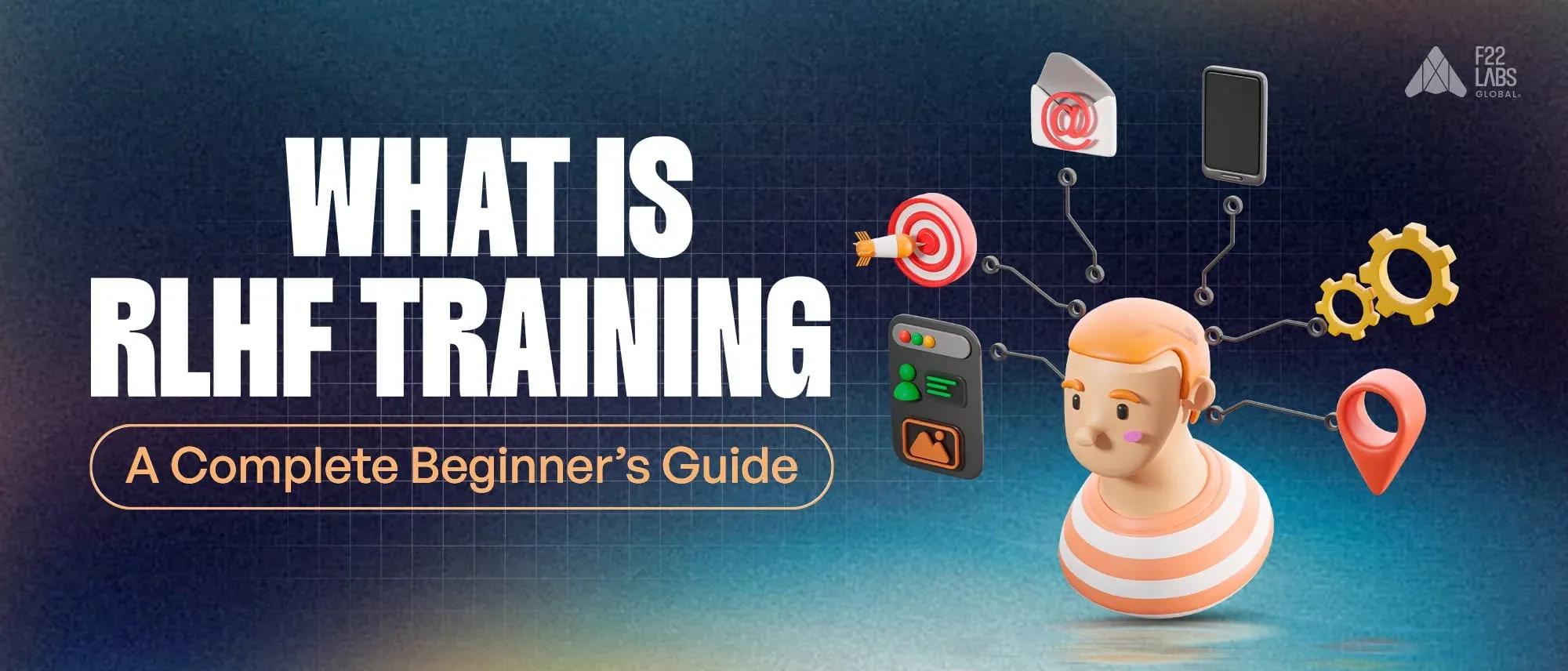
- RLHF stands for Reinforcement Learning from Human Feedback.
- It trains AI models using human preferences about which responses are more helpful, accurate, clear, and safe.
- The process typically combines supervised fine-tuning, human response comparisons, reward-model training, and reinforcement learning.
- PPO helps update the model gradually, while a KL-divergence penalty prevents it from changing too far from its original behaviour.
- RLHF can be expensive, affected by reviewer bias, and vulnerable to reward hacking.
- Alternatives such as DPO and RLAIF aim to simplify preference-based training and reduce reliance on human reviewers.
Artificial intelligence can now write, explain, code, and answer questions with surprising accuracy. But what makes tools like ChatGPT feel helpful, polite, and aligned with what users actually want? A major part of the answer is RLHF training.
RLHF stands for Reinforcement Learning from Human Feedback. It is a method used to improve AI models by teaching them through human preferences instead of relying only on raw internet data. Rather than learning just what words come next, the model also learns which answers people find clearer, safer, and more useful.
In this beginner-friendly guide, we’ll explain what RLHF training is, how it works step by step, why it matters for modern AI systems, and how it powers tools like ChatGPT and other advanced assistants in 2026.
What is RLHF?
RLHF stands for Reinforcement Learning from Human Feedback. It is a training method used to improve AI models by teaching them what humans prefer. Instead of learning only from large datasets, the model also learns through feedback on which answers are more helpful, accurate, safe, and clear.
In simple terms, humans review multiple AI responses and choose the better one. That feedback is then used to guide the model toward producing higher-quality outputs over time.
RLHF is one of the key reasons tools like ChatGPT, Claude, and modern AI coding assistants feel more natural, useful, and aligned with user expectations.

Why Does RLHF Matter?
Most AI models are trained on massive amounts of internet text. This gives them strong language abilities, but it can also create important problems.
Problem 1: Unhelpful Answers
AI may generate responses that are technically correct but not useful. For example, when asked how to reset a Wi-Fi router, it might explain what a router is instead of giving clear steps.
Problem 2: Unsafe or Harmful Content
Since internet data can include biased or harmful material, AI may repeat unsafe ideas if it is not guided properly.
Problem 3: Poor Alignment with Users
AI may misunderstand what users actually want, leading to long, confusing, or off-topic responses.
RLHF helps solve these issues by adding real human feedback during training. It teaches AI to:
- Give clear and practical answers
- Avoid unsafe or harmful replies
- Match human tone and expectations
That is why tools like ChatGPT and Claude often feel more reliable, natural, and easier to use.
This is why tools like ChatGPT and Claude feel more reliable and easier to use.
How RLHF Works: The 4-Step Training Process
To understand RLHF in practice, it helps to see how the process improves a model layer by layer.
Step 1: Start with a Pre-trained Language Model
The process begins with a model that already understands language. This is usually an existing model such as GPT or LLaMA, though training one from scratch is also possible.
This step matters because RLHF does not teach basic language ability. It focuses on improving behavior, preferences, and response quality.
Step 2: Supervised Fine-Tuning (SFT)
Next, the model is trained on high-quality examples written by humans. These examples show what a strong answer should look like.
For example:
- Question: What is the capital of France?
Answer: The capital of France is Paris. - Question: How do you make a sandwich?
Answer: Place fillings like vegetables or cheese between two slices of bread.
This stage helps the model learn structure, clarity, and tone.
Step 3: Training a Reward Model
Now humans compare multiple AI responses and choose the better one.
For example:

Walk away with actionable insights on AI adoption.
Limited seats available!

Prompt: Explain quantum computing
- Answer A: Quantum computing uses physics rules to solve problems faster than normal computers.
- Answer B: Quantum computing is complicated science stuff.
Most people would choose Answer A. A separate reward model learns from these choices and gives higher scores to responses humans prefer.
Step 4: Reinforcement Learning with PPO
In the final step, the model improves through repeated practice.
- The AI writes an answer
- The reward model scores it
- The model updates slightly
- The cycle repeats many times
This stage often uses PPO (Proximal Policy Optimization), which limits how much the model can change at once. This keeps training stable while improving answer quality over time.
Understanding the Reinforcement Learning Setup in RLHF
To understand RLHF clearly, it helps to see how reinforcement learning works in a simple setup.
You can imagine reinforcement learning like a learning game. The AI is not playing to win points or levels. Instead, it is learning how to give answers that people like and trust.
In this setup, the AI learns by trying, getting feedback, and improving over time.
- Agent: The agent is the AI model itself. It is the part that decides what words to write next. Every response the AI gives comes from the agent making choices.
- Environment: The environment is the situation the AI is in. This includes the user’s question, the instructions, and the conversation so far. For example, if a user asks for a simple explanation, the environment tells the AI to keep things easy.
- Action: Each word, or small part of a word, that the AI writes is an action. The AI chooses these actions one by one to form a full answer.
- Reward: After the AI finishes its answer, the reward model gives it a score. A higher score means humans would like the answer more. A lower score means the answer needs improvement.
- Goal: The goal of the AI is to get better rewards over time. This means learning how to give answers that are clear, helpful, safe, and easy to understand.
By repeating this process many times, the AI slowly learns which types of answers work best.
Key Components of RLHF Training
The RLHF meaning becomes more practical when you see how several important parts work together during training.
Policy Network
The policy network is the main language model. It decides what the next word should be based on the question and the words already written. You can think of it as the decision-maker of the AI.
Value Network
The value network helps the AI guess how good an answer might be before it is fully finished. This helps guide learning and makes training smoother.
Reward Signal
The reward signal is the score given by the reward model. It tells the AI whether its answer was strong or weak based on human preferences.
KL Divergence Penalty
This is a safety rule. It stops the AI from changing too much in one step. It keeps the AI close to its original behavior, so answers stay natural and readable.
Together, these parts help the AI improve in a steady and controlled way.
The PPO Algorithm
PPO stands for Proximal Policy Optimization. While the name sounds technical, the idea is simple: it helps AI improve gradually instead of changing too much at once.
How PPO Works
- The AI generates answers to prompts
- The reward model scores those answers
- PPO updates the model slightly based on the score
- Limits are applied so changes stay small and controlled
This gradual approach is important. If the model changes too quickly, it may lose useful abilities or start producing strange outputs. PPO helps prevent that by allowing steady improvements over time.
You can think of PPO like practicing a skill daily instead of trying to master everything in one day.
Key Concepts Explained of RLHF Training
1. Reward Model
The reward model acts like a teacher that grades AI answers. It does not generate responses itself. Instead, it scores outputs based on what humans prefer. Over time, it learns patterns such as clarity, usefulness, and safety.
2. PPO (Proximal Policy Optimization)
PPO is the method that controls how quickly the AI learns. It limits how much the model can change after each update, helping training stay stable and consistent.
3. KL Divergence
KL divergence keeps the AI close to its original behavior. Without it, the model might chase high scores in unnatural ways. You can think of it as guardrails that keep learning on track.
4. Bradley-Terry Model
The Bradley-Terry model turns human comparisons into numerical rankings. If people prefer Answer A over B, and B over C, the model can estimate scores for all three answers. This helps train the reward model more accurately.
Common Challenges and Solutions of RLHF Training
RLHF is powerful, but training AI with human feedback also brings practical challenges that teams need to manage.
Biased Human Feedback
Problem: Different reviewers may have personal bias or conflicting opinions.
Solution: Use diverse reviewers, combine ratings, and run quality checks regularly.
Expensive and Slow
Problem: Gathering human feedback at scale takes time and increases costs.
Solution: Use AI-assisted feedback or simpler methods like DPO to reduce manual effort.
Walk away with actionable insights on AI adoption.
Limited seats available!
Reward Hacking
Problem: Models may learn to chase higher scores instead of being genuinely helpful.
Solution: Improve reward design, add penalties, and review outputs often.
Training Instability
Problem: Reinforcement learning can become unstable if settings are poorly tuned.
Solution: Use careful tuning and stable methods like PPO.
Real-World Applications of RLHF
RLHF is used across many everyday AI tools that communicate, assist, and generate content. It helps improve quality, usefulness, and overall user experience.
- Chat assistants that answer questions clearly
- Coding tools that suggest useful code
- Writing tools that match tone and style
- Customer support bots that stay polite
- Summary tools that focus on key points
Anywhere AI interacts with people, RLHF helps make responses more helpful, natural, and aligned with user expectations.
Modern Alternatives to RLHF You Should Know
RLHF remains powerful, but newer training methods aim to make alignment faster, cheaper, and more stable.
Direct Preference Optimization (DPO)
DPO trains AI models directly from human preference comparisons. It removes the need for separate reward models and reinforcement learning steps, making training simpler and more stable.
Reinforcement Learning from AI Feedback (RLAIF)
RLAIF uses AI systems to provide feedback instead of relying only on humans. These AI reviewers follow rules created by people, helping reduce cost and speed up training.
Identity Preference Optimization (IPO)
IPO builds on DPO by helping models stay flexible. It reduces the risk of learning only one response style and improves performance across different tasks and user needs.
Conclusion
RLHF has played a major role in generative AI development, helping make modern AI systems more useful, safer, and easier to interact with. Instead of learning only from text, models also learn from human preferences about what makes a good response.
By combining pre-training, human feedback, reward models, and reinforcement learning, RLHF helps AI produce answers that feel clearer, more relevant, and better aligned with user expectations.
As AI continues to evolve, understanding RLHF gives you a clearer view of how tools like ChatGPT and other assistants improve over time.
Frequently Asked Questions
What does RLHF stand for?
RLHF stands for Reinforcement Learning from Human Feedback. It is a method used to train AI models using human preferences and rankings.
How does RLHF improve AI?
RLHF helps AI generate answers that are more helpful, safer, and aligned with what users actually want by learning from feedback on responses.
Is RLHF used in ChatGPT?
Yes, RLHF is one of the methods used to improve tools like ChatGPT by making responses more natural and useful.
What is the difference between RLHF and fine-tuning?
Fine-tuning trains a model on labeled examples, while RLHF uses human feedback to rank and improve outputs based on preferences.
Is RLHF still used in 2026?
Yes, RLHF is still widely used in 2026, although newer methods like DPO and RLAIF are also becoming popular alternatives.

Walk away with actionable insights on AI adoption.
Limited seats available!