How Long Will It Take to Develop an MVP for Startups?
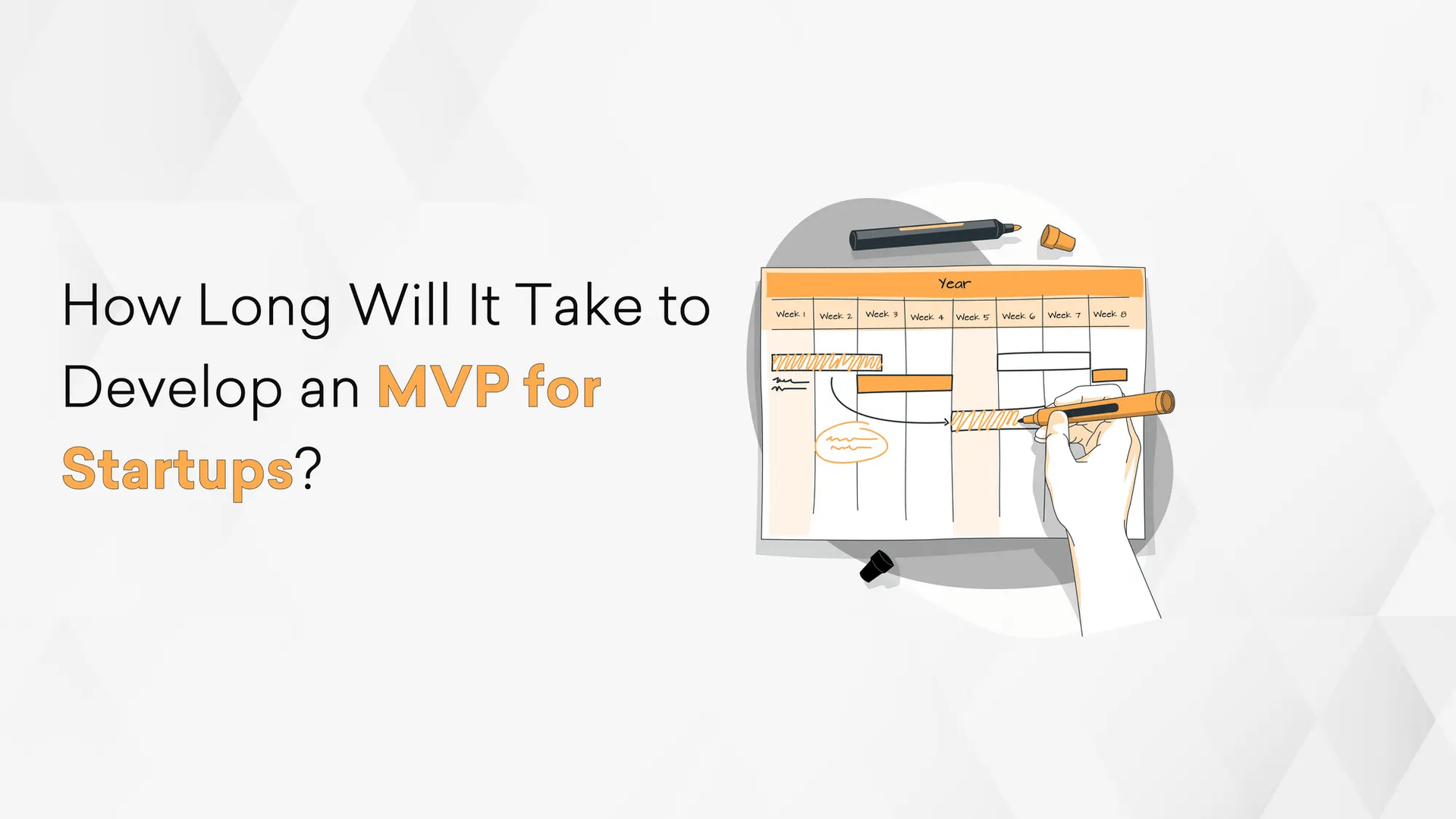
The startup world is increasingly competitive, and speed often decides who survives. Building an MVP is no longer optional, it’s how ideas get validated before resources run out.
I wrote this to help you understand not just how long MVP development takes, but what actually influences that timeline in real execution.
An MVP for startups helps validate ideas, gather user feedback, and iterate quickly. But the timeline isn’t fixed, it depends on how clearly you define scope, priorities, and execution phases.
Understanding Your Product Vision
Before estimating timelines, clarity on product vision is critical. Without it, development slows down due to constant changes and misalignment.
Start with defining the problem, core features, and user needs. This ensures that MVP development stays focused on outcomes, not assumptions.
Ask yourself:
- What problem does your product solve?
- What are the core features required?
- Does it align with your target audience’s needs?
Understanding your audience and market helps prioritize features effectively. Competitor analysis and gap identification further guide decisions, reducing unnecessary iterations later.
Preparing for MVP Development
Once the product vision is clear, execution depends on assembling the right team and setting realistic expectations.
MVP development is a focused effort, not full-scale product building. It requires prioritizing only essential features that validate the idea.
Define roles clearly across development, design, and product management. Align everyone on MVP KPIs to avoid scope creep.
Budget planning plays a major role. Startups often operate with constraints, so resource allocation must balance cost and impact.
Understanding app development cost early helps avoid mid-project compromises. The goal is to stay lean without affecting user experience.
Build Lean. Learn Fast.
Launch an MVP that saves money while proving your concept works.
MVP Development Timeline
MVP development timelines are best understood when broken into phases. Each phase impacts delivery speed depending on clarity, feedback cycles, and execution efficiency.
A structured approach reduces delays and helps maintain momentum throughout development.
Phase 1: Ideation and Conceptualization
This phase focuses on validating the idea before investing in development.
Refine the concept by evaluating market demand, feasibility, and differentiation. Early validation through user feedback or surveys reduces the risk of building unnecessary features.
Identify core functionalities and define MVP KPIs clearly. Prioritization at this stage directly impacts development speed and efficiency.
Phase 2: Design and Prototyping

Design defines how users experience your MVP, making it a critical phase.
Create wireframes and mockups that focus on usability and clarity rather than complexity. Tools like Figma or Adobe XD help visualize interactions early.
User testing at this stage prevents costly changes later. Feedback-driven design ensures the MVP is intuitive and aligned with user expectations.
Phase 3: Development and Testing
This is where execution speed and structure directly influence timelines.
MVP development is iterative, not linear. Agile methodology allows teams to build, test, and improve continuously.
Break development into smaller tasks and deliver functional increments. This reduces risk and improves adaptability.
Testing is essential throughout the process. Functional testing and user acceptance testing ensure the product performs as expected before launch.
Choosing the right tech stack early avoids scalability issues later.
Phase 4: Launch and Initial Rollout
The launch phase is where planning meets real-world validation.
Build Lean. Learn Fast.
Launch an MVP that saves money while proving your concept works.
Ensure hosting, integrations, and deployment processes are ready before going live. A clear marketing approach helps reach the right audience early.
Post-launch monitoring is critical. Track user interactions, identify issues, and respond quickly to maintain user experience and engagement.
Phase 5: Post-Launch Evaluation
Post-launch is where real insights emerge.
Analyze user behavior, engagement, and feedback to evaluate performance. Focus on key MVP KPIs such as retention, conversions, and usage patterns.
These insights guide future iterations, ensuring the product evolves based on real user needs rather than assumptions.
Continuous improvement is what turns an MVP into a scalable product.
Conclusion
MVP development timelines are not fixed, they depend on clarity, execution, and decision-making speed.
A structured approach across phases helps reduce delays while maintaining quality.
An MVP is not just a starting point, it’s the foundation that determines how efficiently your product evolves.
With the right priorities and execution, it becomes a strategic advantage rather than just a prototype.

Murtuza Kutub
A product development and growth expert, helping founders and startups build and grow their products at lightning speed with a track record of success. Apart from work, I love to Network & Travel.