Building a chatbot app like ChatGPT is no longer experimental; it’s becoming a core part of how products deliver support, automate workflows, and improve user experience.
The cost to develop a ChatGPT-like app typically ranges from $50,000 to $500,000+, depending on the model used, infrastructure, real-time performance, and how the system handles scale.
Most guides focus on features, but that’s not what actually drives cost here. The real complexity comes from running large language models, managing token usage, and delivering fast, reliable responses at scale.
In this guide, I’ll break down the actual cost of building a ChatGPT-like app, what impacts it the most, and how to build efficiently without overspending.
How Much Does It Cost to Build a ChatGPT-Like App?
The cost to build a ChatGPT-like app typically ranges from $50,000 to $500,000+, depending on LLM usage, infrastructure, features, and scalability.
- Basic chatbot (MVP): $50K – $100K
- Mid-level AI app: $100K – $250K
- Advanced AI platform: $250K – $500K+
The biggest cost drivers are LLM usage (token costs), real-time performance, memory systems, and scaling, not just features.
ChatGPT App Development: Quick Overview
The cost of building a ChatGPT-like app depends on how the system handles LLM usage, context, and real-time performance.
A basic chatbot using APIs can be built relatively quickly, but once you introduce memory, streaming responses, and higher usage, both cost and complexity increase significantly.
Here’s a practical way to think about it:
| Stage | Estimated Cost | What It Looks Like |
Basic Chatbot | $50K – $100K | API-based responses, simple UI, limited context |
Functional AI App | $100K – $250K | Context memory, better UX, integrations, streaming |
Scalable AI Platform | $250K – $500K+ | RAG systems, multi-user scale, optimization, infra |
What Makes ChatGPT-Like Apps Expensive
Most people assume chatbot apps are expensive because of features. In reality, features are the easy part.
The cost increases when the system has to think, respond, and scale in real time.
Here’s where things actually get expensive:
1. Continuous LLM Usage
Every user message triggers a model response, which means you’re paying per token, every time. As usage grows, this becomes one of the biggest ongoing costs.
2. Real-Time Response Requirements
Users expect near-instant replies. Achieving low latency requires optimized infrastructure, streaming responses, and efficient request handling.
3. Context & Memory Handling
Maintaining conversation history, user context, or long-term memory adds complexity. This often involves vector databases and retrieval systems.
4. Scalability & Concurrency
Handling thousands of users simultaneously requires load balancing, queue systems, and scalable backend infrastructure.
5. AI Orchestration & Integrations
Modern chatbot apps don’t just respond, they connect with tools, APIs, and workflows. Managing this orchestration increases system complexity.
ChatGPT-like apps become expensive not when you build them, but when you run them continuously at scale.
Core Features of a ChatGPT-Like App
A ChatGPT-like app combines multiple components that work together to process input, generate responses, and manage conversations.
Chat Interface & Input Handling
This is the visible layer where users interact with the system. It includes message input, conversation flow, and response display.
LLM-Powered Response Generation
At the core, the app uses a language model to understand queries and generate responses. This can be through APIs (like GPT) or custom models.
Context & Conversation Memory
The system remembers previous messages to maintain context. This can be short-term (session-based) or long-term using memory systems.
Streaming Responses (Real-Time Output)
Instead of waiting for a full reply, responses are streamed token by token, making the interaction feel faster and more natural.
Prompt Handling & System Instructions
Behind the scenes, prompts are structured and optimized to guide the model’s behavior and ensure consistent output.
File & Multimodal Support (Optional)
Users can upload files, images, or documents, and the system processes them along with text inputs.
Admin & Usage Controls
Includes monitoring usage, managing users, tracking token consumption, and controlling access.
Integrations & Tool Usage
The chatbot can connect with external APIs, databases, or tools to perform actions beyond simple responses.
The complexity of a ChatGPT-like app doesn’t come from individual features, but from how all these components work together in real time.
ChatGPT App Architecture (How It Works)
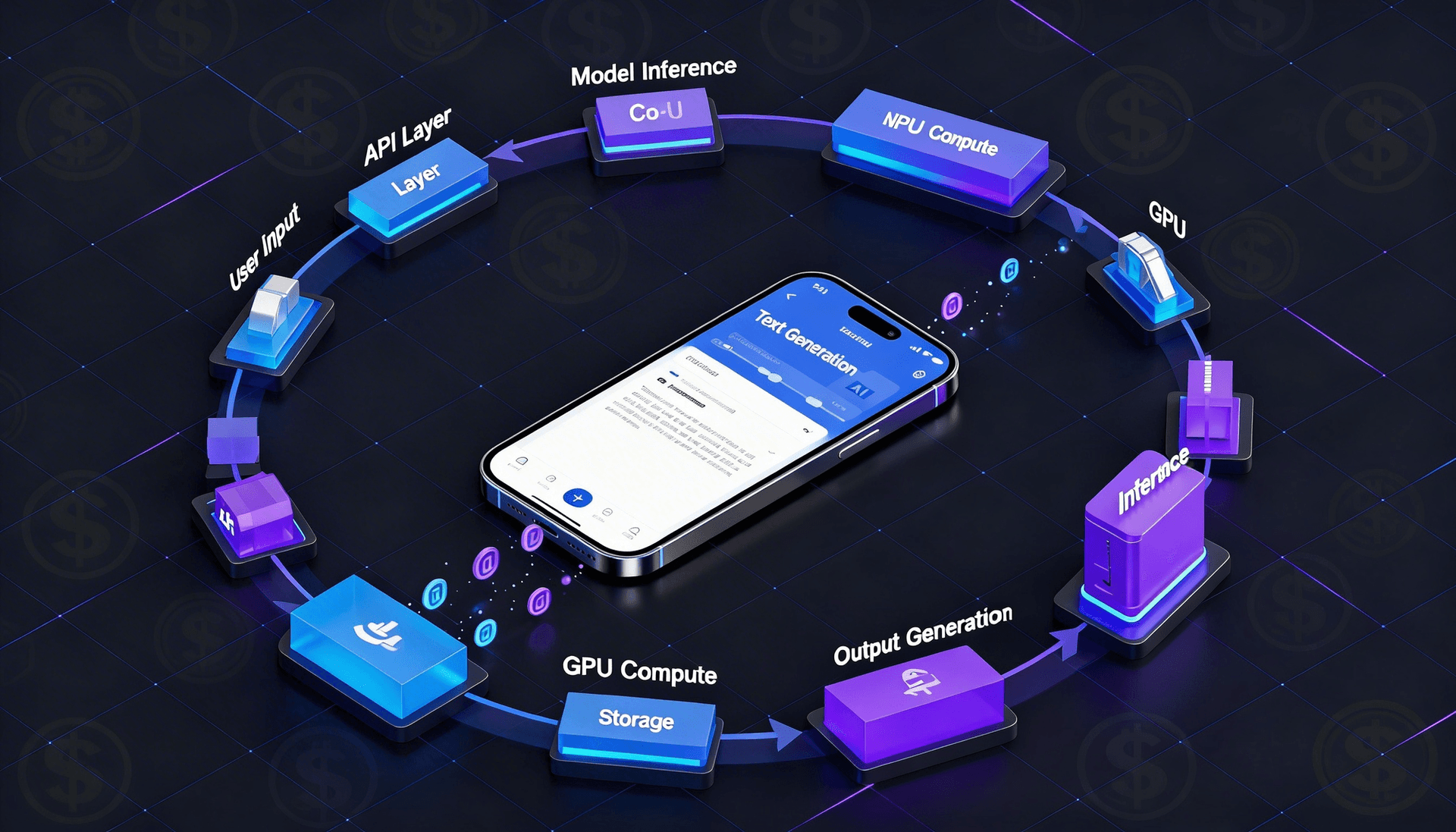
A ChatGPT-like app processes each user request through multiple layers that handle input, model interaction, memory, and response delivery.
At a high level, the flow looks like this:
1. Frontend (User Interface)
This is where users interact with the app, typing messages, uploading files, and viewing responses. Built using web or mobile frameworks like React or Flutter.
2. Backend (Orchestration Layer)
The backend manages requests, formats prompts, handles sessions, and connects different services. It acts as the control layer of the entire system.
3. LLM Layer (AI Model)
This is the core intelligence of the app. It can be:
- API-based (GPT, Claude, Gemini)
- Or custom-hosted models

Walk away with actionable insights on AI adoption.
Limited seats available!

It processes the input and generates responses.
4. Memory & Context Layer
To maintain conversation flow, the system stores and retrieves past interactions. This can include:
- Short-term memory (session context)
- Long-term memory (vector databases / RAG systems)
5. Tool & Integration Layer
The app can connect with external tools like APIs, databases, CRMs, or internal systems to perform actions beyond chat.
6. Real-Time Response System
Handles streaming responses so users see replies instantly instead of waiting for full output.
Every user message passes through multiple layers before generating a response. The complexity of the system comes from coordinating these layers efficiently and in real time.
Technology Stack for AI Chatbot Apps
The technology stack behind an AI chatbot app determines how fast it responds, how well it scales, and how efficiently it handles model calls, memory, and integrations.
A typical ChatGPT-like app uses multiple layers working together:
| Layer | Common Technologies | Purpose |
Frontend | React, Next.js, Flutter, React Native | Builds the chat interface and user experience |
Backend | Node.js, Python (FastAPI, Django) | Handles orchestration, APIs, sessions, and business logic |
LLMs | GPT-4o, Claude, Gemini, Llama | Generates responses and powers the chatbot experience |
Memory / Retrieval | Pinecone, Qdrant, Weaviate, PostgreSQL | Stores embeddings, context, and retrieval data |
Database | PostgreSQL, MongoDB, Redis | Stores users, chats, metadata, and caching layers |
Real-Time Streaming | WebSockets, Server-Sent Events | Streams responses token by token |
Cloud & Infrastructure | AWS, Google Cloud, Azure, Vercel | Hosts services, scales workloads, and manages uptime |
File Processing | OCR tools, PDF parsers, object storage | Handles uploaded documents and file-based workflows |
Monitoring & Analytics | LangSmith, Prometheus, Grafana, Mixpanel | Tracks usage, latency, cost, and system performance |
As usage grows, the stack directly impacts response latency, LLM cost, and how well the system scales under concurrent users.
ChatGPT App Development Cost Breakdown
If you're planning to build a chatbot app like ChatGPT, the first question is always the same:How much does it cost?
The cost typically ranges from $50,000 to $500,000+, depending on the model, infrastructure, features, and scale of usage. The final cost can also vary based on the AI development company you work with and how they design the system.
Most apps fall into three stages:
| Stage | Estimated Cost | What It Includes |
MVP (Basic Chatbot) | $50,000 – $100,000 | Chat interface, API-based LLM, basic prompts, limited context |
Mid-Level App | $100,000 – $250,000 | Context memory, better UX, integrations, streaming responses |
Advanced AI Platform | $250,000 – $500,000+ | RAG systems, multi-user scaling, optimization, custom workflows |
What Actually Drives Cost
ChatGPT-like apps don’t become expensive because of features alone. Cost increases when the system starts handling:
- Continuous LLM usage (token-based pricing)
- Real-time response delivery
- Context and memory systems (RAG, embeddings)
- High user concurrency and scaling
- Infrastructure for low-latency performance
Cost Formula
A simple way to estimate:
Total Cost = LLM + Infrastructure + Features + Scaling + Data
Most chatbot apps don’t become expensive because of features. They become expensive when they start handling continuous AI usage and real-time responses at scale.
Two apps with similar features can have very different costs depending on how efficiently they manage model calls and infrastructure.
Real Example (AI Chatbot App)
An AI chatbot app with context memory, streaming responses, and API-based LLM integration can cost around $120,000 – $250,000+, depending on usage and integrations.
- Handles real-time conversations
- Maintains context across sessions
- Integrates with APIs and tools
- Optimized for multi-user usage
But the higher cost comes after launch.
For example, a chatbot handling 50,000 daily requests with ~800–1,000 tokens per interaction can generate:
- Daily tokens: ~40M–50M tokens
- Estimated LLM cost: $80 – $500/day
- Monthly cost: $2,400 – $15,000+ (LLM usage alone)
This does not include infrastructure, memory systems, or integrations.
This shows where cost actually increases LLM usage, infrastructure, and scaling, not just feature development.
The cost of building a ChatGPT-like app is only part of the investment. The real expense comes from running the system continuously as usage grows.
LLM Cost Explained
The highest ongoing cost in a ChatGPT-like app comes from using large language models (LLMs). Unlike traditional apps, you’re not just paying for development; you’re paying every time a user interacts with the system.
How LLM Pricing Works
Most LLM providers charge based on tokens:
- Input tokens (user message)
- Output tokens (AI response)
The longer the conversation, the higher the cost.
Example (Simple Breakdown)
Let’s say:
- One request = ~1,000 tokens
- Cost per 1,000 tokens = ~$0.002 – $0.01 (varies by model)
If your app handles:
- 10,000 requests/day
Daily cost = $20 – $100Monthly cost = $600 – $3,000+
Now scale that to:
- 100,000+ users
Costs increase significantly
API vs Custom Model Cost
| Approach | Cost Impact | When to Use |
API-Based Models (GPT, Claude) | Lower upfront, higher ongoing cost | Best for MVPs and fast launches |
Custom / Self-Hosted Models | High upfront, lower per-request cost | Suitable for large-scale, long-term usage |
What Increases LLM Cost
- Long prompts and responses
- Maintaining conversation history
- High user activity
- Complex queries requiring more tokens
- Lack of optimization (prompt + caching)
Development Process to Build a ChatGPT-Like App (Step-by-Step)
Building a ChatGPT-like app involves integrating an LLM, handling user queries, managing context, and delivering responses in real time.
1. Define the Use Case & Scope
Start by identifying what the chatbot should actually do, customer support, internal assistant, AI copilot, or automation tool. A clear use case prevents unnecessary complexity later.
2. Choose the Right LLM Strategy
Decide whether to use API-based models (like GPT or Claude) or build/customize your own model. This decision directly impacts cost, speed, and scalability.
3. Build the MVP (Core Chat Experience)
Develop the basic chat interface with prompt handling and model integration. Focus on getting accurate responses before adding advanced features.
4. Add Context & Memory Handling
Enable the system to remember past interactions using session memory or vector databases. This improves response quality and user experience.
5. Implement Real-Time Streaming
Stream responses token by token instead of waiting for full outputs. This makes the app feel faster and more interactive.
6. Integrate Tools & External Systems
Connect APIs, databases, or internal tools so the chatbot can perform actions beyond answering questions.
Walk away with actionable insights on AI adoption.
Limited seats available!
7. Optimize Performance & Cost
Improve prompt design, reduce token usage, add caching, and optimize latency to control ongoing costs.
8. Test, Deploy & Scale
Test for accuracy, edge cases, and performance. Once stable, deploy and scale the system to handle increasing user load.
Timeline to Build a ChatGPT-Like App
The time required to build a ChatGPT-like app depends on the complexity of the product, the model setup, and how much context, integration, and scaling support it needs.
| Stage | Estimated Timeline | What It Includes |
MVP (Basic Chatbot) | 2 – 3 months | Chat interface, API-based LLM, basic prompt handling, limited context |
Mid-Level App | 3 – 6 months | Context memory, streaming responses, integrations, better UX |
Advanced AI Platform | 6 – 12+ months | RAG systems, tool usage, multi-user scaling, optimization, custom workflows |
A basic chatbot can be launched relatively quickly, but timelines increase when the app starts handling memory, real-time performance, and higher user concurrency.
Delays in ChatGPT-like app development usually come from context systems, integrations, and performance optimization, not the chat interface itself.
Hidden Costs in AI Chatbot Apps
Beyond development, ChatGPT-like apps come with ongoing costs that are often underestimated. These costs increase as usage grows and the system scales.
| Cost Area | What It Includes | Estimated Impact |
LLM Usage (Token Costs) | Charges per input/output token for every request | $500 – $10,000+/month |
Cloud Infrastructure | Servers, GPUs, storage, networking | $1,000 – $20,000+/month |
Vector Database / Memory | Embeddings storage, retrieval systems (RAG) | $200 – $5,000+/month |
Monitoring & Logging | Tracking usage, latency, errors, model performance | $200 – $3,000+/month |
Model Optimization | Prompt tuning, caching, response optimization | $2,000 – $15,000+ (one-time / ongoing) |
Third-Party APIs | External tools, integrations, data providers | $500 – $5,000+/month |
Maintenance & Updates | Bug fixes, improvements, model updates | 15% – 25% of development cost/year |
The initial development cost is only part of the investment. Most of the long-term cost comes from running the AI continuously and supporting growing user activity.
How to Reduce Chatbot Development Cost
Building a ChatGPT-like app can get expensive quickly, especially due to ongoing LLM and infrastructure costs. The key is to make smart decisions early and avoid unnecessary complexity.
Start with an MVP
Focus on a single use case with basic chat functionality. Avoid building advanced features like memory or tool integrations until there is real user demand.
Use API-Based Models Instead of Training Your Own
Using APIs (like GPT or Claude) eliminates the need for expensive model training and infrastructure in the early stages.
Optimize Token Usage
Shorten prompts, limit response length, and avoid unnecessary context. This directly reduces LLM costs over time.
Implement Caching for Repeated Queries
Store responses for frequently asked questions to reduce repeated model calls and save costs.
Limit Context Length
Avoid sending the full conversation history every time. Use selective memory or summarization to reduce token usage.
Use Scalable Cloud Infrastructure
Start with lightweight infrastructure and scale only when usage increases instead of overbuilding early.
Prioritize Features Based on Usage
Build only what users actively need. Avoid adding complex features before validating their value.
Reducing cost in chatbot development comes down to controlling LLM usage, infrastructure, and how efficiently the system is designed.
Is It Worth Building a ChatGPT-Like App in 2026?
Demand for AI chatbots is growing across customer support, internal tools, and product experiences. But building a ChatGPT-like app today is not just about launching a chatbot, it’s about whether you can deliver consistent value at scale.
| When It Makes Sense | When It Doesn’t |
You are solving a clear use case (support, automation, AI copilot) | The idea is too broad (“build a ChatGPT clone”) |
You can start with a focused MVP | You are overbuilding features from the start |
You understand ongoing LLM and infrastructure costs | You haven’t planned for token and infrastructure costs |
You have a plan to scale usage gradually | There is no clear differentiation or use case |
Building a ChatGPT-like app is worth it when the value per interaction justifies the ongoing LLM and infrastructure cost.
Conclusion
The cost to build a ChatGPT-like app typically ranges from $50,000 to $500,000+, but development is only part of the investment.
As usage grows, managing LLM usage and infrastructure becomes the primary cost challenge.
Starting with a focused MVP, validating the use case, and optimising how the system processes requests is what keeps both cost and complexity under control.
Frequently Asked Questions
How much does it cost to build a ChatGPT-like app?
The cost typically ranges from $50,000 to $500,000+, depending on features, model usage, infrastructure, and scalability.
How long does it take to develop a ChatGPT-like app?
An MVP can take 2 to 3 months, while more advanced AI chatbot platforms may take 6 to 12+ months.
What affects the cost of chatbot development the most?
The biggest cost drivers are LLM usage (token costs), infrastructure, real-time performance, and scaling, not just features.
Is it better to use APIs or build a custom AI model?
API-based models are faster and cheaper to start with, while custom models are better for large-scale systems with long-term cost optimization.
What are the ongoing costs of a ChatGPT-like app?
Ongoing costs include LLM usage, cloud infrastructure, memory systems, monitoring, and maintenance, which increase as usage grows.
Can I build a ChatGPT-like app with a small budget?
Yes, starting with an MVP using API-based models and limited features can significantly reduce initial cost.
Why are AI chatbot apps expensive to run?
Because every interaction triggers model usage, and costs scale with user activity, response length, and system complexity.

Saisaran D
I'm an AI/ML engineer specializing in generative AI and machine learning, developing innovative solutions with diffusion models and creating cutting-edge AI tools that drive technological advancement.
Walk away with actionable insights on AI adoption.
Limited seats available!