- Chatbot cost ranges from $3,000 (basic FAQ bot) to $500,000+ (enterprise), with most AI chatbots landing at $10,000–$80,000+.
- Cost scales with complexity: rule-based bots are cheapest; AI chatbots cost more due to model integration, data prep, and testing.
- Biggest cost drivers: integrations, security/compliance needs, and features like voice, multilingual support, or sentiment analysis.
- Maintenance is a real ongoing cost most budgets miss; NLP tuning, security patches, and support staffing add up post-launch.
- Build one clear use case first, use existing models (not custom-trained), and add integrations/features only after the MVP proves out.
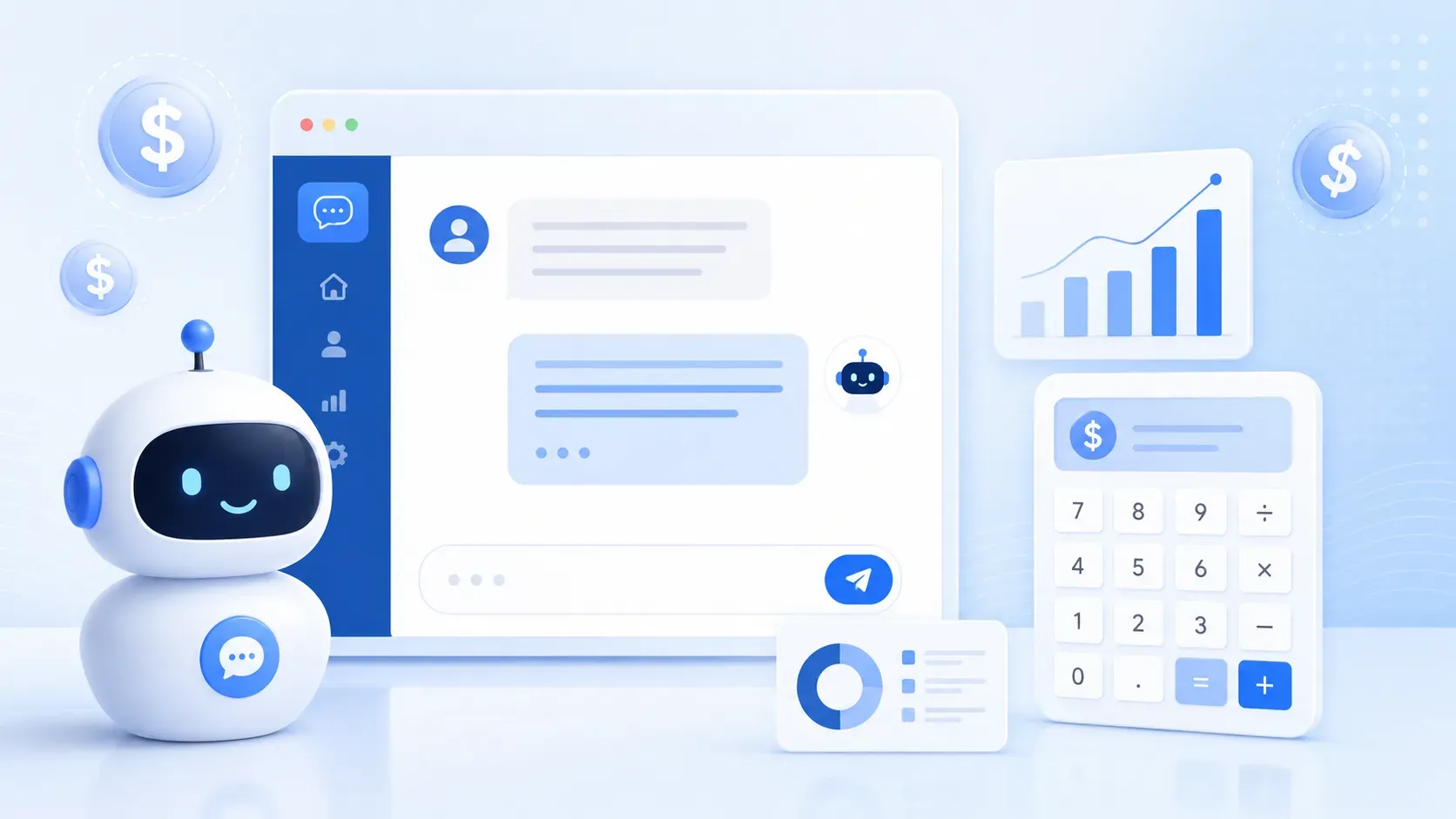
How much does it cost to develop a chatbot? The answer depends on what you want the chatbot to do. A simple FAQ chatbot will cost much less than an AI chatbot that connects with your CRM, answers customer questions, pulls data from documents, or supports internal workflows.
In 2026, chatbot development costs can range from a few thousand dollars for a basic chatbot to much higher for custom AI chatbots with integrations, security, analytics, and ongoing model usage. The final chatbot cost depends on the complexity, features, data, platforms, and chatbot pricing model you choose.
In this guide, we’ll break down how much chatbots cost across basic chatbots, AI chatbots, and enterprise chatbot systems, what affects pricing, and how to plan your chatbot budget without overbuilding the first version.
How Much Does It Cost to Develop a Chatbot?
The cost to develop a chatbot usually ranges from $3,000 to $80,000+, depending on the type of chatbot, features, integrations, AI model, data requirements, and level of customization.
A basic FAQ or lead-generation chatbot can cost around $3,000 to $10,000. An AI chatbot that understands natural language, answers customer questions, and connects with tools like CRM, helpdesk, or internal databases may cost between $10,000 and $40,000+.
For advanced or enterprise chatbots, the cost can go higher if the chatbot needs custom workflows, RAG, multilingual support, analytics, security controls, human handoff, or integration with multiple business systems.
The best way to estimate chatbot development cost is to define what the chatbot should actually do. If the goal is simple customer support, the cost stays lower. If the chatbot needs to automate business workflows or use company-specific data, the budget will increase.
Chatbot Development Cost by Complexity
Chatbot development cost mainly depends on how complex the chatbot is. A simple FAQ bot costs less because it follows basic flows, while a custom AI chatbot costs more because it may need integrations, business data, security, and advanced automation.
| Chatbot Type | Estimated Cost | Best For |
Basic Chatbot | $3,000–$10,000 | FAQs, lead capture, simple website support |
AI Chatbot | $10,000–$30,000 | Customer support, sales queries, internal assistants |
Custom AI Chatbot | $30,000–$60,000+ | CRM, databases, RAG, business-specific workflows |
Enterprise Chatbot | $60,000–$500,000+ | Security, compliance, analytics, scale, multiple integrations |
These ranges are practical estimates, not fixed prices. The final cost depends on the chatbot’s features, AI model, platforms, data quality, and how many systems it needs to connect with.
Chatbot Development Cost by Use Case
Chatbot development cost also changes based on where and how the chatbot will be used. A simple website chatbot usually costs less than a chatbot that handles customer support, internal knowledge, healthcare data, or multiple business workflows.
| Chatbot Use Case | Estimated Cost |
Website FAQ Chatbot | $3,000–$10,000 |
Lead Generation Chatbot | $5,000–$15,000 |
E-commerce Chatbot | $8,000–$25,000 |
AI Customer Support Chatbot | $10,000–$35,000 |
Internal Knowledge Chatbot | $10,000–$40,000 |
Healthcare or Fintech Chatbot | $25,000–$80,000+ |
Enterprise AI Chatbot | $60,000–$500,000+ |
Large-scale enterprise chatbots with biometric authentication, real-time compliance monitoring, multimodal interfaces (voice, text, visuals), or predictive analytics can exceed $1,000,000 depending on scope.
What Is Included in Chatbot Development Cost?
Chatbot development cost includes more than just building the chat interface. A useful chatbot needs planning, conversation design, AI integration, data setup, testing, deployment, and ongoing improvements.
Use Case Discovery and Conversation Planning
The first step is to define what the chatbot should do. This includes the target users, main questions, expected answers, user journey, and business goal.
For example, a support chatbot may need to answer FAQs, collect order details, create tickets, or hand over complex queries to a human agent.
Chatbot Flow Design
Before development starts, the team plans how conversations should move. This includes welcome messages, user options, fallback replies, lead forms, handoff points, and error messages.
A clear flow helps the chatbot respond better and avoids confusing users.
AI Model or LLM Integration
If you are building an AI chatbot, the cost includes connecting it with models such as OpenAI, Anthropic, Gemini, or open-source alternatives.
This also includes prompt setup, response tuning, context handling, and deciding when the chatbot should answer, ask follow-up questions, or escalate.
Knowledge Base and Data Preparation
The chatbot may need FAQs, documents, product details, policies, support articles, or internal data to answer correctly.
This data may need to be cleaned, structured, uploaded, embedded, or connected through a knowledge base before the chatbot can use it reliably.
Backend and API Development
Some chatbots need backend logic to fetch customer details, check order status, create tickets, update CRM fields, or trigger workflows.
The more backend actions the chatbot performs, the more development effort is required.

Walk away with actionable insights on AI adoption.
Limited seats available!

Third-Party Integrations
Chatbots often connect with CRMs, helpdesk tools, ecommerce platforms, payment systems, WhatsApp, Slack, Teams, or internal dashboards.
Each integration adds cost because it needs setup, permissions, testing, and error handling.
Testing, Guardrails, and Quality Checks
A chatbot should be tested for accuracy, response quality, hallucinations, fallback handling, security, and edge cases.
Testing is especially important for AI chatbots because the output may vary depending on how users ask questions.
Deployment and Maintenance
After launch, ongoing maintenance is a real cost most budgets underestimate. Common recurring expenses may include:
| Maintenance Item | Estimated Cost |
Basic system maintenance | $1,000–$5,000/year |
NLP model updates | $2,000–$10,000/quarter |
Security patches | $500–$2,500/month |
Compliance recertification | $2,000–$10,000/year |
24/7 support staffing | $15,000–$50,000/year |
Emergency support | $150–$500/hour |
Not all chatbots need every line item. A simple FAQ bot needs basic maintenance and security updates. NLP tuning, compliance recertification, and staffing costs apply mainly to AI chatbots in regulated industries or high-traffic environments.
Key Factors That Affect Chatbot Development Cost
Chatbot development cost depends on how advanced the chatbot needs to be, where it will be used, and how many systems it must connect with. A simple FAQ chatbot is cheaper than an AI chatbot that uses company data, understands natural language, and supports real business workflows.
Type of Chatbot
The first cost factor is the chatbot type. A rule-based chatbot with fixed answers costs less, while an AI chatbot or generative AI chatbot costs more because it needs model integration, prompt setup, testing, and ongoing improvement.
Features and Functionality
The features you add directly affect the development cost. Here are broad cost estimates for common chatbot features:
| Feature | Estimated Cost |
Natural Language Processing (NLP) | $20,000–$50,000 |
Multi-language Support | $10,000–$30,000 |
Sentiment Analysis | $15,000+ |
Voice Interface | $25,000–$100,000 |
Live Chat Handoff | $3,000–$8,000 |
Analytics and Reporting | $2,000–$10,000 |
Not every chatbot needs all of these. A basic customer support bot may only need NLP and handoff. Voice, sentiment analysis, and multilingual support are usually added for enterprise or high-volume use cases.
AI Model Choice
Using existing AI models such as OpenAI, Anthropic, Gemini, or open-source models is usually faster and more affordable than building or fine-tuning a custom model.
Data and Knowledge Base Quality
If your FAQs, documents, product details, or support content are already clean and structured, development is easier. If the data is messy or scattered, extra time is needed for cleaning, formatting, and setup.
Integrations Required
A chatbot that only answers website questions costs less than one that connects with CRMs, helpdesk tools, ecommerce platforms, databases, WhatsApp, Slack, Teams, or internal systems.
Security and Compliance Needs
Chatbots used in healthcare, fintech, HR, legal, or enterprise workflows need stronger security, access control, data privacy, and testing, which can increase the overall cost.
Platform and Deployment
The cost also depends on where the chatbot will be deployed. A website chatbot may be simpler, while a chatbot for mobile apps, WhatsApp, Slack, Teams, or a customer portal may need additional setup and testing.
Chatbot Pricing Models Explained
Chatbot pricing depends on how the project is built, managed, and maintained. Some chatbots have a one-time development cost, while others include monthly platform fees, usage-based AI costs, or ongoing support. For example, Intercom lists its Fin AI Agent from $0.99 per resolved outcome, which shows how usage-based chatbot pricing can work in real products.
| Pricing Model | How It Works | Best For |
Fixed Price | You pay a fixed amount for a clearly defined chatbot scope. | Basic chatbots, MVPs, and projects with clear requirements |
Hourly Pricing | You pay based on the number of hours spent on design, development, testing, and updates. | Flexible projects where the scope may change |
Dedicated Team | You pay a monthly cost for a team working on chatbot development, integrations, and improvements. | Long-term AI chatbot development or enterprise workflows |
Subscription-Based Tools | You pay a monthly fee to use a no-code or SaaS chatbot platform. | Simple support, lead generation, or website chatbots |
Usage-Based AI Pricing | You pay based on AI model usage, tokens, messages, or API calls. | Generative AI chatbots and LLM-powered assistants |
For most businesses, the best chatbot pricing model depends on the stage of the project. A fixed-price model works well for a simple chatbot or MVP, while hourly or dedicated team pricing is better for custom AI chatbots with integrations, changing requirements, or ongoing improvements.
Rule-Based Chatbot vs AI Chatbot Cost Difference
The cost difference comes from how the chatbot works. A rule-based chatbot follows fixed flows and predefined answers, while an AI chatbot understands natural language, uses context, and can answer more flexible questions.
| Factor | Rule-Based Chatbot | AI Chatbot |
How It Works | Follows predefined buttons, flows, and scripts | Understands user intent and responds using AI models |
Setup Cost | Lower | Higher |
Flexibility | Limited to planned conversations | Can handle more varied and open-ended questions |
Data Requirement | Basic FAQs or fixed answers | FAQs, documents, knowledge base, or business data |
Integrations | Usually fewer | Often connects with CRM, helpdesk, databases, or internal tools |
Best For | FAQs, lead capture, simple support | Customer support, internal assistants, sales queries, and workflow automation |
Estimated Cost | $3,000–$15,000 | $10,000–$80,000+ |
A rule-based chatbot is a good option when users follow predictable paths. An AI chatbot is better when users ask questions in different ways or when the chatbot needs to use business data, understand context, and support more complex workflows.
How Long Does It Take to Build a Chatbot?
The time needed to build a chatbot depends on the chatbot type, features, integrations, data readiness, and testing requirements. A simple chatbot can be built in a few weeks, while a custom AI chatbot with business data and integrations may take longer.
| Chatbot Type | Estimated Timeline |
Basic Chatbot | 2–4 weeks |
AI Chatbot | 4–8 weeks |
Custom AI Chatbot | 8–12 weeks |
Enterprise Chatbot | 12+ weeks |
The timeline stays shorter when the chatbot has a clear use case, clean FAQs or documents, limited integrations, and a defined conversation flow. More time is needed when the chatbot requires RAG, CRM integration, multilingual support, human handoff, analytics, security, or compliance checks.
How to Reduce Chatbot Development Cost
Chatbot development cost can be reduced by keeping the first version focused. Instead of building every feature at once, start with the most important use case and improve the chatbot after launch.
Start With One Clear Use Case
Avoid building a chatbot that handles support, sales, onboarding, internal queries, and payments in the first version. Start with one clear goal, such as answering FAQs, qualifying leads, or reducing support tickets.
Use Existing AI Models First
Most chatbots do not need a custom model at the beginning. Existing models like OpenAI, Anthropic, Gemini, or open-source models can help you build faster and reduce upfront cost.
Walk away with actionable insights on AI adoption.
Limited seats available!
Prepare FAQs and Documents Before Development
Clean and organized data reduces development time. Prepare FAQs, product details, support articles, policies, and internal documents before the chatbot is built.
Limit Integrations in the First Version
Every integration adds cost. Start with the most important system first, such as your website, CRM, helpdesk, or knowledge base. Add more integrations later if the chatbot proves useful.
Add Human Handoff Instead of Full Automation
For complex or sensitive queries, let the chatbot hand over the conversation to a human instead of trying to automate everything. This reduces risk and keeps the first version simpler.
Build a Chatbot MVP Before Scaling
Start with a chatbot MVP to test the core workflow, response quality, and user behavior. Once it works well, you can add advanced features like multilingual support, analytics, voice, payments, or deeper workflow automation.
How F22 Labs Helps Businesses Build AI Chatbots
F22 Labs helps businesses build AI chatbots for customer support, lead generation, e-commerce, internal knowledge search, workflow automation, and product features.
Our team supports everything from use case planning and data preparation to AI model integration, backend development, third-party integrations, testing, deployment, and ongoing improvements. Whether you need a simple chatbot MVP or a custom AI chatbot, we help you build it with the right scope, timeline, and cost in mind.
Conclusion
Chatbot development cost depends on the chatbot’s complexity, AI model, integrations, data quality, and pricing model. A basic chatbot costs less, while a custom AI chatbot with business data, automation, and security will need a higher budget.
The best approach is to start with one clear use case, build the first version, and add advanced features only after the chatbot proves useful. Done right, a chatbot can reduce support workload, improve response time, and help users get answers faster.
Frequently Asked Questions
How much does it cost to develop a chatbot?
Chatbot development cost usually ranges from $3,000 to $100,000+ for most basic and custom AI chatbot builds. Enterprise AI chatbots with advanced security, compliance, automation, and multiple integrations can cost much more.
How much do chatbots cost per month?
Monthly chatbot costs can include hosting, AI model usage, maintenance, analytics, updates, and support. The final cost depends on usage volume and chatbot complexity.
What affects chatbot development cost?
The main factors include chatbot type, features, AI model, data quality, integrations, platform, security requirements, and the chatbot pricing model.
Is an AI chatbot more expensive than a rule-based chatbot?
Yes. AI chatbots usually cost more because they need model integration, data setup, prompt tuning, testing, and ongoing improvements.
What is the best chatbot pricing model?
A fixed-price model works well for simple chatbots. Hourly or dedicated team pricing is better for custom AI chatbots with changing requirements or integrations.
How long does it take to build a chatbot?
A basic chatbot may take 2–4 weeks, while an AI chatbot can take 4–8 weeks. Custom or enterprise chatbots may take 8–12+ weeks.
Can I build a chatbot using existing AI APIs?
Yes. Many businesses start with existing AI APIs like OpenAI, Anthropic, Gemini, or open-source models before investing in custom model development.
How much does it cost to maintain a chatbot?
Maintenance cost depends on usage, hosting, AI model costs, integrations, updates, testing, and support. AI chatbots usually need regular monitoring and improvements.

Walk away with actionable insights on AI adoption.
Limited seats available!