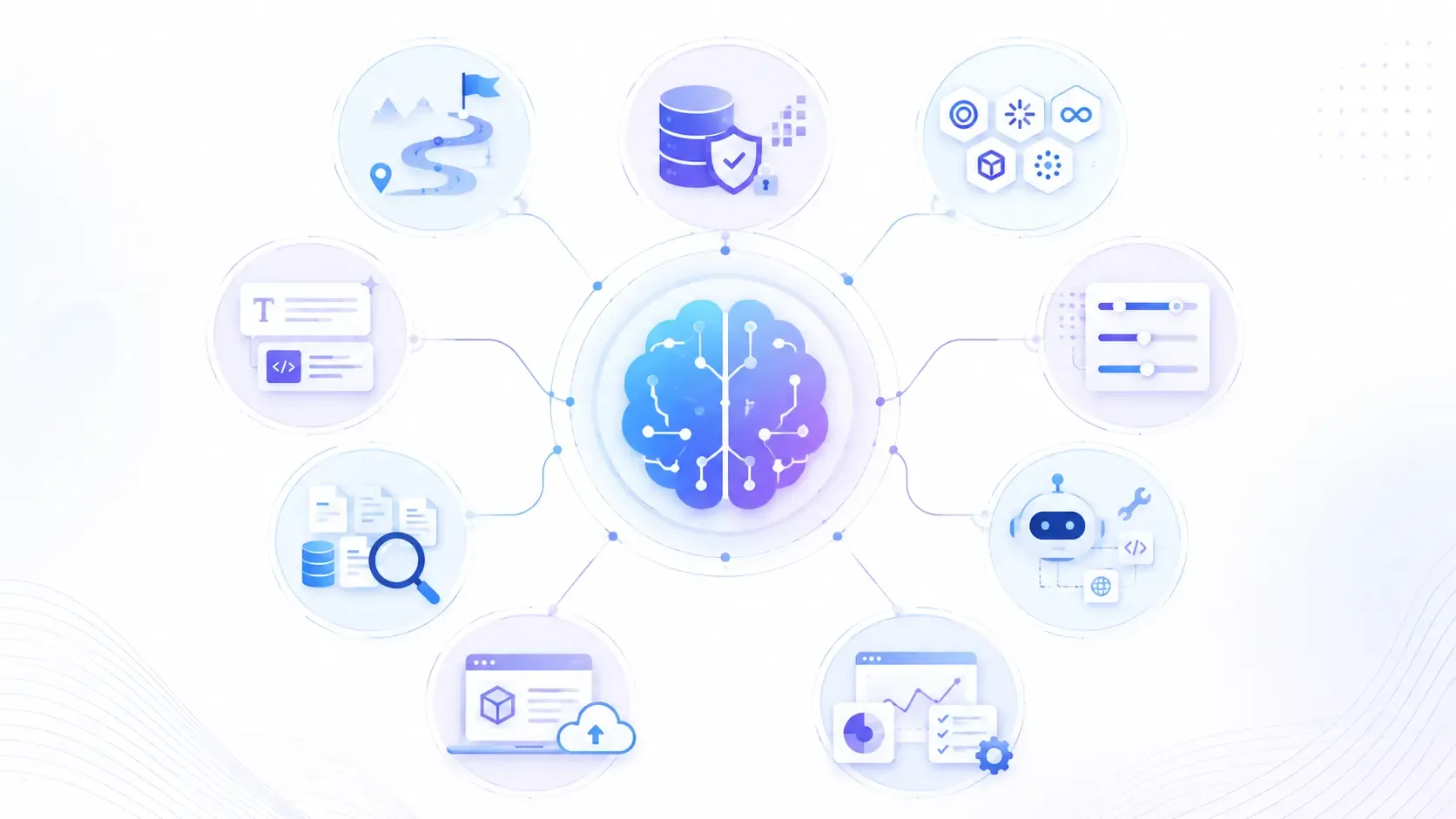
- MCP standardizes how AI systems connect with external tools, files, databases, APIs, and live data.
- It uses a client-server architecture involving hosts, clients, and MCP servers.
- Servers expose tools, resources, and prompts that AI applications can use.
- MCP reduces the need to build separate custom connectors for every integration.
- It improves modularity, access control, data isolation, maintenance, and scalability.
- Common MCP transports include STDIO and HTTP-based communication.
- MCP is useful for AI assistants, coding tools, enterprise systems, and other tool-enabled AI applications.
AI models in 2026 are expected to do more than generate text. They need to access tools, read files, query databases, and interact with live systems. The challenge is that many of these integrations still rely on custom connectors that are difficult to maintain and scale.
The Model Context Protocol (MCP) addresses this problem by providing a standard way for AI systems to connect with external tools and data sources. Instead of rebuilding integrations for every platform, teams can create more secure, reliable, and modular AI workflows.
In this guide, I’ll explain what MCP is, how it works, and why it has become an important foundation for modern AI applications.
What is MCP (Model Context Protocol)?
The Model Context Protocol (MCP) is an open standard that allows AI models to connect with external tools, data sources, and applications through a unified framework. Instead of building separate custom integrations for every system, MCP creates a consistent way for models to access context and perform actions.
In practical terms, MCP helps AI assistants interact with files, databases, APIs, business software, and development tools more reliably. It uses a client-server architecture where hosts, clients, and servers exchange structured information securely.
As AI systems become more tool-driven in 2026, MCP is becoming an important layer for building scalable, modular, and context-aware AI applications.

General Architecture of MCP
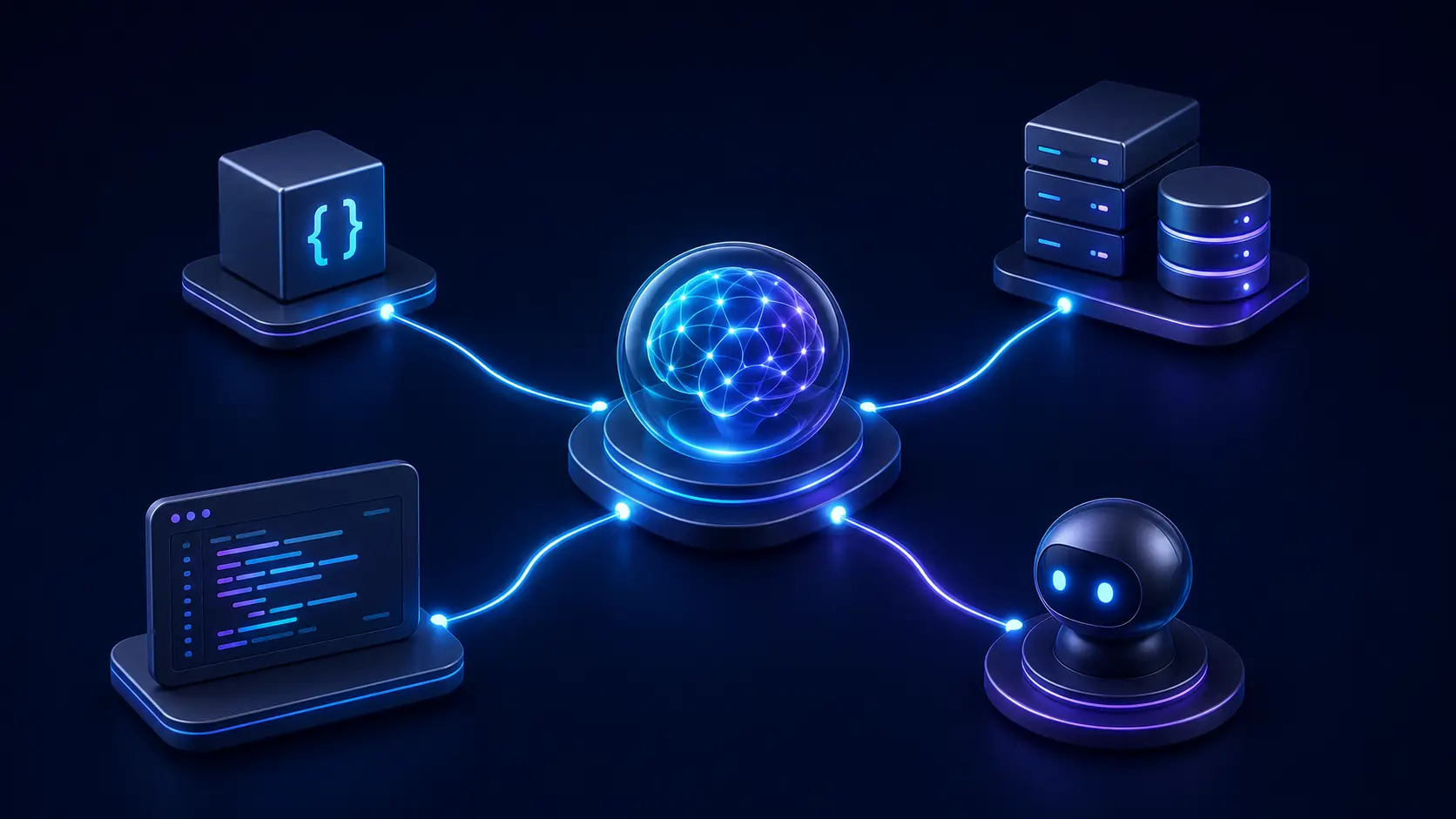
Architecturally, MCP follows a client-server model where a host application orchestrates connections to multiple context servers:
- Hosts: These are LLM applications (like Claude Desktop or Integrated Development Environments) that initiate connections. The host process acts as the container and coordinator, managing multiple client instances, controlling client connection permissions and lifecycle, enforcing security policies, handling user authorization decisions, coordinating AI/LLM integration and sampling, and managing context aggregation across clients.
- Clients: Each client is created by the host and maintains an isolated server connection. Clients establish one stateful session per server, handle protocol negotiation and capability exchange, route protocol messages bidirectionally, manage subscriptions and notifications, and maintain security boundaries between servers.
- Servers: Servers provide specialized context and capabilities. They expose resources, tools, and prompts via MCP primitives, operate independently with focused responsibilities, and request sampling through client interfaces.
- Local Data Sources: Your computer’s files, databases, and services that MCP servers can securely access
- Remote Services: External systems available over the internet (e.g., through APIs) that MCP servers can connect to

Core Components of MCP (Model Context Protocol)
- Protocol Layer: The protocol layer handles message framing, request/response linking, and high-level communication patterns. Key classes include
- Protocol
- Client
- Server
- Transport Layer: The transport layer handles the actual communication between clients and servers. All transports use JSON-RPC 2.0 to exchange messages. MCP supports multiple transport mechanisms:
- Stdio transport
- HTTP with SSE transport
Message Types of MCP
MCP defines the following core message types:
- Requests expect a response from the other side
- Results are successful responses to requests
- Errors indicate that a request failed
- Notifications are one-way messages that don’t expect a response

Resources in Model Context Protocol
Resources represent a foundational primitive in MCP, enabling structured exposure of contextual data to clients, which allows servers to expose data and content that can be read by clients and used as context for LLM interactions.
- File contents
- Database records
- API responses
- Live system data
- Screenshots and images
- Log files
- And more

Walk away with actionable insights on AI adoption.
Limited seats available!

Each resource is identified by a unique URI and can contain either text or binary data.
Benefits of Using the Model Context Protocol (MCP)
Adopting MCP introduces structural advantages that improve integration discipline, security posture, and system composability: that streamline development processes, enhance system architecture, and bolster security measures.
1. Simplified Integration Processes
- Standardized Connectivity: MCP introduces a uniform protocol layer for AI-to-data interaction, reducing integration variability and eliminating the need for custom integrations for each dataset. This standardization reduces development time and complexity.
- Unified Development Approach: Developers can implement MCP once and seamlessly connect to multiple data sources, streamlining the integration process and reducing redundancy.
2. Enhanced Composability and Modularity
- Component-Based Architecture: MCP's design promotes a modular approach, allowing developers to build applications with interchangeable components. This enhances flexibility and scalability in system design.
- Interoperability: By adhering to open standards, MCP ensures that various AI applications and tools can work together seamlessly, fostering a cohesive ecosystem.
3. Improved Security and Data Isolation
- Granular Access Controls: MCP incorporates detailed access control mechanisms, allowing for precise management of permissions and enhancing data security.
- Data Segmentation: The protocol's architecture supports data isolation, ensuring that sensitive information is compartmentalized and protected from unauthorized access.
4. Accelerated Development and Maintenance
- Reduced Redundancy: With MCP's standardized approach, developers no longer need to create custom connectors for each data source, significantly reducing repetitive coding tasks.
- Easier Maintenance: A unified protocol simplifies the maintenance process, as updates or changes can be applied universally rather than individually to each integration.
5. Future-Proofing and Scalability
- Adaptability: MCP's flexible framework allows for easy adaptation to emerging technologies and data sources, ensuring long-term viability.
- Scalable Integrations: The protocol supports scalable architectures, enabling systems to grow and integrate additional functionalities without significant overhauls.
6. Enhanced Performance and Efficiency
- Direct Data Access: Structured client-server communication minimizes latency introduced by redundant middleware layers and improves response times, leading to more efficient operations, and approaches like STDIO transport in MCP further support streamlined communication between clients and servers.
- Optimized Resource Utilization: Standardized integrations allow for better resource management, optimizing system performance and reducing overhead.
Real-World Applications and Adoption of MCP
MCP has gained rapid adoption across industries due to its architectural clarity and interoperability model, demonstrating its versatility and effectiveness in enhancing AI capabilities. Below is an exploration of its real-world applications and the extent of its adoption:
1. Industry Adoption
- Major Tech Companies: Several prominent technology firms have integrated MCP into their platforms, showcasing its practical benefits. This widespread adoption underscores MCP's reliability and effectiveness in real-world scenarios.
- Coding Platforms: Platforms such as Replit, Codeium, and Sourcegraph have adopted MCP to enhance their AI agents, enabling these tools to perform tasks on behalf of users with greater efficiency and accuracy.
- Enterprise Integration: Companies like Goldman Sachs and AT&T have utilized AI models compatible with protocols like MCP to streamline various business functions, including customer service and code generation.
2. Community Engagement
- Open-Source Contributions: The open-source nature of MCP has fostered a vibrant developer community, leading to continuous enhancements and a growing repository of tools and integrations. This collaborative environment accelerates innovation and broadens MCP's applicability.
- Educational Resources: The community has generated extensive documentation, tutorials, and best practices, facilitating easier adoption and implementation of MCP across various projects.
3. Diverse Applications
- AI Assistants: MCP enables AI assistants to access and interact with external data sources seamlessly, improving their ability to provide accurate and contextually relevant responses. In certain scenarios, developers even compare these setups against Small language models when looking for lightweight, faster-to-deploy alternatives that still deliver strong contextual performance.
- Development Tools: Integrated Development Environments (IDEs) and other development tools leverage MCP to offer AI-driven code suggestions, debugging assistance, and project management features, enhancing developer productivity.
Frequently Asked Questions
1. What problem does Model Context Protocol (MCP) solve?
MCP standardizes how AI models connect to external tools and data sources, eliminating fragmented custom integrations.
2. How does MCP differ from traditional API integrations?
Unlike isolated APIs, MCP introduces a unified protocol layer that manages structured context exchange across systems.
3. Is MCP only for large language models?
MCP is primarily used with LLM-based systems but can support any AI workflow requiring structured context integration.
4. What architecture does MCP use?
MCP uses a client-server architecture with host applications, clients, and specialized context servers.
5. How does MCP improve AI security?
MCP enforces isolated sessions, granular permissions, and controlled resource exposure through structured communication.
Walk away with actionable insights on AI adoption.
Limited seats available!
6. Why is MCP important in 2026?
As AI systems increasingly rely on tool integration and external context, standardized protocols like MCP enable scalable and maintainable architectures.
Conclusion
The Model Context Protocol (MCP) is becoming an important step forward in how AI systems connect with external tools and data sources. By standardizing context exchange, MCP reduces fragmented integrations and makes AI architectures more scalable, secure, and easier to maintain.
As AI workflows increasingly depend on real-time tools, files, APIs, and business systems, protocols like MCP are becoming foundational for modern AI infrastructure. They help teams build modular systems without rebuilding custom connectors for every new use case.
Looking ahead, MCP is likely to see wider adoption, stronger tooling, and broader enterprise use. As the ecosystem grows, it can play a major role in shaping more reliable, context-aware, and future-ready AI applications.
Frequently Asked Questions
1. What is Model Context Protocol (MCP)?
Model Context Protocol (MCP) is an open standard that helps AI models connect with external tools, data sources, and applications through a unified framework.
2. Why is MCP important in 2026?
In 2026, AI systems increasingly rely on tools, APIs, and live data. MCP helps standardize these integrations, making systems easier to scale and maintain.
3. How does MCP work?
MCP uses a client-server architecture where AI applications connect to specialized servers that expose tools, resources, and structured context.
4. What problems does MCP solve?
MCP reduces fragmented custom integrations, repeated engineering work, and unreliable context flow between AI models and external systems.
5. Is MCP only for large language models?
No. While commonly used with LLMs, MCP can support any AI system that needs structured access to tools or contextual data.
6. What transports does MCP support?
MCP commonly supports transports such as STDIO and HTTP with SSE, depending on the deployment environment.
7. Is MCP open source?
Yes. MCP is designed as an open standard, which encourages adoption, interoperability, and community-driven improvements.
8. Who should use MCP?
Developers, AI engineers, product teams, and enterprises building tool-enabled AI systems can benefit from MCP.

Walk away with actionable insights on AI adoption.
Limited seats available!