Ruby on Rails vs Node.js: Which Is Better for Startups?
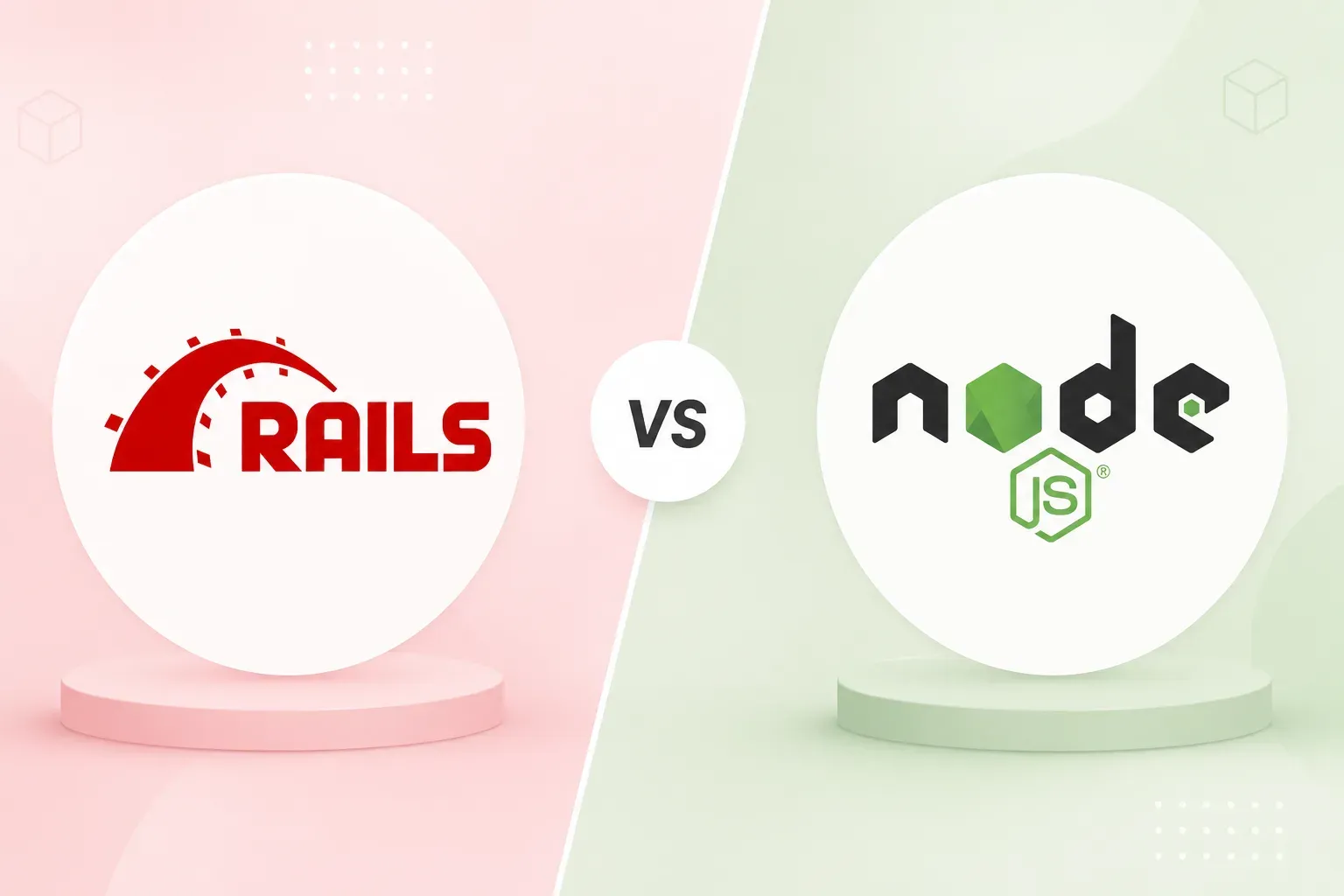
Choosing between Ruby on Rails and Node.js can directly affect how fast your startup builds, how much the first version costs, and how easily the product scales later. Both are strong backend choices, but they solve startup problems in different ways.
Ruby on Rails is often preferred for fast MVPs, SaaS products, marketplaces, and admin-heavy platforms. Node.js is usually stronger for real-time apps, event-driven systems, APIs, and products that need JavaScript across the stack.
In this guide, we’ll compare Ruby on Rails vs Node.js across speed, scalability, cost, MVP development, use cases, pros and cons, and help you decide which one makes more sense for your startup.
Ruby on Rails vs Node.js: Quick Comparison
Ruby on Rails and Node.js are both popular choices for building startup products, but they are not used in the same way. Rails is a full-stack web framework built for speed and convention, while Node.js is a JavaScript runtime often used for APIs, real-time apps, and event-driven systems.
| Factor | Ruby on Rails | Node.js |
Best For | MVPs, SaaS apps, marketplaces, dashboards, admin-heavy products | Real-time apps, APIs, chat apps, streaming, event-driven products |
Faster for structured web apps because many features are built-in | Fast, but may need more setup and package decisions |
|
Scalability | Scales well with good architecture, caching, background jobs, and database optimization | Strong for handling many concurrent requests and real-time workloads |
Cost | Often cost-effective for MVPs and business apps | Cost-effective if the team already uses JavaScript across the stack |
Ecosystem | Mature Rails gems and strong web app conventions | Large npm ecosystem and strong JavaScript tooling |
Learning Curve | Easier when developers follow Rails conventions | Easier for teams already familiar with JavaScript |
Best Startup Fit | Founders building SaaS, marketplaces, internal tools, or MVPs quickly | Startups building real-time, API-heavy, or JavaScript-first products |
In simple terms, Ruby on Rails is usually better when you need to build a structured web product quickly. Node.js is usually better when your product needs real-time performance, event-driven architecture, or a JavaScript-first engineering setup.
What Is Ruby on Rails?
Ruby on Rails is a full-stack web application framework built with Ruby. It gives developers a ready structure for handling databases, routing, APIs, forms, security, testing, and backend workflows.
Rails is known for its “convention over configuration” approach, which helps teams build faster without making every technical decision from scratch. For startups, this makes it useful for building MVPs, SaaS products, marketplaces, dashboards, and internal business tools.
What Is Node.js?
Node.js is a JavaScript runtime that lets developers build server-side applications using JavaScript. It is commonly used for APIs, backend services, real-time apps, chat systems, streaming platforms, and event-driven products.
Node.js is known for handling many requests at the same time without blocking the server. For startups, this makes it useful when the product needs speed, real-time updates, scalable APIs, or a JavaScript-based frontend and backend stack.
Rails vs Node: Key Differences for Startups
The main difference between Rails and Node.js is how they approach product development. Rails gives startups a complete framework with strong conventions, while Node.js gives teams more flexibility to build custom backend systems with JavaScript.
| Factor | Ruby on Rails | Node.js |
Development Approach | Framework-driven and structured | Flexible and modular |
Best Strength | Fast web app and MVP development | Real-time and event-driven apps |
Backend Setup | Many built-in conventions | More decisions around tools and architecture |
Team Fit | Good for teams that want speed and structure | Good for JavaScript-first teams |
Scalability Style | Scales well with caching, background jobs, and database optimization | Handles concurrent requests and real-time workloads well |
Maintenance | Easier when the app follows Rails conventions | Depends on package choices and the architecture discipline |
For startups, Rails is often better when the goal is to launch a structured product quickly. Node.js is often better when the product needs real-time updates, high concurrency, or one JavaScript stack across the frontend and backend.
Ruby on Rails vs Node.js for MVP Development
For MVP development, the better choice depends on what you need to validate first. Rails is usually stronger when the MVP needs standard product features quickly. Node.js is better when real-time interactions or API-heavy workflows are the main part of the product.
| MVP Factor | Ruby on Rails | Node.js |
Best Fit | SaaS, marketplaces, dashboards, internal tools | Chat, collaboration, streaming, API-heavy apps |
Speed to Launch | Faster for structured web products | Faster when using JavaScript across the stack |
Setup Effort | Lower because Rails has built-in conventions | Higher because teams choose more tools and packages |
Cost Control | Easier for standard MVPs | Depends on architecture and developer experience |
For most startups, Rails is a practical MVP choice when the goal is to launch a working product, test demand, and improve fast. Node.js makes more sense when the MVP’s core value depends on real-time updates, high concurrency, or a JavaScript-first engineering setup.
Node.js vs Ruby on Rails for Scalability and Performance
Both Node.js and Ruby on Rails can scale, but they fit different performance needs. Node.js is stronger for real-time, event-driven, and high-concurrency workloads. Rails scales well for SaaS, marketplaces, dashboards, and business apps when the architecture, database, caching, and background jobs are planned properly.
| Factor | Node.js | Ruby on Rails |
Best Fit | Real-time apps, APIs, chat, streaming | SaaS, marketplaces, dashboards, business apps |
Performance Strength | Handles many concurrent requests well | Handles structured backend workflows well |
Scaling Approach | Event-driven architecture, horizontal scaling | Caching, background jobs, database optimization |
Startup Fit | Better when real-time updates are core | Better when speed, structure, and maintainability matter |
For startups, the choice should depend on the product’s main workload. Choose Node.js when real-time performance is central. Choose Rails when you need to build and scale a structured web product quickly.
Partner with Us for Success
Experience seamless collaboration and exceptional results.
Ruby on Rails vs Node.js for Development Speed and Cost
Rails is faster when…
You need common product features like login, payments, admin panels, dashboards, forms, reports, and database workflows. Rails already has strong conventions and mature gems for these, so the team spends less time setting up the basics.
Node.js is faster when…
You are building APIs, chat, notifications, streaming, live collaboration, or real-time product experiences. It also works well when your team already uses JavaScript across the frontend and backend.
Rails can reduce cost when…
Your startup needs to launch a structured MVP, SaaS product, marketplace, CRM, or internal tool quickly. Less setup, fewer architecture decisions, and reusable Rails gems can reduce early development hours.
Node.js can reduce cost when…
You already have strong JavaScript developers, need a shared frontend-backend language, or the product depends heavily on real-time performance. In that case, Node.js can reduce handoff and improve development speed.
What founders should watch out for
Rails can become expensive if the app is poorly structured or overloaded with features too early. Node.js can become expensive if the team makes weak package, framework, or architecture choices at the start.
Startup takeaway
Choose Ruby on Rails when you want faster development through structure.
Choose Node.js when you want flexibility, real-time performance, and a JavaScript-first stack.
Ruby on Rails vs Node: Pros and Cons
Ruby on Rails and Node.js both have strong advantages, but the right choice depends on what your startup is building and how your team works.
Ruby on Rails Pros
- Faster development for MVPs, SaaS apps, dashboards, marketplaces, and internal tools
- Strong conventions that keep the codebase structured
- Mature gems for common features like authentication, payments, admin panels, and background jobs
- Good fit for database-heavy and admin-heavy products
- Easier cost control when the product follows standard web app patterns
Ruby on Rails Cons
- Less ideal for highly real-time or event-heavy applications
- Performance depends heavily on database design, caching, and background jobs
- Smaller talent pool compared to JavaScript in some markets
- Can become harder to maintain if developers ignore Rails conventions
Node.js Pros
- Strong fit for real-time apps, APIs, chat, streaming, and event-driven products
- Uses JavaScript across frontend and backend
- Handles many concurrent requests well
- Large npm ecosystem and broad developer availability
- Flexible for custom backend architectures
Node.js Cons
- More setup and architecture decisions at the start
- Package quality can vary across the npm ecosystem
- Projects can become messy without strong engineering discipline
- May take longer for standard business apps if the team rebuilds features Rails already provides
Startup takeaway
Choose Ruby on Rails if your startup needs speed, structure, and a reliable path to launch a SaaS product, marketplace, dashboard, CRM, or internal tool.
Choose Node.js if your startup needs real-time performance, API-heavy architecture, high concurrency, or a JavaScript-first engineering setup.
When Should Startups Choose Ruby on Rails and Node.js?
Choosing between Ruby on Rails and Node.js depends on what your startup is building, how fast you need to launch, and what kind of technical workload your product has.
| Startup Need | Choose Ruby on Rails When… | Choose Node.js When… |
MVP Development | You need to launch a structured MVP quickly with standard product features | Your MVP depends on APIs, real-time updates, or JavaScript-heavy workflows |
SaaS Product | You need subscriptions, dashboards, user roles, billing, and admin features | You need API-first architecture, live data, or high-concurrency features |
Marketplace App | You need buyer/seller flows, listings, payments, commissions, and admin controls | You need real-time messaging, live tracking, or event-driven marketplace features |
Internal Tool | You need dashboards, approvals, reports, forms, and database workflows | You need live operational dashboards or continuous data updates |
Real-Time Features | Real-time is limited or secondary to the main product | Real-time features like chat, collaboration, notifications, or streaming are core |
Development Speed | You want faster setup through Rails conventions and mature gems | You already have a strong JavaScript team that can move fast with Node.js |
Cost Control | You want to reduce early build cost for a standard web product | You want one JavaScript team across frontend and backend |
Scalability | You need to scale a structured product with caching, background jobs, and database optimization | You need to handle many concurrent requests or event-driven workloads |
Team Fit | Your team has Rails experience or wants a framework-led development approach | Your team is JavaScript-first and prefers flexible backend architecture |
In simple terms, choose Ruby on Rails when your startup needs speed, structure, and faster MVP development for a standard web product.
Choose Node.js when your startup needs real-time performance, API flexibility, high concurrency, or a JavaScript-first development stack.
Conclusion
Ruby on Rails is usually the better choice when your startup needs to launch a structured MVP, SaaS product, marketplace, dashboard, or internal tool quickly. It gives teams a clear framework, mature gems, and faster setup for common product features.
Partner with Us for Success
Experience seamless collaboration and exceptional results.
Node.js is usually the better choice when your product depends on real-time updates, high concurrency, API-heavy workflows, or a JavaScript-first development stack. It gives more flexibility for event-driven and real-time applications.
The right choice depends on your product, team, and timeline. Choose Rails for speed and structure. Choose Node.js for flexibility and real-time performance.
How F22 Labs Helps Startups Choose the Right Tech Stack
F22 Labs helps startups decide whether Ruby on Rails, Node.js, or another stack fits the product they are building. We look at the MVP scope, feature complexity, real-time needs, integrations, scalability, budget, and long-term maintenance before recommending a stack.
If Rails is the right fit, you can hire Ruby on Rails Developers from F22 Labs to build SaaS products, marketplaces, dashboards, internal tools, APIs, and backend-heavy platforms with clean architecture and post-launch support.
The goal is simple: choose a stack that helps you launch faster today without creating expensive rebuilds later.
Frequently Asked Questions
Is Ruby on Rails better than Node.js for startups?
Ruby on Rails is better for startups building structured MVPs, SaaS products, marketplaces, dashboards, and internal tools. Node.js is better for real-time and API-heavy products.
Which is faster for MVP development, Ruby on Rails or Node.js?
Ruby on Rails is usually faster for standard MVPs because it has built-in conventions and mature gems. Node.js is faster when the MVP needs real-time features.
Is Node.js more scalable than Ruby on Rails?
Node.js is strong for high-concurrency and real-time workloads. Ruby on Rails can also scale well with good architecture, caching, database optimization, and background jobs.
Is Ruby on Rails cheaper than Node.js?
Ruby on Rails can be more cost-effective for standard web apps and MVPs. Node.js can be cheaper when your team already uses JavaScript across the stack.
When should a startup choose Ruby on Rails?
Choose Ruby on Rails for SaaS products, marketplaces, CRMs, dashboards, admin panels, internal tools, and backend-heavy web applications.
When should a startup choose Node.js?
Choose Node.js for real-time apps, chat platforms, streaming products, API-first systems, live dashboards, and JavaScript-heavy applications.
Can Ruby on Rails and Node.js be used together?
Yes. Some products use Rails for the main backend and Node.js for real-time features, APIs, or event-driven services.
Which is better for SaaS, Ruby on Rails or Node.js?
Ruby on Rails is often better for SaaS products with subscriptions, dashboards, roles, billing, and admin workflows. Node.js fits SaaS products with real-time or API-heavy needs.