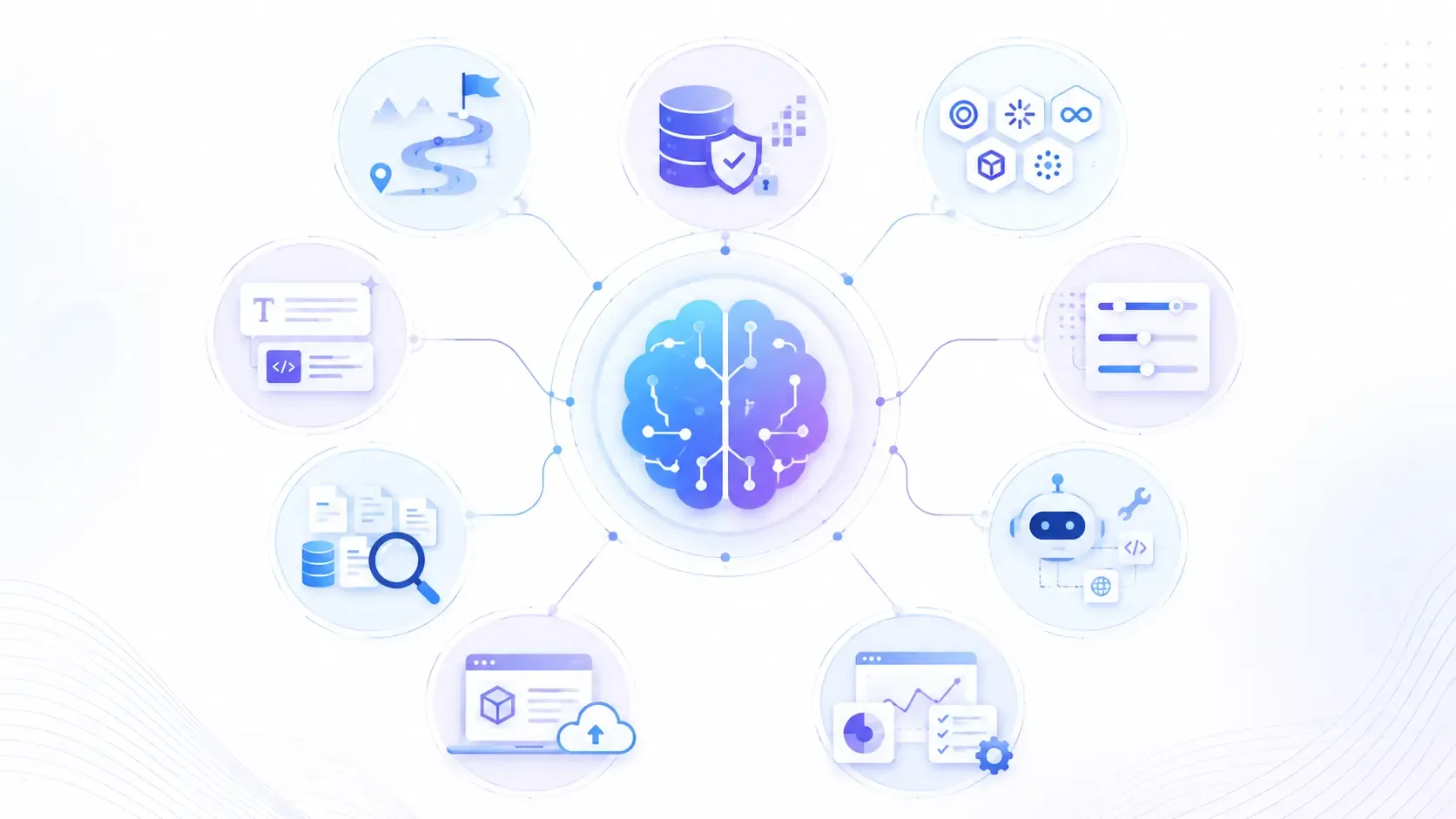
- OpenAI Privacy Filter is a small (1.5B params, 50M active), open-weight model built specifically to detect and redact PII, not a general-purpose LLM.
- It runs locally and handles long inputs (128K tokens), so sensitive data can be masked before it ever reaches an external AI model or database.
- It detects 8 categories: names, addresses, emails, phone numbers, URLs, dates, account numbers, and secrets like API keys and passwords.
- It's a token-classification model that labels sensitive spans in one pass, it doesn't generate or rewrite text.
- It's not a complete privacy solution on its own: it can miss unusual identifiers, over-redact ambiguous text, and should be tested on your own data before production use.
AI teams often work with messy data. A developer may paste a stack trace into an LLM, a support team may summarize customer tickets, or an internal AI agent may search through company documents. In all these cases, the input can contain private details like emails, phone numbers, API keys, passwords, account numbers, or internal URLs.
OpenAI Privacy Filter helps reduce that risk by detecting and redacting sensitive information before the data is sent to an AI model or stored in another system. Unlike basic regex rules, it can understand context better and identify private information in unstructured text.
For example, instead of sending a raw log with an API key or customer email, the filter can mask those details first while keeping the useful context intact.
In this article, we’ll look at how OpenAI Privacy Filter works, what it can detect, where it can be used, and what limitations teams should keep in mind before using it in production.
Why Traditional PII Detection Falls Short
Traditional PII detection tools usually work by looking for fixed patterns, such as email addresses, phone numbers, or account numbers. This works well for obvious cases, but real-world data is rarely that clean.
A basic system may catch jane.doe@email.com, but it can struggle with context-heavy information like, “Reach out to our lead architect, John, at the same number we used for the Seattle project.” It may also fail to tell the difference between a public support email and private customer information.
This becomes a bigger problem in AI pipelines, where inputs often come from logs, support tickets, internal documents, chat history, or developer prompts. The data is unstructured, messy, and full of indirect references. Pattern matching alone can miss that context, which increases the risk of sensitive information being sent to an AI model or stored in another system.
Meet OpenAI Privacy Filter
OpenAI Privacy Filter is an open-weight model built for PII detection and redaction in text. It helps identify sensitive information before that text is sent to an AI model, stored in a database, or used in another workflow.
Unlike large generative models, Privacy Filter is designed for one focused task: finding and masking private data. It has 1.5 billion total parameters, with 50 million active parameters, and is built for high-throughput privacy workflows. Since it can run locally, teams can redact sensitive data before it leaves their environment.
The model supports long inputs with a 128,000-token context window and labels text in a single pass, which makes it useful for logs, internal documents, support tickets, code snippets, and other unstructured data used in AI pipelines.
Privacy Filter detects eight categories of sensitive data:
- Private person
- Private address
- Private email
- Private phone
- Private URL
- Private date
- Account number
- Secrets, such as API keys, passwords, and authentication tokens
To test this in practice, I built a local UI and ran the model across different enterprise scenarios, including document intake, developer logs, and sensitive workflow data.
Use Case #1: Document Intake & Compliance Workflows
If you handle medical notes, real estate leases, or HR onboarding forms, data storage is a compliance minefield. You need the general context of the document without the liability of storing the exact identifiers.


In this intake scenario, the filter acts as a sanitation layer before the data ever hits your database. In this example, the model successfully strips out the patient's name, their exact dates of treatment, and financial routing numbers, while preserving the structural clinical notes that actually matter for downstream analytics.

Walk away with actionable insights on AI adoption.
Limited seats available!

Use Case #2: Secret Detection in Developer Workflows
For most engineering teams, this may be the most immediately useful category. The secret class is one of the standout features of this release. Accidental credential leaks in logs, stack traces, and config snippets are a leading cause of enterprise breaches.


Look closely at the highlighted vulnerabilities here. The model doesn't just look for standard words; It can identify many credential like strings, including API keys and authentication tokens, even when they appear inside larger logs or stack traces.
By running this locally in your CI/CD pipeline, you can add an additional redaction layer before logs reach observability systems, reducing the risk of accidental credential exposure.
How OpenAI Privacy Filter Works?
OpenAI Privacy Filter does not generate text like ChatGPT. Instead, it works as a bidirectional token classification model, which means it reads the input text and identifies which tokens belong to sensitive information.
In simple terms, the model scans the full sequence and labels parts of the text that may contain private data. These labels help it detect complete sensitive entities, such as a full name, phone number, API key, private URL, or account number.
Internally, it uses sequence labeling techniques such as BIOES tags and Viterbi decoding. These help the model understand where a sensitive entity starts, continues, and ends.
This matters because privacy redaction needs clean boundaries. You do not want a model to mask only half of a name or part of an API key. OpenAI Privacy Filter is designed to produce cleaner redactions around full phrases or credentials, making the output more usable in real-world AI pipelines.
Limitations of OpenAI Privacy Filter
OpenAI Privacy Filter is useful for detecting and redacting sensitive data, but it should not be treated as a complete privacy solution. It reduces risk, but it does not remove the need for proper security, compliance, and data governance.
It can miss some sensitive data:
Like any machine learning model, Privacy Filter may miss unusual names, organization-specific IDs, internal codes, or new credential formats. This is why teams should not rely on it as the only layer of protection.
It can sometimes over-redact content:
When the context is unclear, the model may mask information that is not actually sensitive. This may be safer from a privacy perspective, but it can reduce the usefulness of the remaining text.
It works within fixed detection categories:
Privacy Filter detects sensitive data based on its supported label categories. If your organization needs to protect custom terms, client names, internal project codes, or domain-specific identifiers, you may still need additional rules or custom validation.
Performance can vary across use cases:
Results may differ depending on language, naming patterns, document type, and industry-specific terminology. A workflow using healthcare notes may behave differently from one using legal contracts, financial records, or developer logs.
It should be tested before production use:
Teams should evaluate Privacy Filter on their own datasets before deploying it in real workflows. This helps identify missed entities, false positives, and cases where human review or extra privacy controls are needed.
It should be part of a broader privacy strategy:
In sensitive environments such as healthcare, finance, legal, or government systems, Privacy Filter should work alongside access controls, encryption, logging policies, retention rules, and compliance reviews.
Walk away with actionable insights on AI adoption.
Limited seats available!
Final Thoughts
OpenAI's Privacy Filter addresses a real, recurring problem: sending sensitive data to external AI models with no safety layer in between. Running it locally removes a common friction point for enterprise AI adoption, especially for teams that can't send data outside their environment at all.
If you are building AI agents, indexing internal company wikis, or just tired of panicking over what your team is pasting into chat windows, it's worth testing a local filter like this in your pipeline. If you want help evaluating or wiring it into an existing system, that's the kind of thing our AI Integration team does regularly.
Frequently Asked Questions
What is OpenAI Privacy Filter?
OpenAI Privacy Filter is an open-weight model designed to detect and redact sensitive information in text. It helps mask PII, secrets, account numbers, private URLs, and other sensitive data before the text is sent to AI models or downstream systems.
How does OpenAI Privacy Filter work?
OpenAI Privacy Filter works as a bidirectional token classification model. Instead of generating text, it scans the input, labels sensitive tokens, and redacts complete entities such as names, emails, phone numbers, API keys, private URLs, and account numbers.
Can OpenAI Privacy Filter run locally?
Yes. OpenAI Privacy Filter can run locally, which means sensitive data can be detected and redacted before it leaves your environment. This makes it useful for AI pipelines, internal tools, developer logs, and enterprise workflows.
What types of sensitive data can OpenAI Privacy Filter detect?
OpenAI Privacy Filter detects categories such as private person, private address, private email, private phone, private URL, private date, account number, and secrets like API keys, passwords, and authentication tokens.
Why is local PII redaction important for AI applications?
Local PII redaction helps reduce the risk of sending private customer data, credentials, internal URLs, or sensitive documents to external AI systems. It adds a privacy layer before data is processed, stored, or used by an AI model.
Is OpenAI Privacy Filter better than regex-based PII detection?
OpenAI Privacy Filter can handle context better than basic pattern matching. Regex works well for obvious formats like emails or phone numbers, but Privacy Filter is better suited for messy, unstructured text where sensitive data may appear in different forms.
Can OpenAI Privacy Filter detect API keys and passwords?
Yes. OpenAI Privacy Filter includes a secret category that can detect sensitive credentials such as API keys, passwords, and authentication tokens. This makes it useful for developer workflows, logs, stack traces, and CI/CD pipelines.

Seerin
I am an AIML intern and AI enthusiast passionate about solving real-world problems using artificial intelligence and building practical, impactful solutions.
Walk away with actionable insights on AI adoption.
Limited seats available!