A great product idea can feel exciting in the beginning, but turning that idea into a usable MVP is where real challenges start to appear. The journey is rarely linear, and most teams run into avoidable obstacles long before launch.
I wrote this guide to make those obstacles easier to identify early, because the success of an MVP often depends less on the idea itself and more on how clearly the product is defined, prioritized, built, and validated.
At its core, a minimum viable product is the simplest version of a product that allows you to test assumptions, gather feedback, and learn from real users without overbuilding too early.
The Purpose and Benefits of an MVP
Before addressing the obstacles, it helps to understand why MVP development matters in the first place.
An MVP is not just a smaller version of a product. It is a strategic way to validate assumptions, reduce waste, and build with greater confidence.
For startups and new product teams, this approach lowers risk while creating space for learning before full-scale development begins.
Purpose: Checking Your Assumptions at the Door
The primary purpose of an MVP is to validate assumptions before committing significant time, money, and effort.
Instead of building a complete product based on internal assumptions, an MVP helps teams test whether the market actually wants the solution.
That early validation reduces risk and creates a stronger foundation for future product decisions.

Ouch! The MVP development process helps you avoid this disaster.
Let's consider an example - The Rype App. This language-learning platform started as an MVP with a simple goal - to make language learning flexible, convenient, and affordable.
The founder, Sean Kim, tested the waters by creating a landing page to gauge interest. He answered questions on Quora, and within a day, hundreds of people signed up, validating the idea, and kick-starting the MVP journey.

Their initial offering was far from perfect, but they gathered user feedback, improved, and iterated. Today, Rype App has thousands of users worldwide and continues to expand its services based on real user needs and feedback. That's the power of an effective MVP in action!
Benefit #1: Saving Your Wallet
One of the clearest benefits of an MVP is cost control. By focusing only on essential functionality, teams avoid investing in features that users may never need or use. This allows resources to be allocated more efficiently while reducing the financial risk of building too much, too soon.
With an MVP, you can dodge this bullet. You won't over-invest in features that users don't care about. Instead, you'll build what they want, saving some serious dough in the process.
Benefit #2: Having a Chat with Your Customers
An MVP creates an opportunity to gather direct feedback from early users. That feedback helps teams understand what users value, what they ignore, and what needs improvement before additional investment is made. This makes the product development process more responsive and more aligned with actual user needs.
MVP is not all rainbows and unicorns. MVP development obstacles can pop up repeatedly. Getting your MVP feature prioritization right, managing the MVP cost, and making sure your MVP testing is on point - is the most important path from idea to MVP.
Benefit #3: Test-Driving the Market
An MVP helps test market demand before a full product launch. It allows teams to evaluate interest, identify friction points, and refine the offering based on real-world response. This reduces uncertainty and improves decision-making before scaling further.
Benefit #4: Building Buzz and Securing Funding
A well-executed MVP can also support early traction and investor confidence. Initial user adoption, feedback, and product validation help demonstrate that the idea has real market potential. That makes it easier to build credibility with stakeholders, partners, and potential investors.
Obstacles to MVP Development
MVP development comes with a distinct set of challenges that can affect product quality, speed, and market fit if not addressed early. These obstacles are common, but they are manageable when teams approach development with clarity, prioritization, and structured execution. Understanding them upfront helps reduce risk throughout the product journey.
Obstacle #1: Unclear Vision and Objectives
A vague product vision is one of the earliest and most damaging MVP development obstacles. Without clear objectives, teams struggle to define priorities, evaluate trade-offs, and make consistent product decisions.
A clear vision keeps the MVP focused on solving a specific problem for a specific user group. If your answer is "Uhmm not yet," we need to talk about the first of the MVP development obstacles.
Defining a Clear Product Vision
A clear product vision acts as a decision-making framework throughout MVP development. It helps teams stay aligned on what the product should achieve and what it should not attempt in its early stage.
This prevents scope drift and supports faster, more confident execution. It's not just about creating something cool; it's about creating something that fulfils a need.
Identifying Target Audience and Core Features
An MVP becomes more effective when the target audience is clearly defined. Once the audience is understood, it becomes easier to identify the core features required to solve their most important problem.
This helps teams avoid unnecessary additions and keep the product viable from the start. Once you know who you're talking to, it's time to decide what to say - in other words, your core features. These should be the absolute essentials, the things without which your product just wouldn't be itself.
Obstacle #2: Feature Prioritization

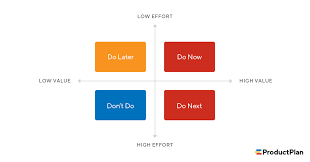
Feature prioritization is one of the most difficult parts of MVP development. The challenge is not choosing everything that sounds useful, but identifying the smallest set of features that delivers real value. Strong prioritization protects time, budget, and product focus.
Challenges in Determining the Minimum Set of Features
Defining the minimum feature set requires discipline. The MVP must be functional enough to solve a problem, but lean enough to avoid unnecessary complexity. Getting this balance right is critical to building something viable rather than overloaded. The key here is to focus on the 'V' in MVP viable.
Your features need to make your product not only functional but also appealing to your early adopters. But hey, no one said it's easy to pick your MVP's winning features.
Balancing User Needs and Available Resources
MVP development always operates within constraints such as time, budget, and available talent. The goal is to prioritize features that matter most to users while staying realistic about what can be built well. This balance is where many MVP decisions either create momentum or create waste.
With limited time, money, and manpower, you need to choose what goes into your MVP and what doesn’t. And this isn't about just stuffing in as many features as possible; it's about finding that sweet spot between satisfying your users and not breaking the bank.
Obstacle #3: Technical Complexities
Technical complexity often becomes a major obstacle once MVP planning moves into execution. Even simple product ideas can involve multiple systems, integrations, and infrastructure decisions that affect reliability and scalability.
Addressing these early helps avoid delays and costly rework later in the process. But there's still a significant hurdle to cross: the tech stuff. You know, all the ones and zeros that make your product work. And let's be real, it can get pretty tricky.
Build Lean. Learn Fast.
Launch an MVP that saves money while proving your concept works.
When you start dealing with technicalities in the MVP development process, it feels like you're learning a new language. Let's decode some of these common mistakes to avoid when building your MVP and other MVP development obstacles.
Integration of Technologies and External APIs
Many MVPs rely on external APIs and third-party technologies to deliver core functionality. The challenge is that every integration introduces dependencies, technical constraints, and implementation complexity. Careful planning is required to ensure these systems work together without compromising the user experience.
APIs are like translators that allow different technologies to communicate.
For example, if you want your app to display data from a Fitbit or an Apple Watch, you'll need to use their APIs. The tricky part? Each API has its own set of rules. Just imagine trying to communicate with people from different countries, all speaking different languages!
| APIs | Integration Challenges |
Fitbit API | Requires OAuth 2.0 for authentication |
Apple HealthKit | Only available for iOS apps, not web applications |
Garmin Connect IQ | Limited data availability and requires user permission |
With the right MVP development services, you can overcome these challenges and create a seamless user experience.
Scalability and Security Concerns
Scalability and security are often underestimated during MVP development. An MVP does not need enterprise-level complexity, but it should still be built with enough structure to handle growth and protect user data. Ignoring these areas too early can create serious technical and trust-related issues later.
Imagine your MVP becomes a hit overnight (Hey, a startup can dream, right?). Suddenly, you've got thousands, or even millions, of users. Awesome? But can your MVP handle the load? And here's where the concept of scalability steps onto the stage. It's all about guaranteeing your MVP can flex and grow alongside your expanding user base, without any stumbles.
Take the case of an AI language model like ChatGPT. The team behind it launched it with fingers crossed, hoping for a warm reception. And was it a hit? You bet! Users worldwide were quick to jump on board, making it a success overnight.

But here's the twist: the sudden influx of users was more than what the initial infrastructure could handle. The server load skyrocketed, leading to slower response times and, in some cases, the service becoming temporarily unavailable.
The takeaway here? Scalability matters. It's not just about building an MVP that works now, but one that can handle growth in the future. This incident serves as a crucial reminder that while getting your MVP to the market is important, ensuring it can smoothly handle an increase in user load is equally vital.
And this is where MVP development services come into the picture, helping you build an MVP that's not just viable, but scalable too.
And then, there's security. With cyber threats at every corner, protecting your users' data is not just a nice-to-have; it's a must. You wouldn't want your MVP to make headlines for the wrong reasons, would you?
Luckily, choosing the right MVP development agency can help you address these concerns, ensuring that your MVP is not just viable, but also scalable and secure.
Obstacle #4: Resource Limitations
Resource limitations affect nearly every MVP project. Time, budget, and team capacity all shape what can be built, how well it can be built, and how quickly it can go live. Managing these limits effectively is essential to keeping the project realistic and sustainable.
Managing Time, Budget, and Human Resources
MVP development requires disciplined resource planning. Overspending, rushing, or misallocating work can weaken the product and slow progress instead of accelerating it. A stronger outcome usually comes from aligning scope with available time, budget, and team capability.
Time is one resource you can't afford to waste. Sure, you want your MVP out there ASAP but rushing can lead to oversights that cost more time in the long run. And then there's the budget. Managing MVP cost is like walking a tightrope. You want to build the best MVP possible, but not at the expense of running your bank account dry.
And of course, there's your team. Every member has their strengths and limitations. Balancing these to ensure your MVP is top-notch, now that's a challenge.
| Resource | Challenges | Examples |
Time | Striking the balance between speed and quality | Spending too little time on testing might save you a few days, but can lead to bugs that cost you weeks to fix later |
Budget | Making sure the MVP cost doesn't drain your funds | Opting for a cheaper, inexperienced developer might save you money upfront but could lead to higher costs in the long run due to mistakes and rework |
Human Resources | Allocating tasks according to team member capabilities | Assigning complex coding tasks to a junior developer might overburden them and lead to subpar outcomes |
Efficient Project Management and Prioritization
Effective project management keeps MVP development structured and achievable. Clear priorities, defined responsibilities, and realistic milestones help teams move faster without losing focus. This becomes even more important when multiple functions such as design, development, and testing must progress together.
With several tasks to handle - from design to coding to testing - prioritizing becomes crucial. Think of it like whipping up a fancy dinner. You can't chop veggies, stir the sauce, and roast the chicken all at once, can you? You need to decide the order of operations - what comes first, what follows, and so on. That's what prioritizing in the face of MVP development obstacles is all about.
Consider the example of SpaceX, Elon Musk's ambitious venture. SpaceX's goal wasn't just bold; it was borderline outrageous - making space travel as common as air travel. Now, that's a monumental task with an almost endless list of things to do. So how did SpaceX handle it?
They used efficient project management and prioritization.

Instead of trying to tackle everything at once, they broke down their vision into manageable milestones - first, develop a reliable and reusable rocket (the Falcon 1), then, transport cargo to the International Space Station (Dragon spacecraft), and so on.
Every step was a project in itself, and each project was managed with clear objectives, timelines, and assigned tasks. And while there were setbacks, this approach allowed SpaceX to achieve its goals one at a time without being overwhelmed by the magnitude of its vision.
Let's not forget that a well-balanced project not only keeps the MVP development process on track but also makes sure that time, budget, and human resources are used wisely.
Obstacle #5: User Feedback and Validation
You've built an MVP that you're proud of. It's time to take it for a spin and see what users think. But gathering meaningful feedback and validating your MVP can be as tricky.
Here's why:
Obtaining Meaningful Feedback from a Limited User Base
Early-stage MVPs often launch to a small user base, which makes feedback harder to interpret. A few responses can feel significant, but they may not always reflect the needs of the broader target audience. This is why feedback quality matters more than feedback volume.
Remember the initial version of Instagram? It started as Burbn, a check-in app with a plethora of features. The founders noticed that users loved one feature in particular - photo sharing.

So, they focused solely on that feature and rebranded it as Instagram. They obtained meaningful feedback, acted on it, and, well, the rest is history.
Identifying the Right User Group and Incentivizing Feedback
Feedback becomes more useful when it comes from the right users. Identifying early adopters or highly relevant user groups improves the quality of validation and reduces noise in decision-making. In some cases, incentives can also help increase participation and response quality.
But here's the thing, you're not just looking for any feedback. You want insight from people who represent your target audience. That's like trying to catch a specific fish in the middle of the ocean.
| User Group | Feedback Incentives |
Early Adopters | Exclusive access to new features |
Tech Enthusiasts | Opportunity to contribute to the product's development |
Potential Customers | Discounts or free services |
Obstacle #6: Iterative Development
MVP development works best when treated as an iterative process rather than a one-time build. The goal is to launch with a focused version, learn from user behavior, and improve continuously based on evidence. This mindset allows the product to evolve more intelligently over time.

Shifting from Linear Development to an Iterative Mindset
A linear development mindset can slow down learning and make teams overly attached to early assumptions. An iterative approach keeps the MVP flexible, allowing changes to be made as new information emerges. This makes the product more adaptable and more aligned with real user needs.
MVP development is more like creating a sculpture. You start with a basic shape (your MVP) and then refine it, bit by bit, based on feedback. You're not just creating a product; you're continuously improving it.
Take the case of AllTrails, a hiking trail discovery app. Its MVP started merely as a database of trails. Over time, through iterative improvements based on user feedback, they introduced features like trail reviews, offline maps, and more.

Today, it's a must-have app for outdoor enthusiasts.
Importance of Continuous Improvement and Adaptation
Continuous improvement is what helps an MVP stay relevant in changing markets. As user behavior, competition, and market expectations shift, the product needs to adapt without losing direction. An MVP that improves through evidence has a stronger chance of reaching product-market fit.
Whether it's a new competitor, a change in user preferences, or even a global pandemic (remember 2020?), an iterative mindset allows you to pivot and keep your MVP relevant.
Obstacle #7: Time Constraints
Time constraints can force difficult trade-offs during MVP development. Teams often need to launch within a specific window while still maintaining enough quality and usability to support learning. This makes time management and feature discipline especially important.
Delivering an MVP within a Specific Timeframe
An MVP must often be delivered within a limited timeframe to capture opportunity and start learning sooner. The challenge is to move quickly without allowing deadlines to reduce product clarity or stability. A realistic delivery plan helps teams launch on time with fewer compromises.
| Task | Estimated Time |
Defining MVP Goals | 1 Week |
Identifying Core Features | 2 Weeks |
Developing the MVP | 6-8 Weeks |
Testing the MVP | 1-2 Weeks |
Gathering and Analyzing Feedback | 1 Week |
Making Improvements | 3-4 Weeks |
Launching the MVP | 1 Day |
Managing Time Effectively and Focusing on Essential Features
Time management in MVP development depends heavily on deciding what truly matters in the first release. When teams focus on essential features, they reduce delays and increase the likelihood of shipping something usable. This keeps the MVP lean while preserving its ability to validate the core idea.

Remember Peek, the tour booking platform? Initially, it had an extensive list of features, but the team realized users loved the tour booking feature the most. So, they decided to focus on that, refining and perfecting it, leading to an MVP that resonated with users worldwide.
Obstacle #8: Quality Assurance
Quality assurance plays a critical role in MVP development, even when speed is a priority. A fast launch loses value if the product is unstable, confusing, or broken in ways that affect user trust. The goal is to protect usability and reliability without overcomplicating the release process.
Build Lean. Learn Fast.
Launch an MVP that saves money while proving your concept works.
Testing and Ensuring the Quality of the MVP
Testing helps ensure the MVP performs as expected under real usage conditions. It identifies bugs, functional issues, and experience gaps before they affect user confidence. Even a lean MVP should meet a baseline level of quality to support useful feedback and adoption.
It's about taking your MVP on a tough fitness test, spotting any weaknesses, and strengthening them. It's about looking for bugs (those pesky little problems that can make things go haywire) and fixing them. And then, just for good measure, we test it all over again.
Remember that cool meditation app, Headspace? Its MVP was filled with unique features to make meditation easy for everyone. But without thorough testing and quality assurance, those features would have just been good ideas on paper. Through rigorous quality checks, they turned those ideas into a functional, reliable app loved by millions.
So, when we're talking MVP development obstacles, never underestimate the power of quality assurance.
Balancing Speed and Quality in the Development Process
One of the hardest parts of MVP development is balancing speed with quality. Moving too slowly can delay learning, but moving too fast can introduce issues that undermine the product’s purpose. The right balance comes from focusing on essential functionality while maintaining a dependable user experience.
The MVP development process is a delicate balance between speed and quality. And finding that balance is crucial in overcoming these MVP development obstacles.
Obstacle #9: User Experience (UX) Design
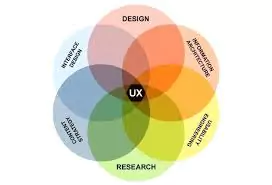
User experience design has a direct impact on how users perceive and interact with an MVP. Even if the underlying idea is strong, poor navigation or confusing flows can reduce adoption and distort feedback. A usable MVP gives users a fair chance to understand the product’s value.
MVP UX Design Ouch! Not quite the user reaction we were hoping for, right?
Creating a Seamless and Intuitive User Experience
A strong MVP UX should feel simple, intuitive, and easy to navigate. The goal is not perfect polish, but enough clarity for users to complete key actions without friction. This improves usability and makes feedback more meaningful.
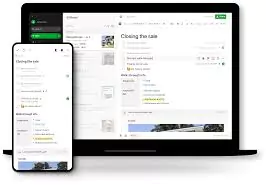
Think about Evernote, the note-taking app. It wasn't the first, but what set it apart was its intuitive UX design. It made note-taking simple, efficient, and fun, leading to a loyal user base worldwide.
Understanding User Expectations and Conducting Usability Tests
Usability testing helps teams understand whether the MVP matches user expectations. It reveals where users hesitate, get confused, or fail to complete important tasks. These insights make UX improvements more targeted and more effective.
In the MVP development process, UX design plays a critical role. Without it, even the best ideas can fall flat.
| Task | Importance |
Understanding User Preferences | Crucial for effective UX design |
Sketching UI Layouts | Helps in visualizing user interface |
Developing Wireframes | Sets the structure of the MVP |
Creating Interactive Prototypes | Allows testing and refinement |
Conducting Usability Tests | Gathers user feedback on design |
Making Improvements | Refines the UX design |
Finalizing the Design | Prepares MVP for launch |
Whether it's meticulous quality checks or empathetic UX design, these MVP development obstacles are part and parcel of the journey from idea to MVP. But with the right approach and the assistance of an expert MVP development company like F22 Labs, you can tackle these obstacles and come out on top.
Obstacle #10: Marketing and User Adoption
Even a well-built MVP can struggle without a clear launch and adoption strategy. Marketing is what helps the product reach the right users, while user adoption validates whether the value proposition resonates. Without traction, it becomes harder to gather feedback, build momentum, or justify further investment.
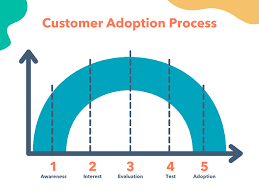
Launching the MVP Successfully and Gaining Traction
A successful MVP launch requires more than making the product available. It needs a focused rollout strategy, a clear message, and enough momentum to generate early usage. Traction matters because it creates the conditions needed for validation and iteration.
Do you remember how Slack emerged on the scene? It was a new player in a crowded market. Yet, through a successful launch and continuous marketing efforts, it quickly gained traction and is now a go-to tool for team communication.
Effective Marketing Strategies and User Acquisition
Marketing and user acquisition should be aligned with the MVP’s target audience and stage of growth. The goal is to attract relevant users, communicate the core value clearly, and convert attention into product usage. A focused strategy improves both reach and the quality of early adoption.
Check out how Canva did it. It leveraged social media and influencer marketing, offering simple design solutions to non-designers. This effective marketing strategy helped them acquire millions of users globally.
| Strategy | Outcome |
Social Media Marketing | Greater brand visibility |
Content Marketing | Educates and engages the audience |
Email Marketing | Personalized user outreach |
Influencer Marketing | Expands reach and credibility |
SEO | Increases organic visibility |
Paid Advertising | Quickly attracts potential users |
Referral Programs | Encourages word-of-mouth marketing |
FAQ
1. What are the biggest obstacles to MVP development?
Unclear vision, feature prioritization, technical complexity, limited resources, and poor user validation.
2. Why is feature prioritization important in MVP development?
It helps teams focus on essential functionality without wasting time or budget.
3. How do startups overcome MVP development obstacles?
By defining clear goals, building lean, gathering feedback, and improving iteratively.
4. Why is user feedback important for an MVP?
It helps validate assumptions and guides better product decisions.
5. What is the role of quality assurance in MVP development?
It ensures the MVP is stable, usable, and reliable enough for real users.
6. How does marketing affect MVP success?
Marketing helps attract early users, generate traction, and support product validation.
Conclusion
MVP development is rarely free from obstacles, but most of those challenges become easier to manage when they are identified early.
Clear vision, disciplined prioritization, technical planning, user feedback, quality assurance, and focused adoption strategies all play a role in shaping a stronger MVP.
The goal is not to build everything at once. It is to build the right foundation, learn from real users, and improve with purpose.
If you are navigating MVP development obstacles and want a more structured path from idea to execution, F22 Labs can help you move forward with clarity and confidence.