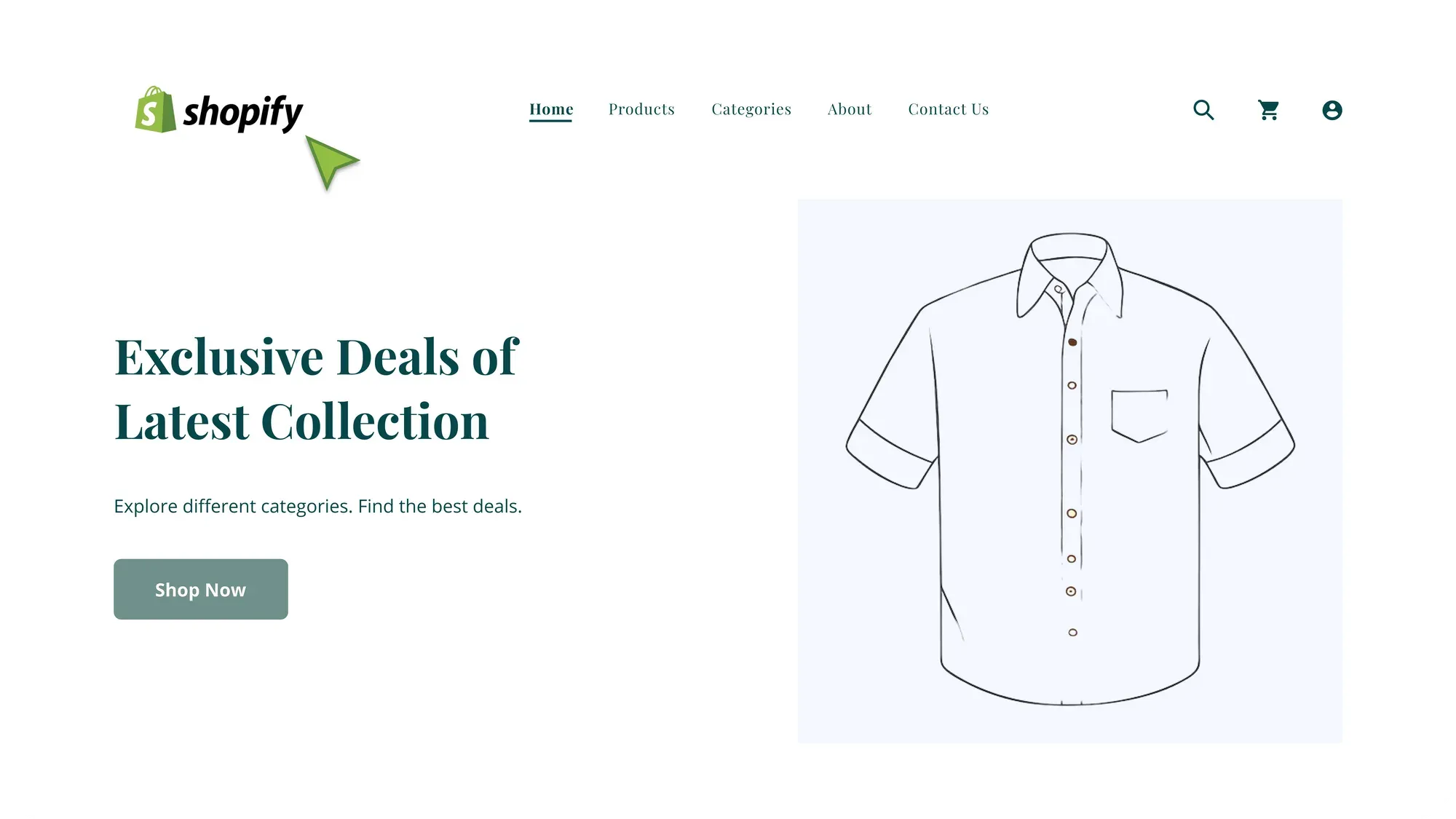
- Check whether your theme provides a logo-link setting before editing code.
- Duplicate the theme before making changes.
- The logo markup is commonly found in
sections/header.liquid, but filenames vary.- Find the existing logo link containing
routes.root_url.Replace only its href value rather than copying markup from another theme.- Use the Shopify product object instead of hard-coding
/products/.- Test desktop, mobile, sticky, and transparent header variations.
- Keep a visible Home link because visitors expect the logo to return home.
- Document the edit because a future theme update may not carry it forward.
A Shopify theme normally links its header logo to the homepage. However, a single-product store, temporary campaign, or focused landing experience may benefit from directing that logo to a particular product page.
The change requires only a small Liquid edit, but it should be made carefully. Customers generally expect a website logo to return them to the homepage. Changing that convention can make navigation less predictable unless the store provides another obvious Home link.
This guide explains how to change the Shopify logo link safely, test it and restore the original behaviour later.
Should Your Shopify Logo Link to a Product?
Changing the logo destination can make sense when:
- The store sells only one primary product.
- The homepage already functions as a campaign landing page.
- A temporary promotion directs all traffic towards one product.
- The store has a clear Home link elsewhere in the header.
- Navigation behaviour has been tested with real users.
It is usually better to retain the homepage link when:
- The store has several product categories.
- Customers frequently use the logo to restart their journey.
- The header does not contain a separate Home link.
- The product is seasonal or frequently replaced.
- Visitors may arrive on product, collection or article pages from search.
For most multi-product stores, adding a prominent header button such as Shop Bestseller is less disruptive than changing the logo’s expected behaviour.
How to Link a Shopify Logo to a Product Page
Step 1: Find the Product Handle
Open the product in your Shopify admin and check its search engine listing or URL.
A product URL may look like this:
https://example.com/products/formal-shirtThe product handle is the part after /products/:
formal-shirtCopy the exact handle. If the handle later changes, the theme code must also be updated.
Step 2: Duplicate Your Shopify Theme
Create a backup before editing the theme:
- From Shopify admin, go to Online Store > Themes.
- Find the theme you want to change.
- Click the three-dot menu.
- Select Duplicate.
- Wait for the copy to appear in the theme library.
Shopify recommends duplicating a theme before code customisation. This gives you a working copy to restore if the edit causes a problem.
Make the change in the duplicate first and preview it before editing or publishing the live theme.
Step 3: Check the Theme Editor
Before changing code:
- Open Online Store > Themes.
- Click Edit theme beside the duplicate.
- Select the header section.
- Review the available logo and link settings.
Most themes do not include a setting for changing the logo destination, but checking first can avoid an unnecessary code edit.
Step 4: Open the Theme Code
If the setting is unavailable:
- Return to Online Store > Themes.
- Click the three-dot menu beside the duplicate.
- Select Edit code.
- Search for
header.liquid.
The logo is commonly located in:
sections/header.liquidHowever, themes use different structures. The code could appear in a header snippet or another section.
If you cannot find it, use Shopify’s code search to look for:
routes.root_urlThen identify the instance wrapping the store logo. Do not change every occurrence because other elements may legitimately link to the homepage.
Step 5: Locate the Logo Link
The existing code may resemble:
<a href="{{ routes.root_url }}" class="header__heading-link">
  {{ settings.logo | image_url: width: 300 | image_tag }}
</a>
Your theme’s code may use different:
- Classes
- Logo variables
- Image filters
- Accessibility labels
- Desktop and mobile markup
Need Help With Shopify Development?
We build fast, custom Shopify stores designed to drive more sales.
Keep the existing anchor, classes, image code and attributes. Change only the destination unless another adjustment is specifically required.
Step 6: Change the Logo Destination
First, assign the product using its handle:
{% assign logo_product = all_products['formal-shirt'] %}Replace formal-shirt with the actual product handle.
Then change the logo anchor’s href value from:
href="{{ routes.root_url }}"to:
href="{{ logo_product.url | default: routes.root_url }}"A simplified result may look like:
{% assign logo_product = all_products['formal-shirt'] %}

<a
  href="{{ logo_product.url | default: routes.root_url }}"
  class="header__heading-link"
>
  {{ settings.logo | image_url: width: 300 | image_tag }}
</a>
The default fallback sends visitors to the homepage if Shopify cannot find the product. This is safer than producing an empty destination.
Using the product’s generated url is also preferable to hard-coding:
href="/products/formal-shirt"The generated URL is easier for Shopify to handle within its storefront routing and market configuration.
Do not replace your complete logo block with the example above. Preserve the markup from your theme and change only the relevant parts.
Step 7: Review the Accessible Link Name
Some themes add an aria-label to the logo link:
aria-label="{{ shop.name }}"Others use visually hidden text or the logo image’s alt text.
If the current accessible label says “Home,” it will become inaccurate after changing the destination. Update it so the link’s purpose is clear, for example:
aria-label="View {{ logo_product.title | escape }}"Do not remove existing accessibility attributes without understanding their purpose.
Step 8: Check for Multiple Logo Links
Some themes contain different logo markup for:
- Desktop headers
- Mobile headers
- Sticky headers
- Transparent headers
- Drawer navigation
- Password pages
Search the header code for additional instances of:
routes.root_urlChange only the instances associated with logos that should use the new destination.
If one logo points to the product while another returns home, customers will experience inconsistent navigation across devices.
Step 9: Save and Preview the Theme
Click Save, then preview the duplicate theme.
Test the logo from:
- Homepage
- Product page
- Collection page
- Cart page
- Blog article
- Search results
- Customer account area, where applicable
- Desktop
- Mobile
- Sticky header state
Confirm that:
- The intended product opens.
- The product is active and available to the Online Store channel.
- The destination works in each market or language.
- The logo remains visually correct.
- Keyboard users can activate the link.
- Screen readers receive an accurate link label.
- Customers still have an obvious path to the homepage.
Once testing is complete, publish the duplicate or repeat the verified change in your live theme.
An Easier Alternative: Add a Header Product Link
Changing the logo destination breaks a widely recognised navigation convention. A dedicated header link is usually safer.
Depending on your theme:
- Go to Online Store > Navigation.
- Open the menu used in the header.
- Click Add menu item.
- Enter a label such as Shop Our Bestseller.
- Select the product as the destination.
- Save the menu.
Some themes also support a header button or promotional block. This gives the product prominence while allowing the logo to continue linking home.
How to Restore the Logo’s Homepage Link
To restore the default behaviour, replace:
href="{{ logo_product.url | default: routes.root_url }}"with:
href="{{ routes.root_url }}"You can also remove this line if nothing else uses the variable:
{% assign logo_product = all_products['formal-shirt'] %}Save the file and retest every header variation.
Shopify’s code editor includes a Timeline view for restoring previous versions of modified files, although its history is finite and should not replace a duplicated-theme backup.
What Happens When the Theme Is Updated?
Shopify theme updates generally create an updated copy of the theme. Custom code changes that are incompatible with the update might not carry across.
Need Help With Shopify Development?
We build fast, custom Shopify stores designed to drive more sales.
Document:
- The edited filename
- The original code
- The replacement code
- The product handle
- The date of the change
- The reason for the customisation
After an update, compare the new header file with the customised version and reapply the change carefully if it is still required.
Common Problems and Fixes
The logo still opens the homepage
Your theme may contain more than one logo link. Search all theme files for routes.root_url and inspect the logo markup used by the current header layout.
The logo opens a blank or incorrect page
Verify that the product handle in all_products['formal-shirt'] exactly matches the handle shown in the Shopify admin.
It works on desktop but not mobile
The theme probably renders separate mobile logo markup. Find the mobile header link and update its destination consistently.
The product returns a 404 error
Confirm that the product is active, published to the Online Store sales channel and available in the visitor’s market.
The change disappeared after a theme update
The updated theme copy may not include your custom code. Compare it with your documented modification and reapply the edit if it remains compatible.
The theme no longer saves
Restore the original file through Timeline or return to the duplicated backup. A missing Liquid tag, bracket or quotation mark can prevent the template from compiling correctly.
Frequently Asked Questions
Can a Shopify logo link to a product instead of the homepage?
Yes. Locate the logo anchor in the theme code and replace its homepage destination with the selected product’s generated URL. Duplicate and preview the theme before publishing the change.
Which Shopify file contains the logo link?
Many themes place it insections/header.liquid, but the location is not universal. Search the theme code forroutes.root_url, then identify the anchor surrounding the visible logo.
Should I hard-code the product URL?
Using all_products['product-handle'].url is generally more robust than writing /products/product-handle directly. Include routes.root_url as a fallback in case the specified product cannot be found.
Is changing the Shopify logo link bad for UX?
It can be. Visitors commonly expect a logo to open the homepage. Keep a clearly visible Home link, test customer behaviour and consider using a dedicated product button instead.
Will changing the logo link affect SEO?
The edit is unlikely to create a direct ranking problem, but it changes sitewide internal linking. Ensure the homepage remains accessible through navigation and retains sufficient contextual internal links.
Can I link the logo to a collection or custom page?
Yes. Replace the destination with the relevant Shopify object URL or page link. The exact Liquid code differs for products, collections and pages, so avoid assuming one example fits everything.
Can I make the logo link temporary?
Yes. Document the original code and schedule a reminder to restore it after the campaign. Also confirm that the linked product remains active throughout the promotional period.
Do I need a Shopify app for this change?
No. A small Liquid edit is usually sufficient. If your theme has complex header variants or you are uncomfortable editing code, consider asking a developer to make and test it.
Conclusion
Making a Shopify logo link to a product page requires only a small code change, but the navigation impact is broader than the implementation suggests.
Duplicate the theme, locate the actual logo anchor, and use the product object’s generated URL with a homepage fallback. Test every header variation and keep another visible way for visitors to return home.
For most multi-product stores, a dedicated header link or call-to-action is the safer choice. Change the logo destination only when the store structure or campaign provides a clear reason for overriding a familiar navigation convention.
If the header contains multiple layouts or custom Liquid logic, you can hire Shopify experts to make the change without affecting mobile navigation or future theme maintenance.