FinTech App Development: Complete Guide for Startups
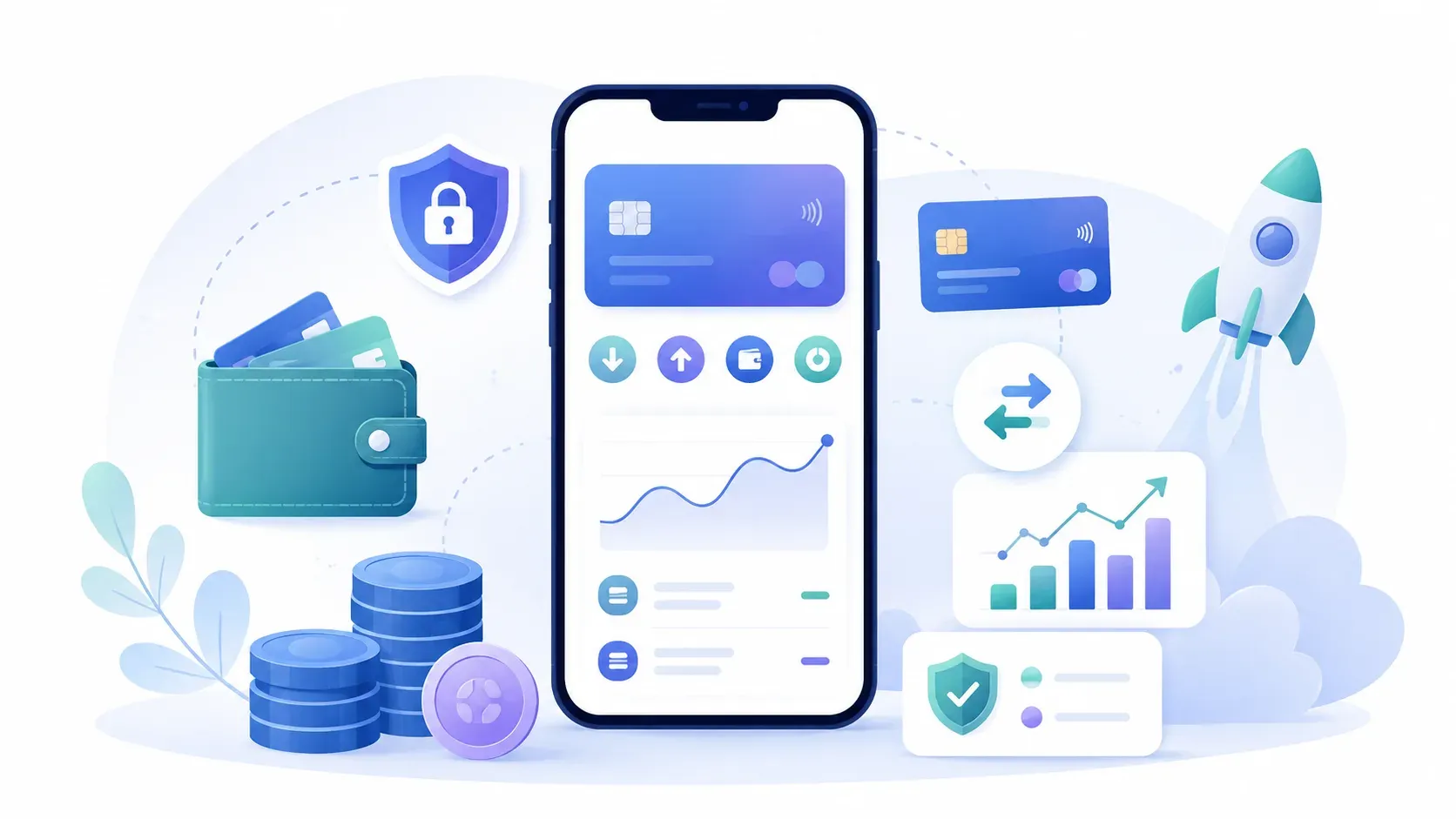
A fintech startup does not fail only because of weak features. It can fail because users do not trust the app, onboarding takes too long, transactions break, compliance is unclear, or the first version becomes too complex to launch.
That is why fintech app development needs a different approach from regular app development. Startups have to move fast, but they also need secure payment flows, reliable data handling, fraud prevention, smooth KYC, and a product experience that makes users feel safe from the first interaction.
In this guide, we’ll break down how to develop a fintech app from idea to launch, including fintech app types, must-have features, compliance, security, development process, cost, and mistakes startups should avoid before building the first version.
What Is FinTech App Development?
FinTech app development is the process of building web or mobile apps that help users manage money, make payments, borrow, invest, insure, or track financial activity.
Unlike regular apps, fintech apps handle sensitive financial data and real transactions. That means fintech mobile app development must focus on security, compliance, fraud prevention, reliable payments, and user trust from the start.
Types of FinTech Apps
The type of fintech app you build depends on the financial problem you want to solve. Some apps focus on moving money, some help users access credit, while others help people manage, invest, or protect their money.
1. Payment and Money Transfer Apps
These apps help users send, receive, and manage payments digitally. They may support peer-to-peer transfers, bill payments, merchant payments, QR payments, payment links, or payment gateway integrations.
2. Digital Wallet Apps
Digital wallet apps allow users to store money, link cards or bank accounts, make payments, and track transactions. For startups, wallet apps need strong focus on transaction reliability, security, and a smooth user experience.
3. Digital Banking Apps
Digital banking apps bring banking services into a mobile or web experience. They can include account management, balance checks, fund transfers, card controls, statements, deposits, and customer support.
4. Lending and Credit Apps
Lending apps help users apply for loans, check eligibility, upload documents, receive approvals, and manage repayments. These apps often need credit scoring, KYC, risk checks, payment schedules, and borrower dashboards.
5. Investment and Wealth Apps
Investment apps help users buy, sell, track, or manage financial assets. They may include portfolio tracking, market data, risk profiling, investment recommendations, and performance reports.
6. Personal Finance Apps
Personal finance apps help users understand and manage their money better. Common features include expense tracking, budgeting, savings goals, subscription tracking, financial insights, and alerts.
7. Insurance Apps
Insurance apps help users compare policies, buy coverage, upload documents, submit claims, and track claim status. The main focus is making a traditionally complex process easier and more transparent.
8. Expense Management Apps
Expense management apps are usually built for businesses. They help teams manage employee expenses, invoice approvals, reimbursements, spending limits, receipts, and financial reporting.
Choosing the right fintech app type early helps startups define the product scope, compliance needs, integrations, security requirements, and MVP features more clearly.
Essential Features of a FinTech App
The essential features of a fintech app should make the product secure, easy to use, and reliable for financial transactions. For startups, the first version should focus on trust, onboarding, money movement, and account management.
1. Secure User Onboarding
User onboarding should help users create an account, verify their identity, and understand the app quickly. For fintech apps, this may include email or phone verification, KYC, document upload, and basic risk checks.
2. User Profile and Account Management
Users should be able to manage personal details, linked accounts, cards, preferences, security settings, and transaction limits. This gives users better control over their financial activity.
3. KYC and Identity Verification
KYC helps verify that users are who they claim to be. This is important for reducing fraud, meeting compliance needs, and allowing safe access to payments, lending, wallets, or investment features.
4. Payment and Transaction Management
Most fintech apps need a smooth way to send, receive, track, or process payments. Users should be able to view transaction status, payment history, failed transactions, refunds, and receipts.
5. Bank Account or Card Integration
Fintech apps often need to connect with banks, cards, payment gateways, or financial APIs. These integrations help users move money, check balances, make payments, or manage financial data inside the app.
6. Security Features
Security features such as multi-factor authentication, encryption, biometric login, session control, fraud alerts, and device monitoring help protect user accounts and financial data.
7. Notifications and Alerts
Notifications keep users informed about payments, account activity, failed transactions, low balances, due dates, approvals, and security alerts. This improves transparency and user trust.
8. Dashboard and Financial Overview
A clear dashboard helps users understand their balance, transactions, spending, loan status, investment performance, or account activity at a glance. The dashboard should make financial information easy to act on.
9. Customer Support
Fintech users need quick support when money is involved. In-app chat, help centers, ticketing, call support, or AI-assisted support can help users resolve payment, account, or verification issues faster.
10. Admin Panel
The admin panel helps the business manage users, transactions, KYC status, disputes, reports, approvals, support tickets, and system activity. It is essential for operations, compliance, and risk monitoring.
These features create the foundation for fintech mobile app development. The goal is to build a first version that users can trust, use easily, and rely on for core financial actions.
Advanced Features for FinTech Apps
Advanced fintech features should not be added just to make the app look more modern. They should solve a specific business problem, such as reducing fraud, improving decision-making, personalizing user experience, or helping the product scale safely.
1. AI-Based Fraud Detection
Fraud detection is one of the most valuable advanced features in fintech apps. It helps identify unusual transactions, suspicious login behavior, risky payment patterns, or account takeover attempts before they cause damage.
Build Lean. Learn Fast.
Launch an MVP that saves money while proving your concept works.
2. Credit Scoring and Risk Assessment
For lending and credit apps, automated risk assessment can help evaluate borrower eligibility, repayment behavior, income patterns, and loan limits. This helps startups make faster and more consistent lending decisions.
3. Open Banking Integration
Open banking allows fintech apps to connect securely with user bank accounts through APIs. It can support account aggregation, faster payments, financial analysis, lending decisions, and personal finance insights.
4. Personalized Financial Insights
Fintech apps can use transaction history, spending behavior, income patterns, or investment activity to give users relevant insights. This can help users track spending, improve savings, reduce unnecessary costs, or make better financial decisions.
5. Real-Time Risk and Transaction Monitoring
Real-time monitoring helps teams track failed payments, unusual activity, chargebacks, KYC issues, suspicious transactions, and system performance. This is especially useful for payment, wallet, lending, and banking apps.
6. Smart Notifications and Alerts
Advanced alerts can go beyond basic reminders. They can notify users about unusual spending, payment failures, low balances, upcoming repayments, large transactions, or account security risks.
7. Biometric Authentication
Biometric login through fingerprint or face recognition improves both security and convenience. It helps users access the app faster while adding another layer of protection for sensitive financial actions.
8. Admin Analytics Dashboard
A strong admin dashboard helps fintech teams monitor users, transactions, revenue, disputes, KYC status, fraud alerts, and operational performance. This gives the business better control as the app scales.
These features should be added based on the app type and business model. A lending app may need credit scoring first, while a wallet app may prioritize fraud detection, transaction monitoring, and payment reliability.
FinTech App Development Process
Fintech app development should start with the financial workflow the product needs to improve. For startups, the process must balance speed, security, compliance, transaction reliability, and user trust from the first version.
Step 1: Define the Financial Problem
Start by identifying the exact problem your fintech app will solve. It could be slow payments, poor expense tracking, difficult loan access, manual KYC, limited financial visibility, or inefficient investment management.
The clearer the problem, the easier it becomes to decide the app type, user flow, compliance needs, and MVP features.
Step 2: Identify Users and Transaction Flows
Define who will use the app and what financial actions they will perform. A customer, merchant, borrower, investor, admin, or finance team will each need different workflows.
Map key flows such as signup, KYC, account linking, payments, transfers, loan applications, repayments, disputes, refunds, or withdrawals.
Step 3: Choose MVP Features
Select only the features needed to make the first version useful and trustworthy. For example, a payment app may need onboarding, KYC, wallet, transaction history, notifications, and admin monitoring.
Avoid building too many features before validating the core financial workflow. In fintech, a simple but reliable MVP is better than a feature-heavy product users do not trust.
Step 4: Plan Compliance and Security
Compliance and security should be planned before development begins. Depending on the app type and market, this may include KYC, AML, data privacy, payment security, audit logs, transaction monitoring, and user consent.
This step helps reduce legal, operational, and trust risks before the app handles real users or real money.
Step 5: Design Clear User Flows
Fintech users need confidence at every step. Signup, verification, payments, account linking, transaction status, and error messages should be simple and transparent.
Good UX is especially important when money is involved. Users should always know what is happening, what action they need to take, and whether a transaction succeeded or failed.
Step 6: Build and Integrate the App
Once the product scope is clear, the development team builds the frontend, backend, database, APIs, admin panel, and security layers.
Fintech apps often need integrations with payment gateways, banking APIs, KYC providers, card services, fraud tools, accounting systems, or notification services.
Step 7: Test Transactions, Security, and Performance
Testing is critical in fintech app development. The app should be tested for payments, failed transactions, refunds, account access, KYC flow, security risks, load handling, notifications, and admin workflows.
This helps ensure the app works reliably before users start trusting it with financial activity.
Step 8: Launch, Monitor, and Improve
After launch, monitor transaction success rates, failed payments, onboarding drop-offs, fraud alerts, support tickets, user retention, and app performance.
Fintech products improve through real usage. Post-launch updates should focus on smoother flows, stronger security, better reliability, and features that support user trust and business growth.
FinTech App Compliance and Security
Fintech apps deal with money, identity, and sensitive financial data. That means compliance and security cannot be treated as backend tasks. They must shape how users sign up, verify identity, move money, access accounts, and recover from failed or suspicious activity.
1. KYC and Identity Verification
KYC helps verify users before they can access financial services. This may include document verification, face checks, address proof, business verification, or risk checks depending on the app type.
For fintech startups, KYC is important because it reduces fraud, supports compliance, and builds trust before users make payments, borrow money, invest, or store funds.
2. AML and Transaction Monitoring
Anti-money laundering checks help detect suspicious financial activity. This is especially important for payment apps, wallets, banking apps, lending platforms, and cross-border transfer products.
Transaction monitoring can flag unusual payment patterns, high-risk users, repeated failed attempts, large transfers, or suspicious account behavior.
3. PCI DSS for Card Payments
If the fintech app stores, processes, or transmits cardholder data, PCI DSS requirements become important. PCI DSS provides technical and operational security requirements to protect payment account data.
For startups, this affects how card data is handled, tokenized, stored, transmitted, and integrated with payment providers.
4. Data Privacy and User Consent
Fintech apps collect personal and financial data, so users should know what data is collected, why it is needed, and how it will be used. Consent, privacy policies, and data access controls should be clear from the beginning.
If the app serves users in regions like Europe, GDPR requirements may apply to how personal data is collected, stored, processed, and deleted.
5. Secure Authentication
A fintech app should protect user accounts with strong authentication. This can include multi-factor authentication, biometric login, OTP verification, device checks, session control, and suspicious login alerts.
This is important because account takeover risk is high when the app handles payments, wallets, cards, loans, or investments.
6. Encryption and Secure APIs
Sensitive financial data should be encrypted while stored and while moving between systems. APIs should also be secured properly, especially when the app connects with banks, payment gateways, KYC providers, card networks, or accounting tools.
Weak API security can expose transaction data, user details, balances, or payment activity.
7. Role-Based Access and Audit Logs
Admins, support teams, finance teams, and compliance teams should not have the same level of access. Role-based access helps limit who can view, approve, edit, or export sensitive financial data.
Audit logs are also important because they show who accessed data, changed records, approved transactions, or handled disputes.
8. Fraud Prevention and Risk Controls
Fintech apps need systems to detect and reduce fraud before it affects users or the business. This can include velocity checks, device fingerprinting, transaction limits, blacklists, risk scoring, and real-time fraud alerts.
For startups, these controls become more important as transaction volume grows.
Security should be part of the fintech app architecture from day one. A startup can launch with a focused MVP, but the product should still be designed to protect user data, reduce fraud risk, and support future compliance needs.
FinTech App Development Cost
FinTech app development cost depends on the app type, features, compliance needs, security requirements, integrations, and platform. A simple finance tracking MVP will cost less than a digital wallet, lending app, investment platform, or banking product.
Build Lean. Learn Fast.
Launch an MVP that saves money while proving your concept works.
In 2026, fintech app development usually ranges from $20,000 to $300,000+. Apps that include KYC, payments, bank integrations, fraud checks, transaction monitoring, or compliance-heavy workflows will cost more than basic financial apps.
| App Type | Estimated Cost |
Basic FinTech MVP | $20,000 – $90,000 |
Personal Finance App | $60,000 – $120,000 |
Payment or Wallet App | $100,000 – $220,000 |
Lending App | $120,000 – $250,000+ |
Investment or Banking App | $150,000 – $300,000+ |
The biggest cost factors include payment gateway integration, KYC/AML checks, bank APIs, fraud prevention, encryption, admin dashboards, compliance planning, UI/UX design, testing, and post-launch maintenance.
The best way for startups to control costs is to begin with a focused MVP. Build the core financial workflow first, validate user trust and transaction reliability, then add advanced features as the product grows.
Common Mistakes to Avoid in FinTech App Development
FinTech app development becomes risky when startups treat the product like a normal mobile app. A fintech app handles money, identity, financial data, and transaction flows, so mistakes can affect trust, compliance, operations, and growth.
Mistake 1: Building Features Before Proving the Core Financial Flow
A fintech MVP should first prove the main financial action, such as sending money, applying for credit, tracking expenses, managing a wallet, or completing a payment. If that core flow is not smooth and reliable, extra features will not matter.
Mistake 2: Treating Compliance as a Later Step
KYC, AML, payment security, data privacy, user consent, and audit logs should be planned before development starts. Adding them later can force major changes to onboarding, data storage, transaction flows, and admin workflows.
Mistake 3: Not Handling Transaction Edge Cases
Fintech apps must clearly handle failed payments, pending transfers, duplicate charges, refunds, disputes, chargebacks, delayed settlements, and account verification issues. These edge cases are where users lose trust fastest.
Mistake 4: Making Onboarding Too Complicated
Fintech users expect security, but they also expect the signup and KYC process to feel simple. If users do not understand why documents are needed, what step comes next, or how long verification takes, drop-offs can increase.
Mistake 5: Underestimating Fraud and Risk Controls
Fraud prevention should not start after the app gains traction. Startups should plan basic risk controls early, such as transaction limits, suspicious activity alerts, device checks, login monitoring, and admin review workflows.
Mistake 6: Ignoring Admin and Operations Workflows
A fintech app is not only the user-facing product. Internal teams need dashboards to manage KYC reviews, failed payments, disputes, refunds, fraud alerts, support tickets, and transaction monitoring.
Mistake 7: Choosing Integrations Too Late
Payment gateways, banking APIs, KYC providers, card services, fraud tools, and accounting systems can shape the app architecture. If these decisions are delayed, the product may face rework, delays, or reliability issues later.
Mistake 8: Not Testing for Real Financial Scenarios
Basic testing is not enough for fintech apps. The product should be tested for payment failures, slow network conditions, wrong inputs, duplicate requests, unauthorized access, refunds, pending transactions, and high-traffic usage.
Avoiding these mistakes helps startups build fintech apps that are not only functional, but secure, reliable, compliant, and ready for real users.
How F22 Labs Helps Build FinTech Apps
At F22 Labs, we help startups build fintech apps that are secure, scalable, and ready for real financial workflows. We start by understanding the product idea, user journey, transaction flow, compliance needs, integrations, and MVP scope.
Our team supports fintech app development from product planning and UI/UX design to backend development, payment integrations, security implementation, testing, and post-launch improvements.
Whether you are building a payment app, digital wallet, lending platform, personal finance app, or custom fintech solution, we help you build a product that users can trust and your business can scale.
Conclusion
FinTech app development is not only about launching a digital finance product. It is about building a secure, reliable, and easy-to-use platform that users can trust with their money and financial data.
For startups, the right approach is to start with a clear financial problem, build the core transaction flow first, and plan compliance, security, integrations, and scalability from the beginning.
A focused MVP helps you launch faster without losing control over trust, performance, or product quality. Once the core workflow is proven, you can add advanced features and scale the fintech app with more confidence.
Frequently Asked Questions
What is fintech app development?
Fintech app development is the process of building web or mobile apps that help users make payments, manage money, borrow, invest, insure, or track financial activity.
How much does fintech app development cost?
Fintech app development usually costs between $20,000 and $300,000+, depending on app type, features, compliance needs, integrations, security, and platform.
How long does it take to build a fintech app?
A basic fintech MVP can take 3 to 5 months. More complex apps with payments, KYC, bank integrations, fraud controls, or investment features may take longer.
How do you develop a fintech app?
Start with a clear financial problem, define the core user flow, choose MVP features, plan compliance and security, build the app, test transactions, and improve after launch.
What are the must-have features of a fintech app?
Common features include secure onboarding, KYC, user profiles, payments, transaction history, notifications, security controls, customer support, and an admin dashboard.
Is fintech mobile app development different from regular app development?
Yes. Fintech mobile app development needs a stronger focus on transaction reliability, data security, compliance, fraud prevention, KYC, payment integrations, and user trust.
What compliance requirements should fintech apps consider?
Fintech apps may need KYC, AML, PCI DSS, data privacy, audit logs, secure authentication, and transaction monitoring, depending on the app type and operating region.
Should startups build a fintech MVP first?
Yes. A fintech MVP helps startups validate the core financial workflow, user trust, transaction reliability, and business model before investing in advanced features.