9 Top Healthcare Software Development Companies of 2026
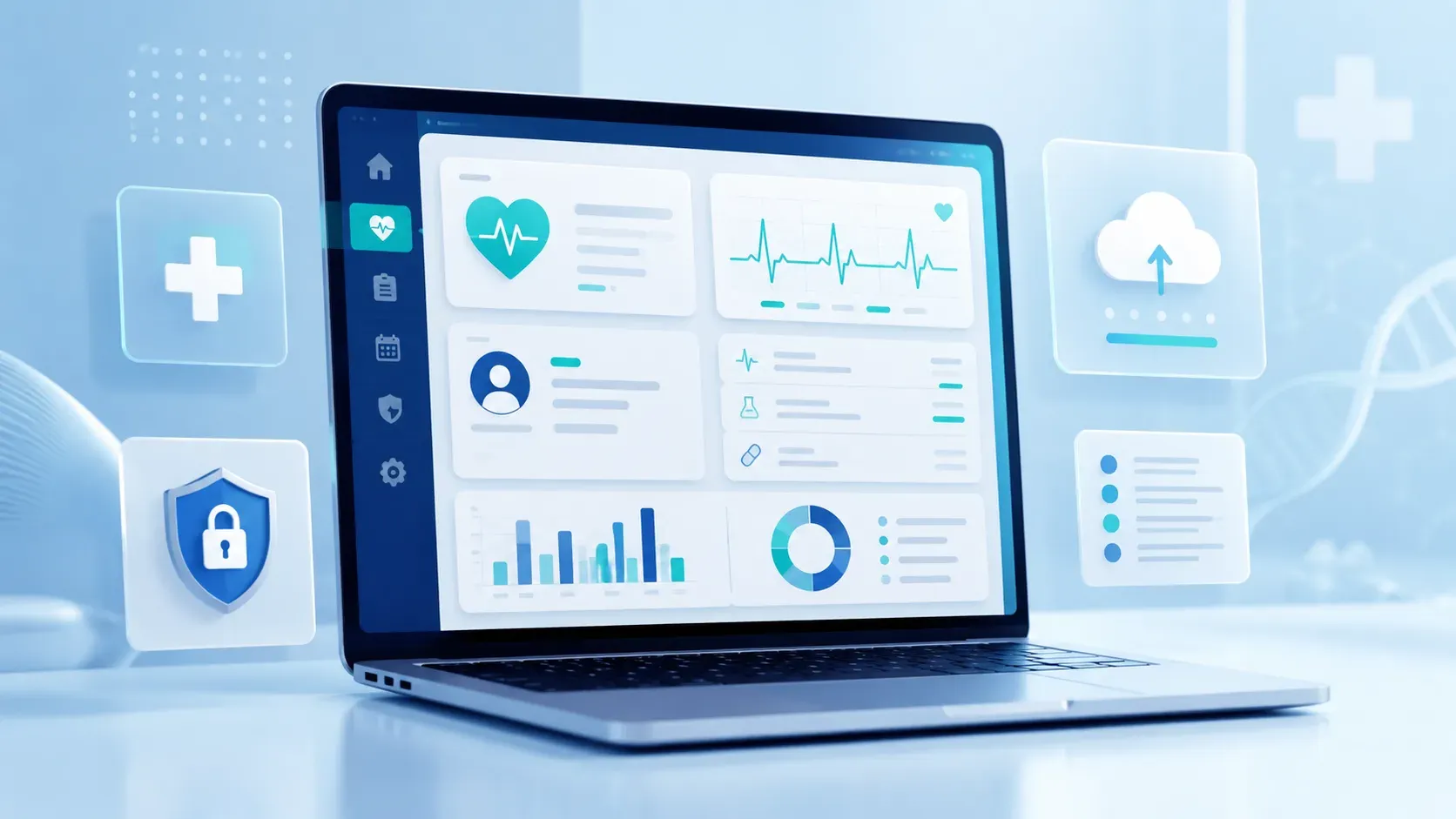
Healthcare businesses need software partners who understand both technology and patient care. Building a healthcare product is not just about features. It also involves security, compliance, integrations, usability, and smooth workflows for doctors, patients, and internal teams.
As healthcare becomes more digital, companies are investing in tools like telemedicine platforms, patient portals, EHR systems, remote monitoring apps, hospital management software, and AI-powered healthcare solutions.
In this guide, we compare the 9 top healthcare software development companies of 2026 to help you find a partner that fits your product goals, technical needs, and healthcare requirements.
How We Selected These Healthcare Software Development Companies
We shortlisted these healthcare software development companies based on the factors that matter most when building medical and healthcare products.
Our selection looked at:
- Healthcare experience: Companies with proven work in healthcare software, medical platforms, patient-facing apps, or healthcare IT systems.
- Technical capabilities: Ability to build web apps, mobile apps, cloud platforms, AI solutions, integrations, and custom healthcare software.
- Compliance awareness: Understanding of security, privacy, HIPAA, GDPR, data protection, and healthcare-related development standards.
- Service range: Support for product strategy, UI/UX, development, testing, integrations, maintenance, and scaling.
- Best-fit use cases: Whether the company is better suited for startups, hospitals, clinics, enterprises, telemedicine, remote monitoring, or AI healthcare products.
- Public credibility: We also considered public service pages, case studies, client reviews, ratings, and healthcare-focused expertise available online.
The goal is not to rank companies only by size or popularity, but to help you understand which medical software development company may fit your project, budget, and long-term product goals.
9 Top Healthcare Software Development Companies in 2026
1. F22 Labs

F22 Labs is a strong choice for startups and growing healthcare businesses that need custom healthcare software, mobile apps, web platforms, AI-powered workflows, and scalable product development support. The team works well for companies that want to build healthcare products from scratch or improve existing platforms with better usability, performance, and integrations.
As a medical software development company, F22 Labs can help build solutions such as telemedicine platforms, patient portals, appointment booking systems, healthcare mobile apps, internal dashboards, healthcare SaaS products, and custom healthcare management tools.
F22 Labs is especially useful for healthcare businesses that need a product-focused team, not just developers. From discovery and UI/UX to development, testing, integrations, and scaling, the team can support the full product lifecycle.
Best for: Healthcare startups, clinics, digital health platforms, healthcare SaaS products, and businesses building custom healthcare apps.
2. Innowise

Innowise is a good fit for healthcare projects where compliance, documentation, and regulatory readiness matter from day one. The company has experience in healthcare IT, medical device software, telemedicine, remote patient monitoring, EHR/EMR systems, and custom medical applications.
What makes Innowise relevant is its focus on regulated healthcare environments. For teams building products that may involve FDA, MDR, HIPAA, GDPR, ISO 13485, or ISO 27001 requirements, Innowise brings the kind of process discipline that healthcare software often needs.
This makes it more suitable for complex medical software projects than simple healthcare apps. Businesses that need clear documentation, secure architecture, clinical workflows, and compliance-aware development may find Innowise a strong partner.
Best for:
Medical device companies, healthcare enterprises, telemedicine platforms, and teams building compliance-heavy healthcare software.
3. 7T

7T is a healthcare software development company focused on AI, automation, and custom healthcare platforms. It works well for healthcare teams that want to improve operations, reduce manual work, and modernize outdated systems.
The company supports projects such as healthcare workflow automation, predictive analytics, data platforms, interoperability solutions, and AI-enabled healthcare tools. This makes it useful for providers and healthcare businesses that want software to support faster decisions and smoother internal processes.
7T is a better fit for teams with clear digital transformation goals, rather than businesses looking for a simple healthcare mobile app.
Best for:
Healthcare providers, mid-market healthcare businesses, and teams building AI-powered healthcare platforms or workflow automation tools.
4. Deloitte

Deloitte is a strong choice for large healthcare organizations that need more than software development. It works well for hospitals, health systems, insurers, and enterprises that need help with digital transformation, system modernization, data strategy, and large-scale healthcare IT programs.
The company supports complex healthcare projects involving cloud migration, analytics, enterprise integrations, patient experience, financial operations, and operational efficiency. Deloitte is better suited for organizations with large budgets, multiple departments, and long-term transformation needs.
It may not be the best fit for startups or smaller healthcare companies that need fast product development or a focused MVP.
Best for:
Build Lean. Learn Fast.
Launch an MVP that saves money while proving your concept works.
Large hospitals, healthcare enterprises, insurers, and organizations are planning enterprise-level healthcare transformation.
5. Accenture

Accenture is a good fit for large healthcare organizations that need help with technology transformation, system integration, and operational improvement. It works well for hospitals, insurers, pharma companies, and healthcare enterprises managing complex digital systems.
The company supports projects around healthcare cloud solutions, data analytics, patient engagement, revenue cycle systems, enterprise integrations, and workflow modernization. Accenture is strongest when the project involves multiple teams, legacy systems, and large-scale implementation.
It may not be ideal for startups or smaller healthcare companies that need a lean, fast-moving product development partner.
Best for:
Healthcare enterprises, insurers, pharma companies, and organizations needing large-scale healthcare IT transformation.
6. Ideas2IT

Ideas2IT is a good fit for healthcare businesses building AI-driven platforms, clinical automation tools, and data-heavy healthcare products. It works well for teams that want to use software to improve decision-making, reduce manual work, or automate complex healthcare workflows.
The company supports projects such as clinical AI platforms, healthcare analytics, HIPAA-aware infrastructure, care coordination systems, and automation tools for providers and payers. Ideas2IT is stronger for technical healthcare products than basic appointment booking or simple patient apps.
It may be a better fit for healthcare companies that already have a clear problem, workflow, or data use case they want to solve with technology.
Best for:
Healthcare AI platforms, clinical automation, payer-provider solutions, and data-driven healthcare products.
7. SumatoSoft

SumatoSoft is a good choice for healthcare businesses building telemedicine platforms, remote patient monitoring tools, and patient-facing healthcare apps. It works well for teams that need secure software with clean user flows for doctors, patients, and care teams.
The company supports projects such as virtual consultation platforms, healthcare mobile apps, patient dashboards, IoT-based monitoring, and healthcare system integrations. SumatoSoft is a better fit for focused healthcare products than large enterprise transformation programs.
It may work best for startups and mid-sized healthcare providers that need a reliable development partner with healthcare domain experience.
Best for:
Telemedicine platforms, remote patient monitoring, healthcare mobile apps, and patient-facing digital health products.
8. Orangesoft

Orangesoft is a good fit for healthcare businesses building connected healthcare products, IoMT solutions, and mobile health apps. It works well for teams that need software to connect patients, providers, devices, and cloud systems.
The company supports projects such as remote patient monitoring apps, connected medical device software, healthcare mobile apps, IoT-based platforms, and healthcare data integrations. Orangesoft is stronger for device-connected and mobile-first healthcare products than broad enterprise transformation work.
It may be a good choice for startups, medical device companies, and healthcare teams building products where mobile experience, device data, and secure connectivity matter.
Best for:
IoMT solutions, connected medical devices, remote patient monitoring, and healthcare mobile app development.
9. BairesDev

BairesDev is a good fit for healthcare companies that need experienced development teams, staff augmentation, or custom software support at scale. It works well for businesses that already have a product roadmap and need engineers to help build, improve, or maintain healthcare platforms.
The company supports projects such as healthcare web apps, mobile apps, internal tools, patient portals, data platforms, and system integrations. BairesDev is stronger for development capacity and technical execution than deep healthcare consulting or niche medical device compliance.
It may be a good choice for healthcare startups, SaaS companies, and enterprises that need flexible engineering support without building a large in-house team.
Best for:
Healthcare staff augmentation, custom software development, healthcare SaaS platforms, and scaling engineering teams.
Key Features to Look for in a Healthcare Software Development Company
Choosing a healthcare software development company is different from hiring a general software team. The partner should understand healthcare workflows, security, compliance, integrations, and the needs of both patients and providers.
Here are the key things to look for:
- Healthcare domain experience: The company should have experience building healthcare apps, patient portals, telemedicine platforms, EHR systems, remote monitoring tools, or healthcare SaaS products.
- Security and compliance awareness: Healthcare software handles sensitive patient data, so the team should understand secure architecture, data privacy, HIPAA, GDPR, access control, and audit-ready development practices.
- Strong integration capabilities: A good partner should be able to connect your product with EHR/EMR systems, payment tools, wearable devices, labs, CRMs, analytics platforms, and third-party healthcare APIs.
- User-focused design: Healthcare software should be simple for doctors, patients, admins, and care teams to use. Clear workflows, accessibility, and mobile-friendly design matter.
- Scalable engineering: The system should be built to handle more users, data, features, locations, and integrations as the business grows.
- Testing and quality assurance: Bugs in healthcare software can affect trust and operations. Look for a team that follows strong QA, performance testing, security testing, and release processes.
- Post-launch support: Healthcare products need updates, compliance improvements, bug fixes, performance monitoring, and feature enhancements after launch.
How to Choose the Right Healthcare Software Development Partner
The right healthcare software development partner should fit your product goals, compliance needs, budget, and long-term roadmap. A company that works well for an enterprise hospital system may not be the right fit for a healthcare startup building an MVP.
Here’s what to check before choosing:
Match their experience with your use case:
If you are building a telemedicine app, patient portal, EHR integration, remote monitoring tool, or healthcare SaaS product, look for similar work in their portfolio.
Build Lean. Learn Fast.
Launch an MVP that saves money while proving your concept works.
Check their healthcare compliance knowledge:
Your partner should understand data privacy, access control, secure architecture, HIPAA, GDPR, and other compliance needs based on your target market.
Review their technical strength:
Look at their ability to build scalable web apps, mobile apps, cloud systems, APIs, AI features, and third-party integrations.
Evaluate their product thinking:
A good partner should not just code requirements. They should help refine workflows, improve usability, reduce complexity, and build around real users.
Understand their delivery process:
Ask how they handle discovery, design, development, testing, documentation, deployment, and post-launch support.
Check communication and ownership:
Healthcare projects need clarity. Choose a team that communicates well, explains trade-offs, and takes responsibility for quality.
The best partner is not always the biggest company. It is the one that understands your healthcare problem, builds securely, and can support your product as it grows.
How F22 Labs Helps Build Scalable Healthcare Software
At F22 Labs, we help healthcare businesses build secure, scalable, and user-friendly software for patients, providers, and internal teams. Our team works on custom healthcare software development, healthcare mobile apps, web platforms, AI-powered workflows, patient portals, telemedicine platforms, and healthcare SaaS products.
We support everything from product discovery and UI/UX to development, integrations, testing, and scaling. Whether you are building an MVP or improving an existing healthcare platform, we help create software that fits your workflows, supports growth, and delivers a smoother experience for users.
Conclusion
Choosing the right healthcare software development company depends on what you are building, how complex your workflows are, and how much compliance support your product needs.
Startups may need a fast, product-focused team for MVP development, while hospitals and enterprises may need partners with deep experience in integrations, security, and large-scale transformation.
Before choosing a partner, look at their healthcare experience, technical skills, compliance awareness, communication, and post-launch support. The right team should help you build software that is secure, scalable, easy to use, and ready for long-term growth.
Frequently Asked Questions
What is a healthcare software development company?
A healthcare software development company builds digital products for healthcare businesses, such as telemedicine platforms, patient portals, EHR systems, hospital management software, remote monitoring apps, and healthcare SaaS products.
Which is the best healthcare software development company in 2026?
The best healthcare software development company depends on your needs. F22 Labs is a good fit for startups and custom healthcare products, while Deloitte and Accenture suit large enterprise transformation projects.
How much does healthcare software development cost?
Healthcare software development can cost anywhere from $25,000 to $250,000+, depending on features, compliance needs, integrations, platform type, design complexity, and whether you are building an MVP or a full-scale product.
How do I choose a medical software development company?
Choose a medical software development company based on healthcare experience, compliance awareness, technical skills, communication, portfolio quality, security practices, and ability to support the product after launch.
What services do healthcare IT service providers offer?
Healthcare IT service providers offer custom software development, healthcare app development, EHR/EMR integration, telemedicine development, cloud solutions, cybersecurity, data analytics, AI workflows, and ongoing technical support.
Why is compliance important in healthcare software development?
Compliance is important because healthcare software handles sensitive patient data. Strong compliance practices help protect privacy, improve security, reduce legal risks, and build trust with patients, providers, and healthcare organizations.
What is the difference between healthcare software providers and healthcare IT service providers?
Healthcare software providers usually build or offer healthcare applications. Healthcare IT service providers support broader technology needs, including infrastructure, integrations, cybersecurity, cloud systems, maintenance, and digital transformation.