As 2026 unfolds, dropshipping continues to reshape online retail. Harnessing the best Shopify dropshipping apps has become essential for e-commerce success, especially as competition tightens and margins leave little room for trial-and-error. With Grand View Research forecasting the global dropshipping market to reach USD 1,253.79 billion by 2030 at a CAGR of 23.4%, the opportunity is real, but only for stores built on the right operational stack.
I’ve written this guide for Shopify store owners who don’t want more apps, but the right ones, tools that reduce friction across sourcing, fulfilment, branding, and scale. This article breaks down the 11 best Shopify dropshipping apps for 2026, with clear context on where each app fits and who it’s actually for, so you can make confident, practical decisions.
Why Choose Shopify for Dropshipping?
Shopify dominates the dropshipping landscape because it removes operational complexity at scale. Its intuitive interface, robust ecosystem, and mature app integrations make it easier to move from validation to growth without rebuilding your store infrastructure.
When comparing Shopify with platforms like Squarespace or WooCommerce, the difference becomes clear in real-world usage. Shopify offers faster app onboarding, deeper dropshipping integrations, and fewer technical dependencies, advantages that matter once order volume, supplier coordination, and automation become daily concerns.
Let’s explore the Shopify dropshipping apps that consistently solve real bottlenecks in sourcing, fulfilment, branding, and scale, challenges most store owners encounter only after launch.
1. Oberlo: The All-in-One Dropshipping Solution
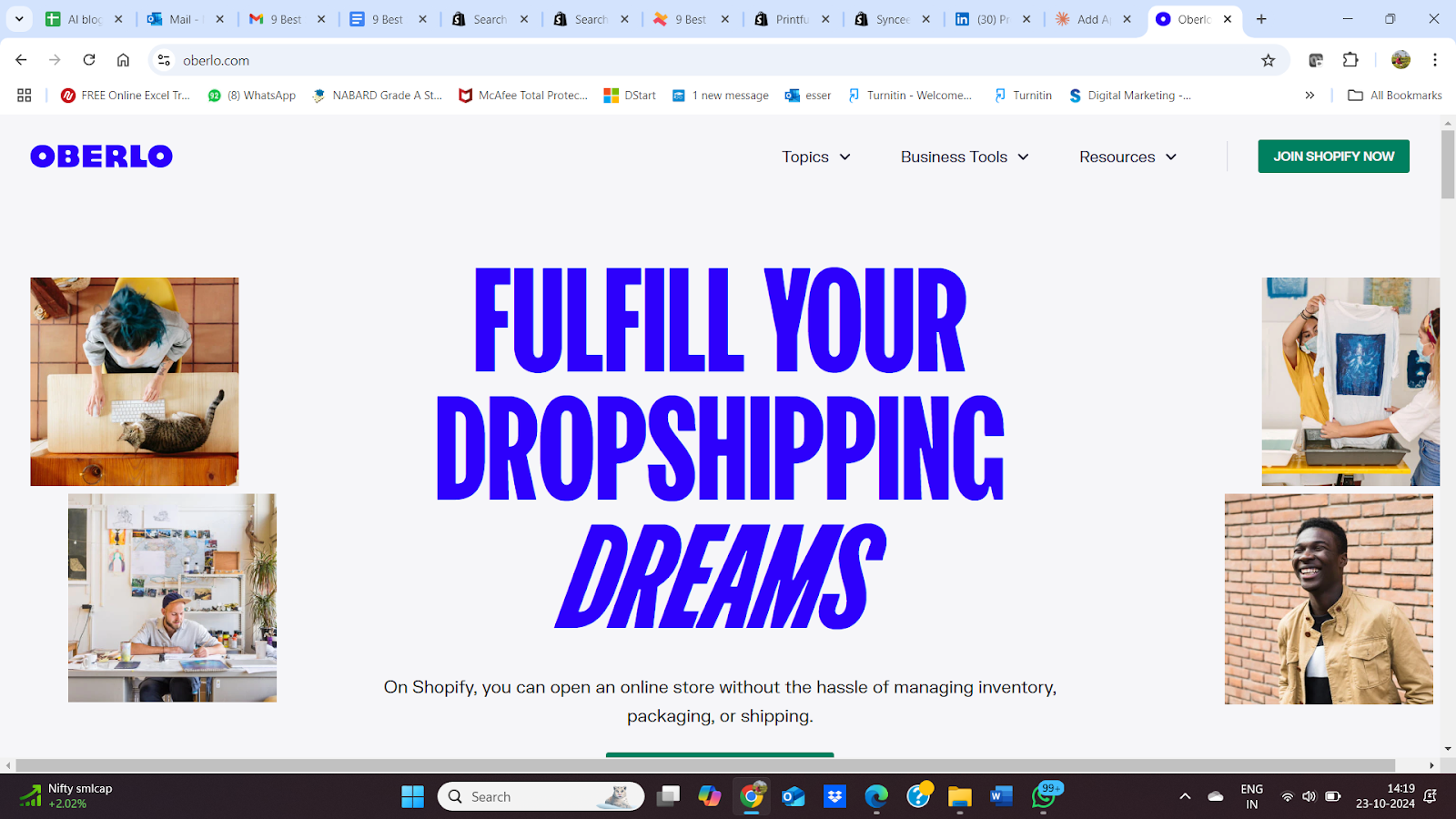
Oberlo leads the pack of Shopify dropshipping apps by simplifying the most failure-prone stages of early dropshipping, product discovery, order handling, and inventory sync. Its tight AliExpress integration makes it a practical choice for store owners who want speed without operational overload.
Oberlo works best for beginners and growing stores that need structure before scale. It allows sellers to refine product listings, test pricing strategies, and manage supplier performance without introducing unnecessary tools or manual processes.
Key Features:
- Automated order handling
- Live inventory syncing
- Product modification tools
- Adaptable pricing mechanisms
- Vendor efficiency monitoring
2. Spocket: Access to US and EU Suppliers
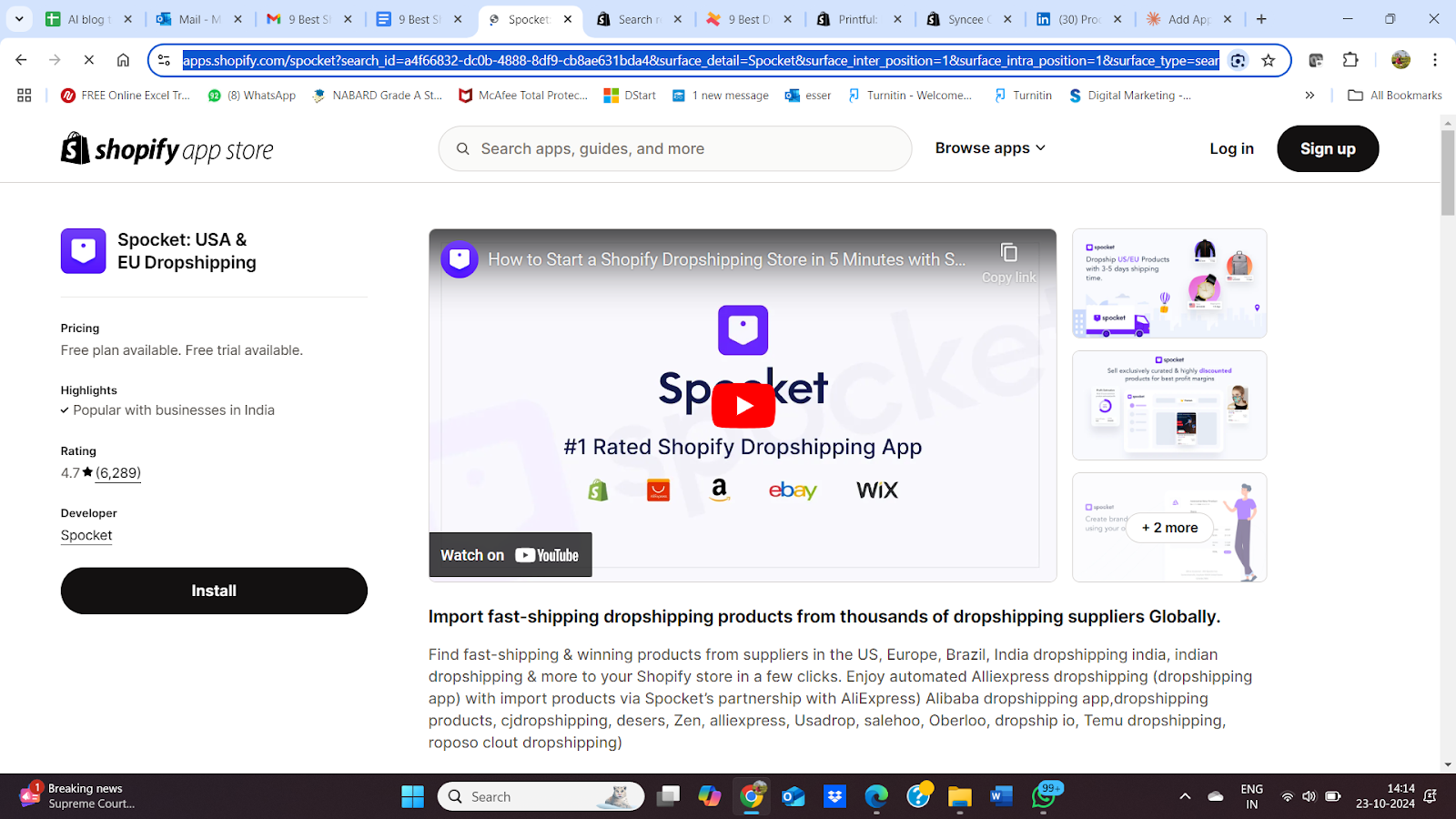
Spocket is designed for store owners who prioritize delivery speed and perceived product quality over mass sourcing. By focusing on US and EU suppliers, it reduces long shipping timelines and improves post-purchase trust, two factors that directly impact repeat orders and chargebacks.
Key Features:
- Custom-branded invoices
- Product sampling options
- Automated stock control
- Real-time delivery tracking
- Exclusive supplier deals
Focusing on local suppliers, Spocket ensures quicker shipping and enhanced customer satisfaction. Its platform simplifies product browsing, importing, pricing, and order processing. The sampling feature allows quality verification before stocking.
3. DSers: The AliExpress Powerhouse
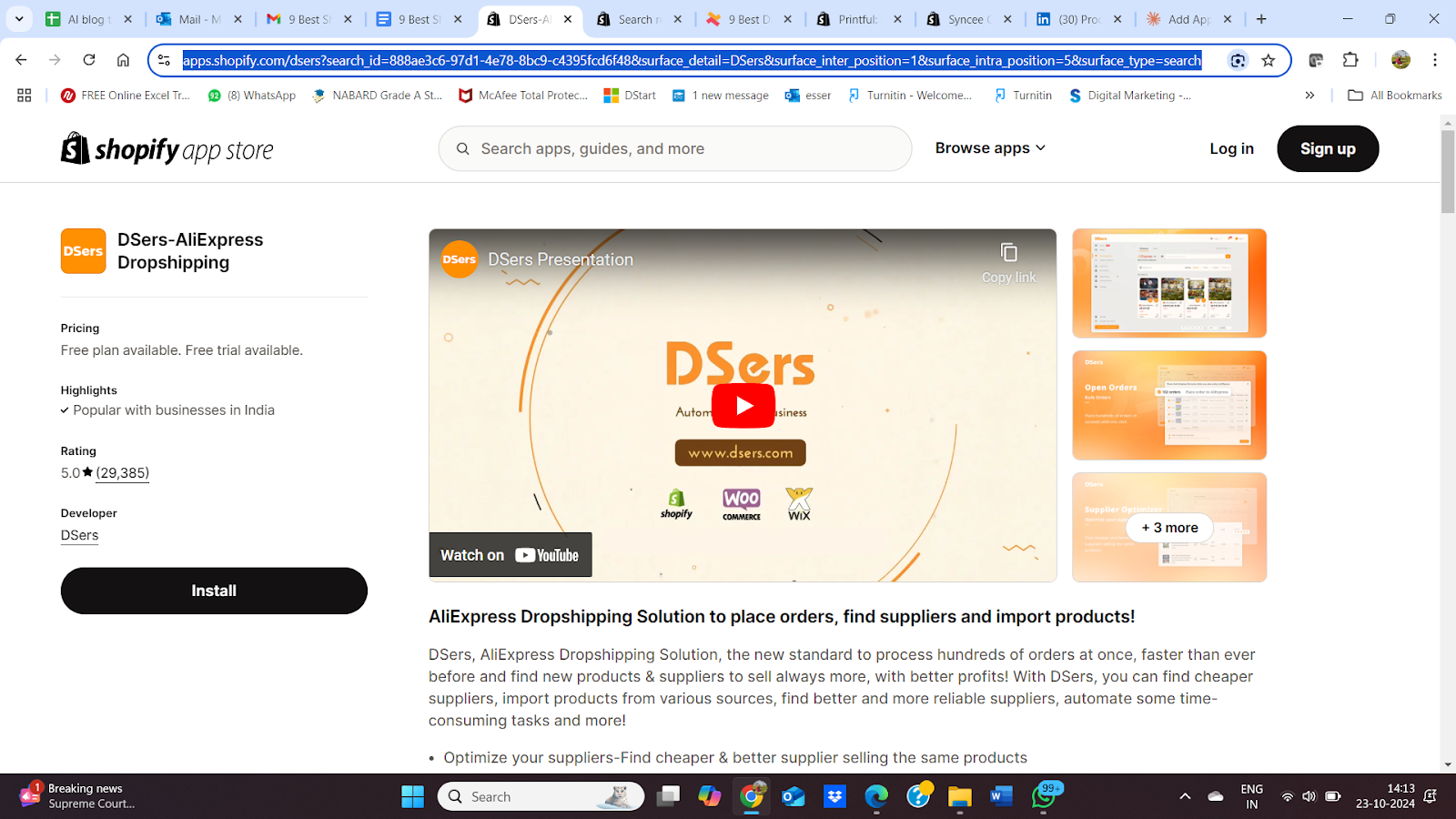
DSers is built for dropshippers who move beyond single-product testing and into operational scale. Its strength lies in handling volume, multiple stores, bulk orders, and supplier mapping, without increasing manual workload as order count grows.
Key Features:
- AI-enhanced product suggestions
- Automated price adjustments
- Product bundle creation
- Mass order fulfillment
- Sophisticated product mapping
Ideal for scaling operations, DSers' AI system pinpoints top products and suppliers, while its bulk processing feature enables simultaneous order fulfilment. Advanced mapping tools simplify variant matching and product information customization.
4. Podbase: print-on-demand platform for tech accessories

Podbase is best suited for sellers who treat print-on-demand as a brand play, not a side experiment. Its focus on durability, low return rates, and margin efficiency makes it practical for stores that rely on repeat purchases rather than one-off novelty sales. Ideal for entrepreneurs who want to build a memorable brand without worrying about inventory or logistics, Podbase blends high-quality products with unmatched affordability.
Key Features:
- Vibrant, long-lasting print quality
- Competitive prices (up to 40% lower than alternatives)
- Return rate as low as 0.2%
- Branded experience without upfront inventory investment
- Shopify-compatible product personalization tools
What sets Podbase apart is its laser focus on durability and aesthetics. With each sale earning you up to $7 more in profit compared to other POD apps, Podbase empowers you to scale with better margins. It’s an excellent choice for creators who want to deliver not just a product, but an experience. Whether you’re launching a niche tech accessory store or an art-forward home decor brand, Podbase provides the quality and infrastructure you need.
5. Printful: Print-on-Demand Dropshipping
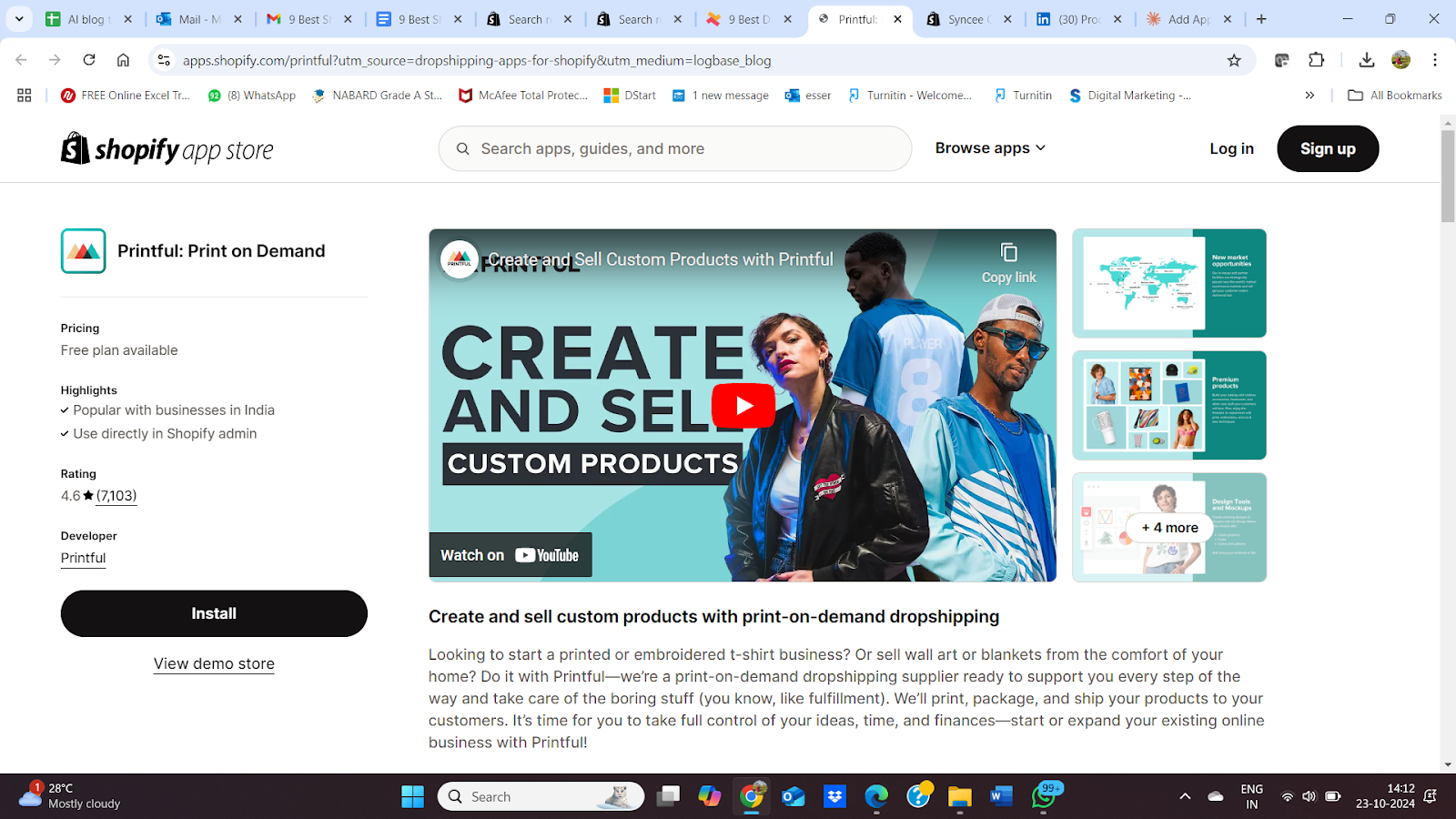
Printful works well for merchants who want creative control without operational ownership. It removes inventory risk while still allowing consistent branding, making it suitable for content-driven or creator-led stores that scale through design variety rather than price competition.
Key Features:
- Extensive customisable product range
- Premium printing capabilities
- Global shipping solutions
- Digital product visualization
- Cross-platform sales integration
Catering to creative business owners, Printful offers a diverse array of customizable items without inventory hassles. Its mockup generator creates professional product visuals, while multi-channel integration expands market reach.
6. CJDropshipping: Global Sourcing and Fulfillment
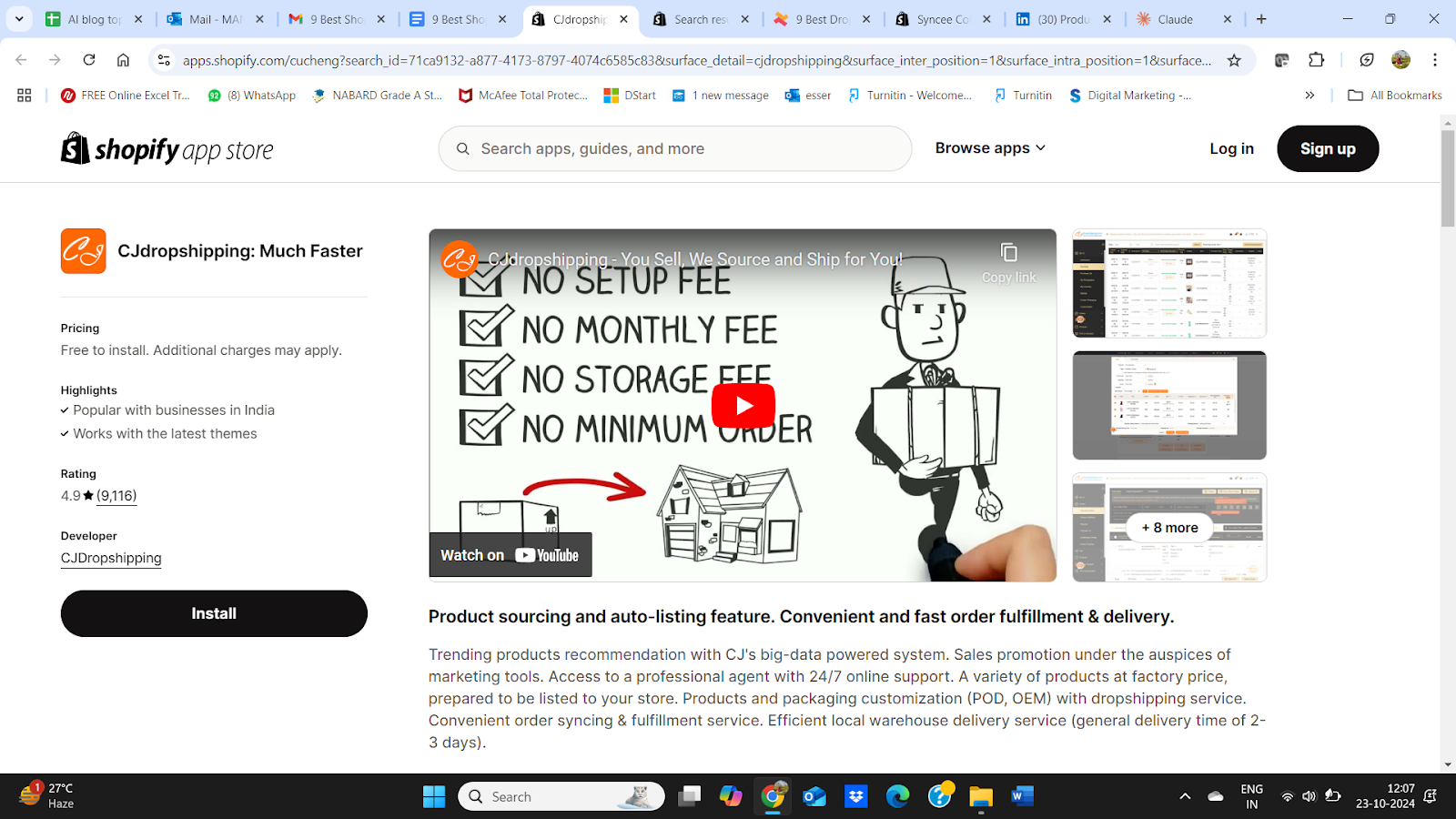
CJDropshipping is built for sellers who want sourcing and fulfillment under one roof. Its value becomes evident when managing multiple suppliers or shipping regions, where centralized control reduces delays, miscommunication, and fulfillment errors.
Key Features:
- Multi-platform product sourcing
- Bespoke packaging options
- Varied shipping methods
- Product photography
- White-label services
This app suits drop shippers seeking an all-encompassing e-commerce solution. It enables diverse supplier sourcing, offers multi-country warehousing for faster shipping, and provides custom packaging for brand distinctiveness.
Suggested Reads- 7 Ways to Increase Conversion Rate on Shopify
7. Modalyst: Curated High-End Products
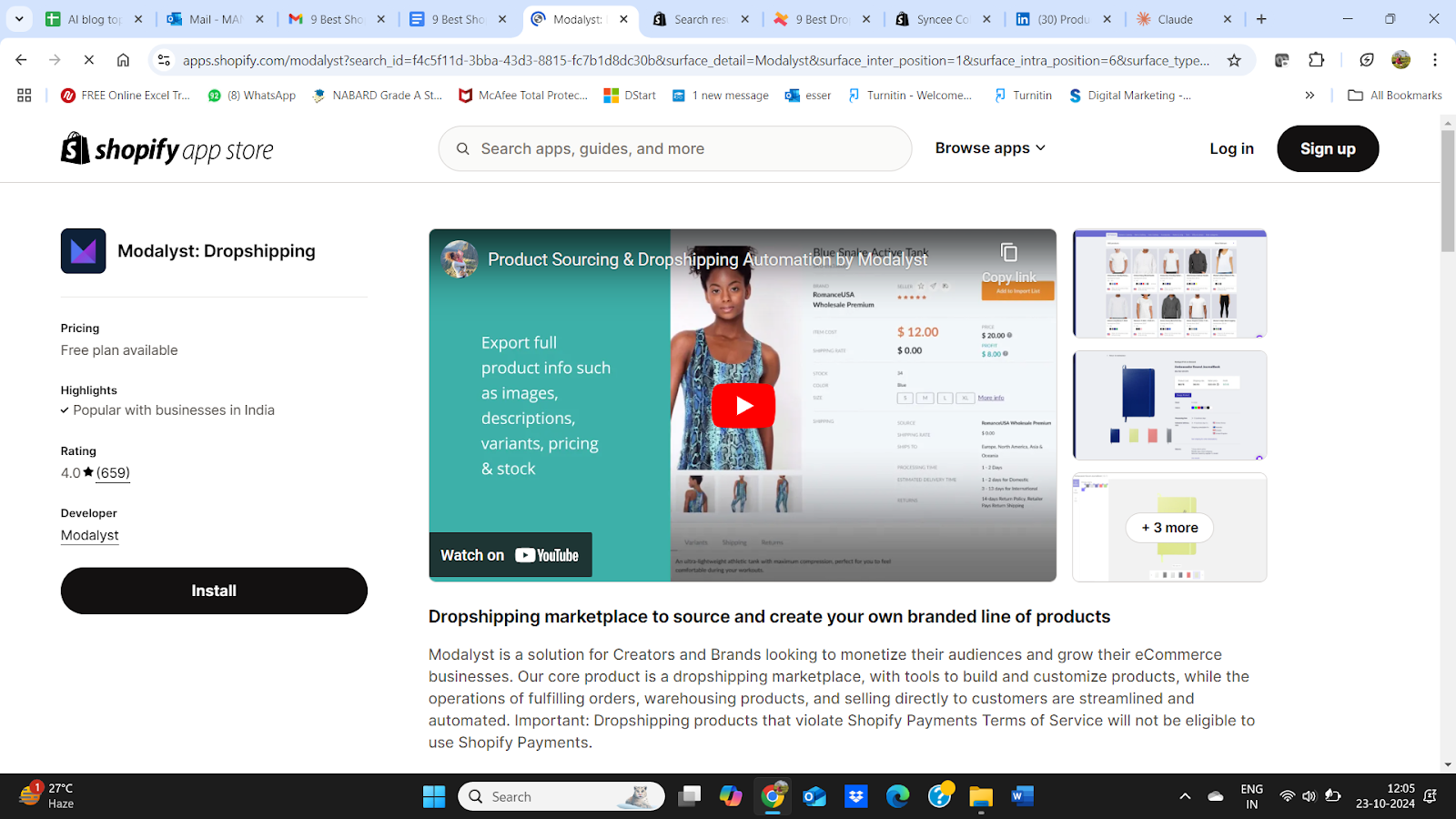
Modalyst is suited for Shopify stores positioning themselves in the mid-to-premium range, where supplier vetting and brand perception matter more than catalog size. Its curated supplier network reduces quality risk, making it easier to maintain consistent pricing and customer expectations.
Key Features:
- High-end supplier access
- Streamlined product importing
- Automated pricing strategies
- Exclusive vendor network
- Focus on US and European suppliers
Modalyst is ideal for stores offering premium products, and providing access to vetted suppliers for quality assurance. Its automated pricing tools maintain profitability, while easy import features simplify inventory management.
8. Dropified: Advanced Automation Tools
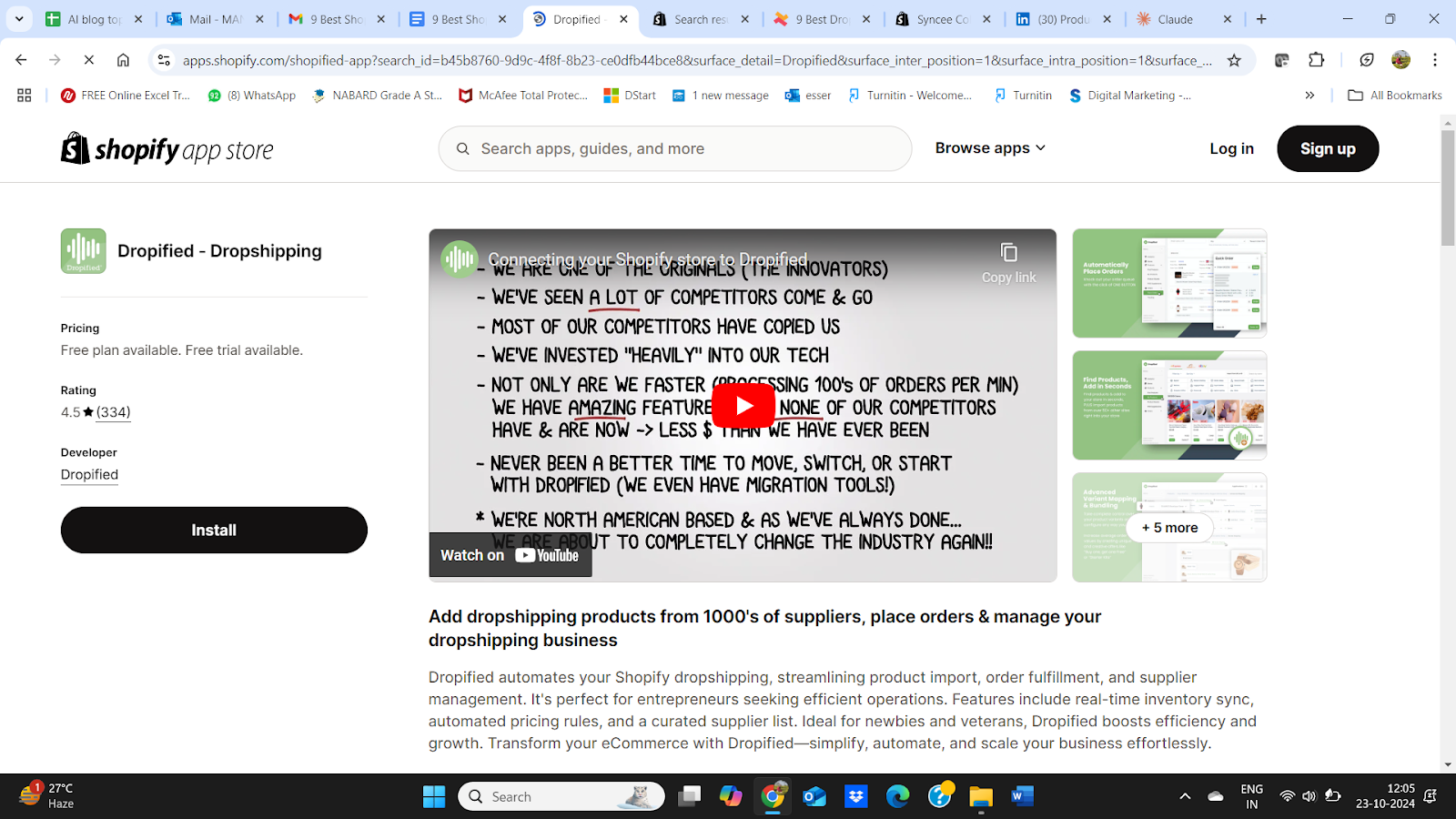
Dropified is designed for Shopify dropshippers who have moved beyond manual workflows and need tighter operational control. Its automation-first approach helps manage complexity as product count, suppliers, and order volume increase.
Best suited for scaling stores, Dropified reduces repetitive tasks through bulk edits, automated fulfillment, and real-time profitability tracking, allowing sellers to focus more on optimization and less on execution.
Key Features:
- Mass product customization
- Real-time profit analytics
- Multi-vendor integration
- Automated order processing
- Comprehensive price monitoring
9. AliDropship: Direct AliExpress Integration
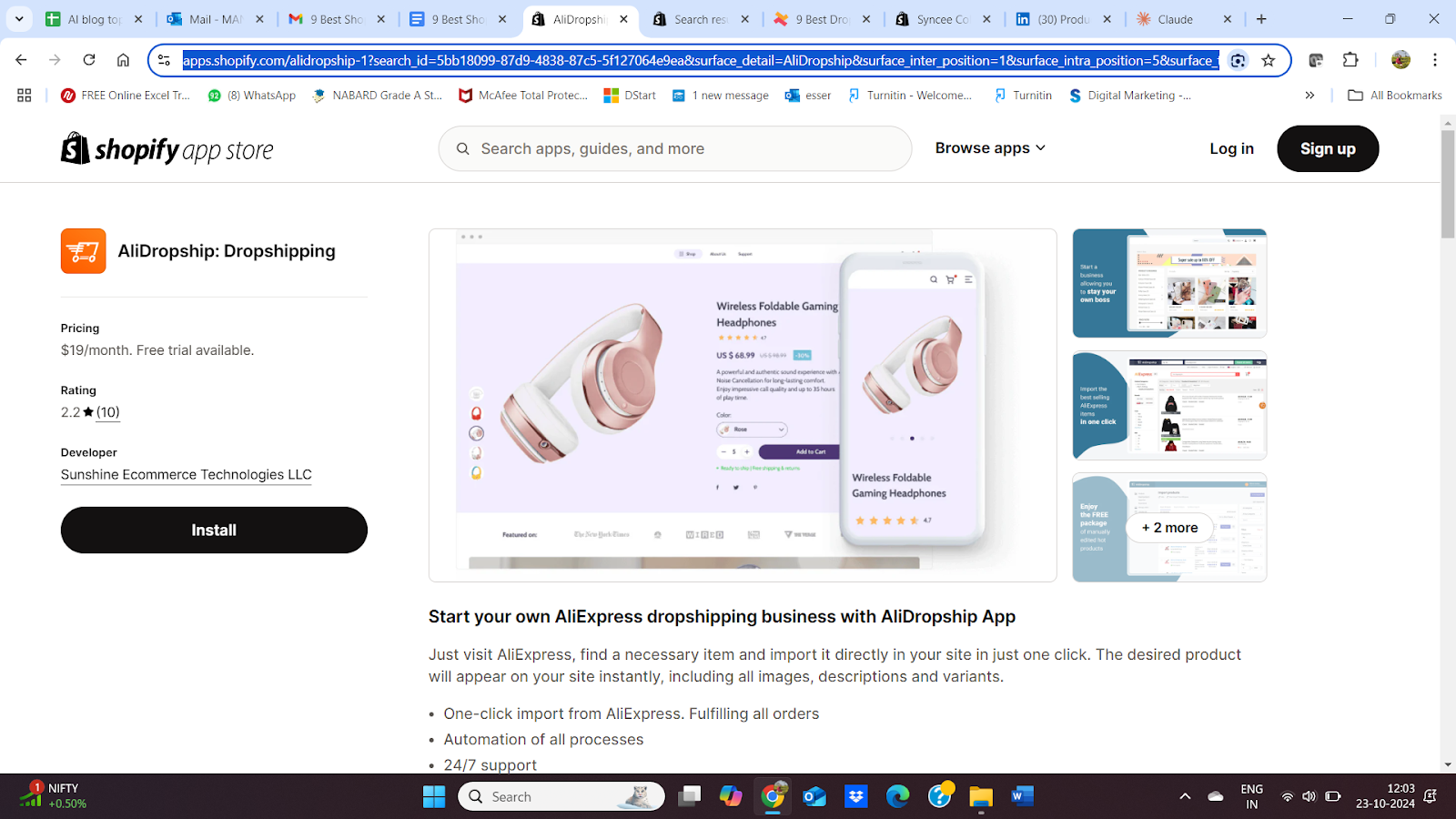
AliDropship is built specifically for store owners who rely heavily on AliExpress as their primary sourcing channel. Its direct integration minimizes friction between product sourcing, pricing, and fulfillment.
The platform works best for sellers optimizing around shipping speed and margin control. Built-in tools like ePacket filtering and pricing automation help maintain competitiveness without adding operational overhead.
Key Features:
- Streamlined order automation
- Flexible product pricing
- ePacket delivery filter
- Integrated image enhancement
- Swift product importing
10. Sellvia: US-Based E-Commerce Ecosystem
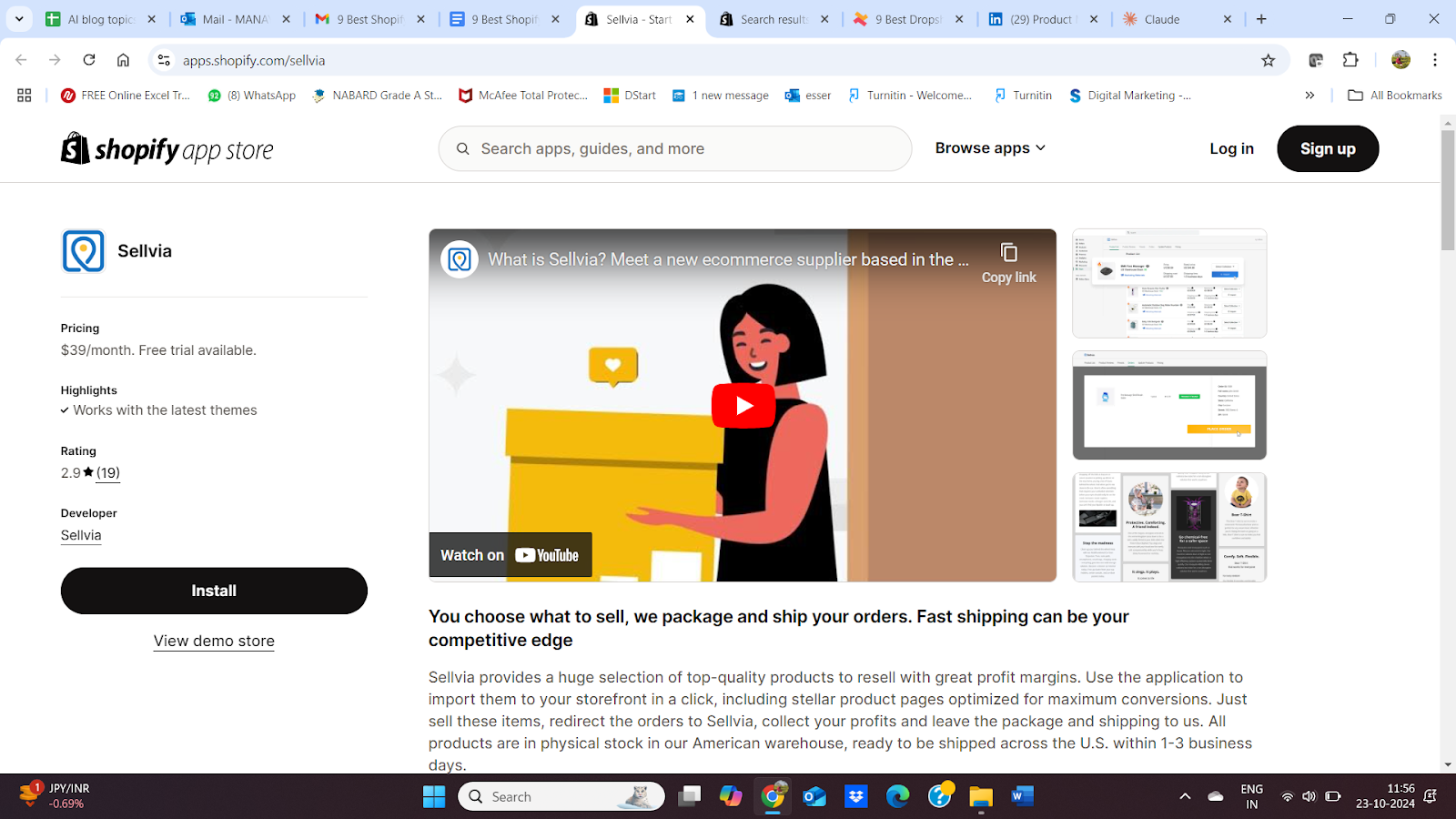
Sellvia, is positioned for Shopify stores prioritizing the US market, where shipping speed and product availability directly influence conversion rates. Its ecosystem combines sourcing, fulfillment, and marketing support into a single workflow.
This makes Sellvia suitable for sellers who want faster time-to-market without building supplier relationships from scratch, especially when targeting customers who expect domestic delivery timelines.
Key Features:
- Selective product curation
- Rapid US shipping (1-3 days)
- Pre-made product marketing content
- Automated order fulfillment
- Market trend analysis
Suggested Reads- Optimizing Your E-commerce Store for Voice Search
11. Syncee: Global B2B Marketplace
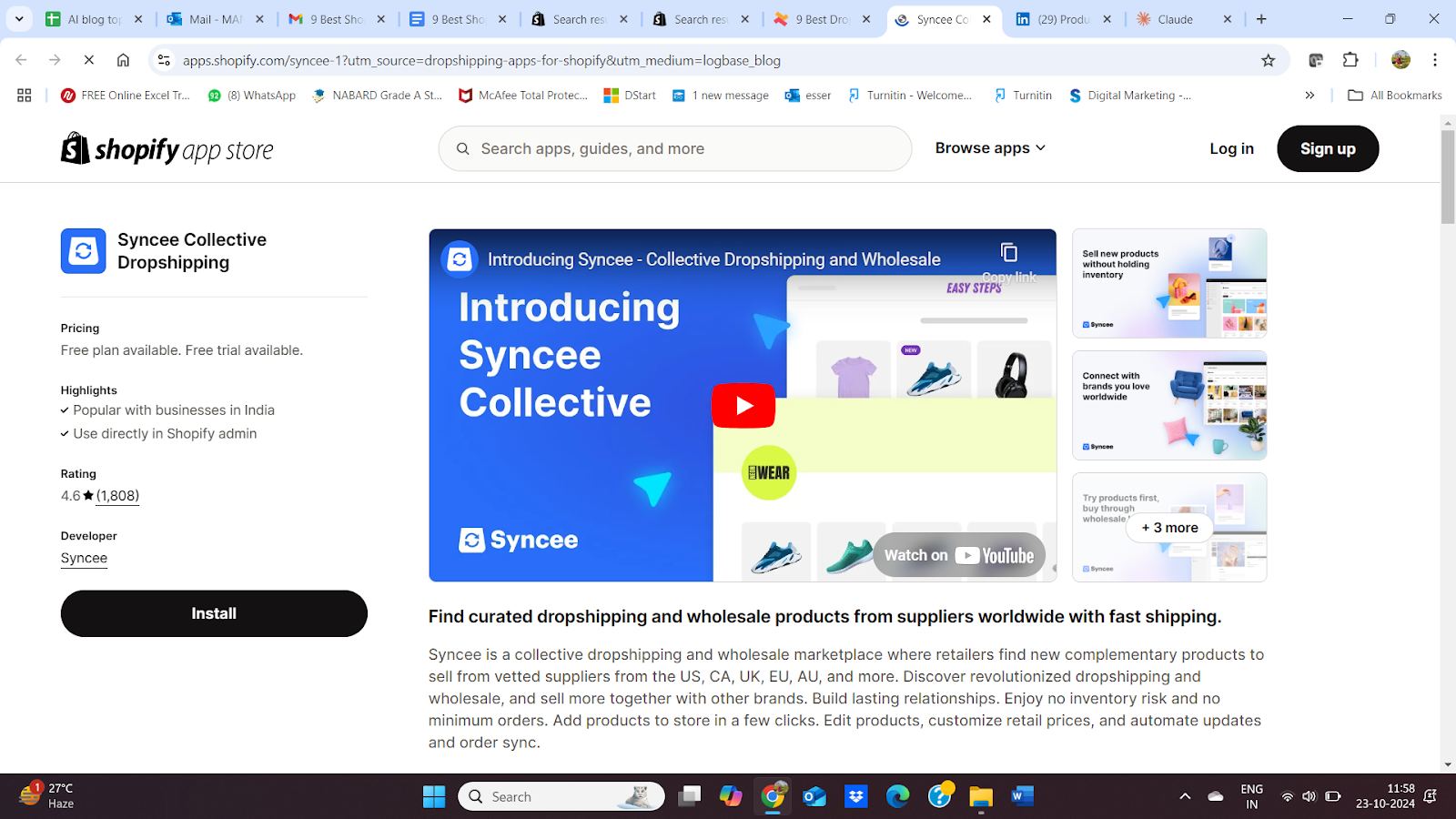
Syncee is positioned for Shopify stores prioritizing the US market, where shipping speed and product availability directly influence conversion rates. Its ecosystem combines sourcing, fulfillment, and marketing support into a single workflow.
This makes Sellvia suitable for sellers who want faster time-to-market without building supplier relationships from scratch, especially when targeting customers who expect domestic delivery timelines.
Key Features:
- Vast product selection (millions)
- Automated pricing and inventory
- Customizable supplier criteria
- Product branding options
- Efficient bulk product management
12. Gooten: Print-on-Demand with a Global Network
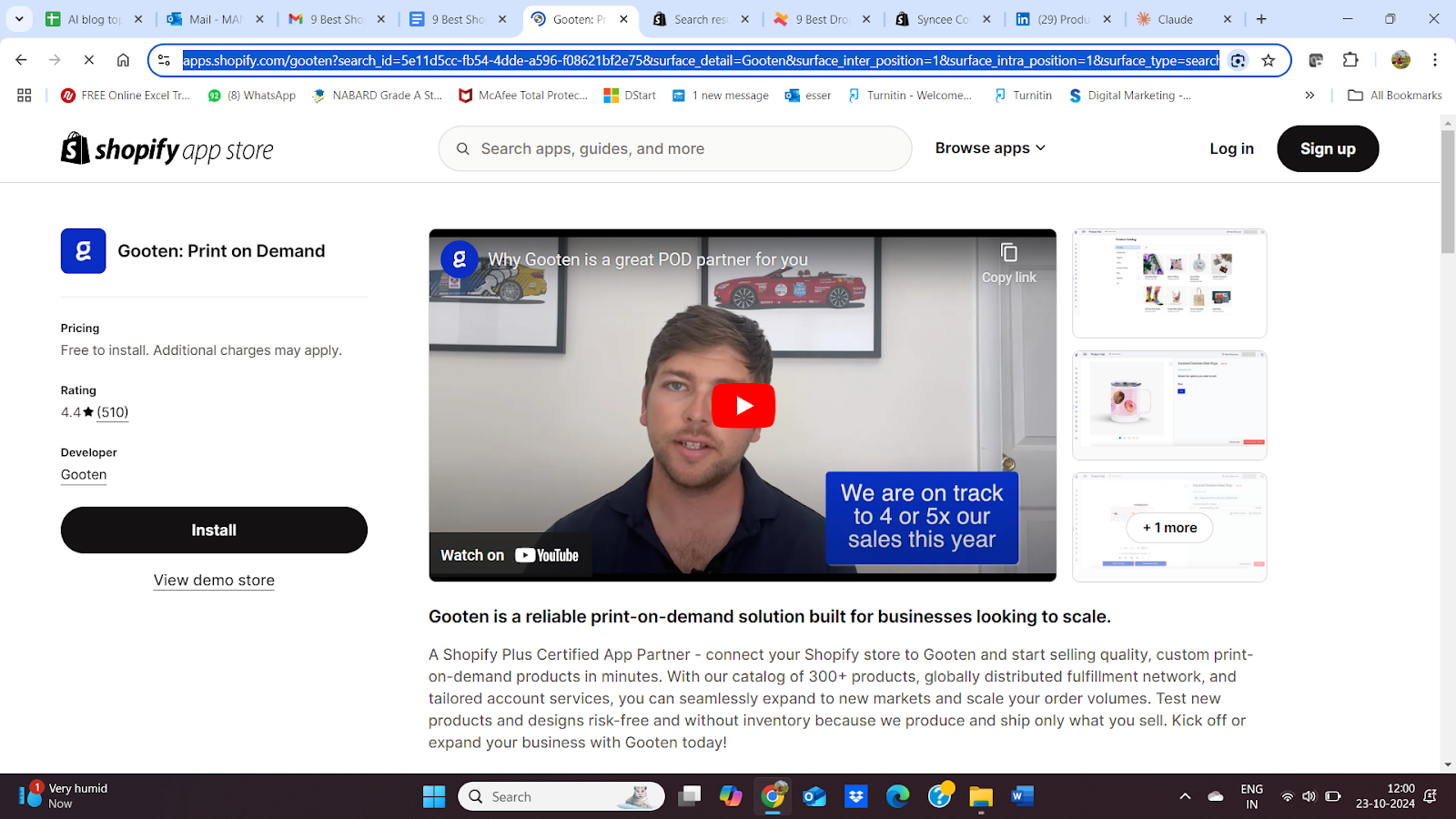
Gooten is designed for sellers treating print-on-demand as a scalable business model rather than a limited add-on. Its global production network helps reduce shipping distances and delivery times for international customers.
The platform works well for merchants selling across regions, where smart order routing and multi-channel integration simplify fulfillment while maintaining consistent product quality and delivery standards.
Key Features:
- Wide range of customizable items
- Global production partnerships
- Smart order routing
- Automated order handling
- Multi-channel sales integration
Conclusion
The best Shopify dropshipping apps in 2026 aren’t one-size-fits-all solutions. Each tool in this list serves a specific purpose, whether it’s faster fulfillment, better supplier control, stronger branding, or smoother scaling.
Choosing the right app comes down to aligning it with your store’s operating model, target market, and growth stage. When your tools match how your business actually runs, dropshipping becomes easier to manage, more predictable to scale, and more resilient over time.
Frequently Asked Questions (FAQs)
1. Which are the best Shopify dropshipping apps in 2026?
The best Shopify dropshipping apps in 2026 include Oberlo, Spocket, DSers, Printful, CJDropshipping, Modalyst, and Syncee, depending on sourcing, fulfillment, and scale.
2. Which Shopify dropshipping app is best for beginners?
For beginners, Oberlo, Spocket, and DSers are ideal because they offer simple setup, automated order handling, and minimal technical complexity during the early validation and testing phase.
3. Can I use multiple dropshipping apps on one Shopify store?
Yes, you can use multiple Shopify dropshipping apps on one store, as long as inventory, pricing, and fulfillment rules are managed carefully to avoid conflicts or overselling issues.
4. Are Shopify dropshipping apps still profitable in 2026?
Shopify dropshipping apps remain profitable in 2026 when paired with fast shipping, reliable suppliers, strong branding, and automation that reduces operational costs and customer support issues.
5. Which Shopify dropshipping apps offer the fastest shipping?
Apps like Sellvia, Spocket, and Modalyst focus on US or EU suppliers, enabling faster delivery times and better customer satisfaction compared to overseas-only sourcing models.
6. Which print-on-demand dropshipping apps work with Shopify?
Popular Shopify-compatible print-on-demand apps include Podbase, Printful, and Gooten, offering custom products without inventory or upfront manufacturing costs.
7. Which Shopify dropshipping apps are best for scaling a store?
Apps such as DSers, Dropified, and CJDropshipping are better suited for scaling due to bulk order processing, automation, and multi-supplier management features.
8. Do Shopify dropshipping apps automate inventory and pricing?
Most modern Shopify dropshipping apps automatically sync inventory and pricing with suppliers, helping prevent overselling, pricing errors, and manual updates as product catalogs grow.
9. Is Shopify better than WooCommerce for dropshipping?
Shopify is generally better for dropshipping due to its mature app ecosystem, ease of use, and lower technical maintenance compared to WooCommerce, especially for non-technical store owners.
10. Do I need coding skills to use Shopify dropshipping apps?
No coding skills are required. Shopify dropshipping apps are designed for non-technical users, offering guided setup, dashboards, and automation to manage products, orders, and suppliers easily.

Murtuza Kutub
A product development and growth expert, helping founders and startups build and grow their products at lightning speed with a track record of success. Apart from work, I love to Network & Travel.