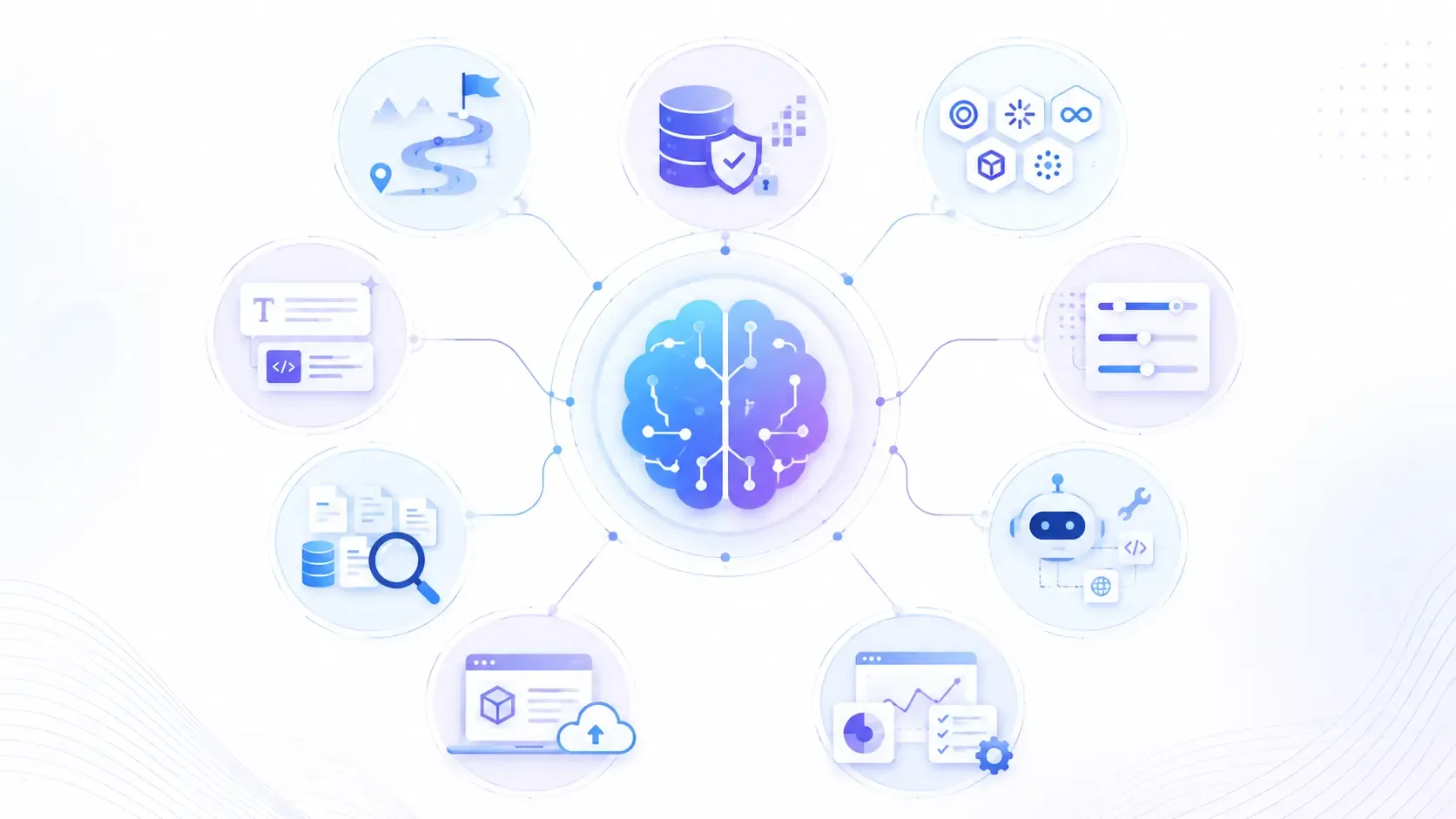
- Voice AI allows patients to schedule appointments, ask questions, complete follow-ups, and access support through natural speech.
- It combines speech recognition, NLP, AI models, system integrations, and text-to-speech to manage conversations in real time.
- Common healthcare use cases include appointment management, patient support, symptom collection, insurance queries, reminders, and outbound engagement.
- Voice AI can reduce call queues and administrative workload while providing patients with support outside regular office hours.
- Healthcare organisations must address accuracy, patient privacy, system integration, human escalation, and regulatory compliance.
- The best approach is to begin with one high-volume workflow, test it through a pilot, and expand based on performance and patient feedback.
Imagine a patient trying to reach their doctor late at night, only to be stuck on hold or asked to call back in the morning.
This is still the reality for millions.
Voice AI in healthcare changes the experience completely. Patients can speak naturally, get instant responses, and complete tasks without waiting at any time of the day. From appointment scheduling to follow-ups and insurance queries, voice AI agents are already handling critical interactions that once depended entirely on human staff.
In this guide, I’ll walk you through how voice AI works, where it fits in healthcare systems, and why it’s becoming a key layer in modern patient care.
What Is Voice AI in Healthcare?
Voice AI in healthcare allows patients and providers to interact with systems using natural speech instead of menus or forms. It combines speech recognition, natural language processing (NLP), and AI to understand intent, access data, and respond in real time.
Unlike traditional IVR systems that rely on rigid options, voice AI understands context. A patient can simply say, “I need to reschedule my appointment,” and the system can process the request, check availability, and complete the task in one conversation.
In practice, voice AI acts as a conversational layer connected to EHRs, scheduling tools, and support systems, helping automate routine interactions while reducing workload on healthcare staff.
Voice AI Agents in Healthcare: What They Are, How They Work, and Why They Matter
Voice AI agents in healthcare are intelligent systems that handle real conversations over voice—going beyond basic chatbots that only answer simple queries. They can understand context, respond naturally, and take action across workflows.
What They Are
Voice AI agents act as virtual assistants for healthcare operations. They can interact with patients, providers, and payors—handling tasks like scheduling, follow-ups, and support through natural speech.
How They Work
They combine:
- Speech recognition to capture voice
- NLP to understand intent
- AI/LLMs to decide actions
- Integrations with systems like EHRs and scheduling tools
- Text-to-speech to respond naturally
All of this happens in seconds, enabling real-time conversations.

Walk away with actionable insights on AI adoption.
Limited seats available!

Why They Matter
Healthcare systems struggle with high call volumes, limited staff, and delayed responses. Voice AI agents solve this by:
- Providing 24/7 patient support
- Reducing wait times and call queues
- Automating routine workflows at scale
- Ensuring continuity by documenting interactions
They don’t replace human care, they extend it, making healthcare more accessible and efficient.
Key Use Cases of Voice AI in Healthcare
Voice AI in healthcare is already being used across patient communication, operations, and care coordination. The most common use cases include:
- Appointment Scheduling & Management
Patients can book, reschedule, or cancel appointments instantly without waiting on calls. - Patient Support & FAQs
Handles routine queries like clinic hours, preparation instructions, and basic guidance. - Patient Triage & Symptom Assessment
Collects symptoms, asks follow-up questions, and guides patients to the right care path. - Insurance Verification & Billing Support
Checks coverage, explains bills, and answers payment-related questions. - Follow-Ups & Care Coordination
Conducts post-visit check-ins, medication reminders, and recovery monitoring. - Outbound Calls & Engagement
Automates reminders, health campaigns, and patient outreach at scale.
Benefits of Voice AI in Healthcare
Voice AI in healthcare improves patient access while reducing operational pressure on teams. It acts as a scalable layer that handles routine interactions efficiently without compromising the quality of care.
Some of the most important benefits include:
- Always-on access: Patients can get help anytime, whether it’s scheduling, queries, or follow-ups, without waiting for office hours.
- Reduced wait times: Multiple conversations are handled simultaneously, eliminating long call queues.
- Lower administrative load: Routine tasks like appointment management, FAQs, and reminders are automated.
- Cost efficiency: Less dependency on large support teams and reduced operational overhead.
- Better patient experience: Natural conversations make interactions faster, simpler, and more accessible.
- Scalability: Systems can handle growing patient demand without proportional hiring.
In practice, this means healthcare teams spend less time on repetitive work and more time on patient care, while patients get faster, more reliable support.
Challenges, Compliance, and Limitations
While voice AI in healthcare offers clear benefits, it also comes with practical challenges that need to be addressed for successful implementation.
One of the main limitations is accuracy in real-world conversations. Accents, background noise, or complex medical queries can sometimes lead to misinterpretation. For this reason, strong fallback systems and easy human escalation are essential.
There are also limits in handling complex or sensitive scenarios. Voice AI works well for routine interactions, but it cannot replace human judgment in critical medical situations or emotionally sensitive conversations.
From a technical standpoint, integration with existing systems like EHRs, telephony, and billing platforms can be complex, especially in healthcare environments with legacy infrastructure.
Compliance is another major factor. Healthcare organizations must ensure:
- HIPAA compliance for handling patient data
- Secure data storage and encryption
- Controlled access and audit trails
Without these, deploying voice AI can create legal and trust risks.
Finally, there’s the challenge of patient trust and adoption. Some users may be hesitant to interact with AI systems, especially when discussing health-related concerns. Clear communication and the option to switch to a human agent are critical.
In practice, voice AI works best as a support layer, not a replacement, combined with human oversight and well-defined boundaries.
Cost, ROI, and Implementation
Voice AI in healthcare is typically priced based on usage and system complexity. Most solutions include a one-time setup cost for integration, followed by ongoing charges tied to call volume or platform usage.
Walk away with actionable insights on AI adoption.
Limited seats available!
While costs vary, the real value comes from how quickly it delivers operational efficiency and measurable ROI.
Healthcare organizations often see returns through:
- Reduced administrative workload by automating routine calls and tasks
- Lower operational costs by minimizing dependency on large support teams
- Fewer missed appointments through automated reminders and follow-ups
- Improved patient access, leading to better retention and utilization
In many cases, these gains outweigh the initial investment within months, especially for organizations handling high call volumes.
From an implementation perspective, success depends on starting small and scaling strategically. Most teams begin with high-impact use cases like appointment scheduling or patient support, then expand gradually.
A typical rollout involves:
- Identifying repetitive, high-volume workflows
- Integrating with systems like EHRs and scheduling tools
- Running a pilot to test performance and accuracy
- Scaling based on results and feedback
Voice AI is not a plug-and-play solution. Effective voice AI development requires planning, system integration, testing, and continuous optimisation. When implemented correctly, it can become a long-term operational asset that improves both efficiency and patient experience.
Conclusion
Voice AI in healthcare is no longer an experimental technology—it’s becoming a practical layer for improving access, efficiency, and patient experience.
From handling routine interactions to supporting care coordination, it helps healthcare systems manage growing demand without increasing operational strain. At the same time, it allows teams to focus on what matters most, delivering quality care where human judgment is essential.
The real impact of voice AI comes down to how it’s implemented. Used correctly, it doesn’t replace people, it extends their capacity, making healthcare systems more responsive and scalable.
For organizations dealing with high call volumes and limited resources, adopting voice AI is less about innovation and more about staying efficient and competitive in a rapidly evolving landscape.

Walk away with actionable insights on AI adoption.
Limited seats available!