
function-callingPicture this: You wake up at 2 AM with chest discomfort. Your mind races with questions. Should you go to the hospital? Can it wait until morning? What if you just need to talk to someone who understands medical concerns?
Now imagine picking up your phone and having a calm, intelligent conversation with a voice that actually understands medical terminology, asks the right follow-up questions, and guides you to the appropriate care, whether that means scheduling an urgent appointment, directing you to emergency services, or simply reassuring you with accurate information.
This is not the future. This is happening right now.
Voice AI is already helping healthcare organizations manage staff shortages, high call volumes, and growing patient demand by handling routine interactions at scale without removing the human touch, making it one of the most practical forms of conversational AI in healthcare today.
This guide explores how Voice AI addresses these challenges in real healthcare environments, covering how the technology works, where it is being applied today, the benefits and limitations to consider, and what healthcare organizations need to know about compliance, integrations, costs, and successful implementation.
What Is Voice AI in Healthcare?
Voice AI in healthcare refers to conversational AI systems that use speech recognition, natural language understanding, and real-time system integrations to assist patients and healthcare staff through voice-based interactions.
Unlike traditional phone systems that rely on rigid menus and keypad inputs, Voice AI understands intent and context. When a patient says, “I need to reschedule my appointment because my knee is bothering me,” the system recognizes the scheduling request, the medical concern, and the implied urgency in a single interaction.
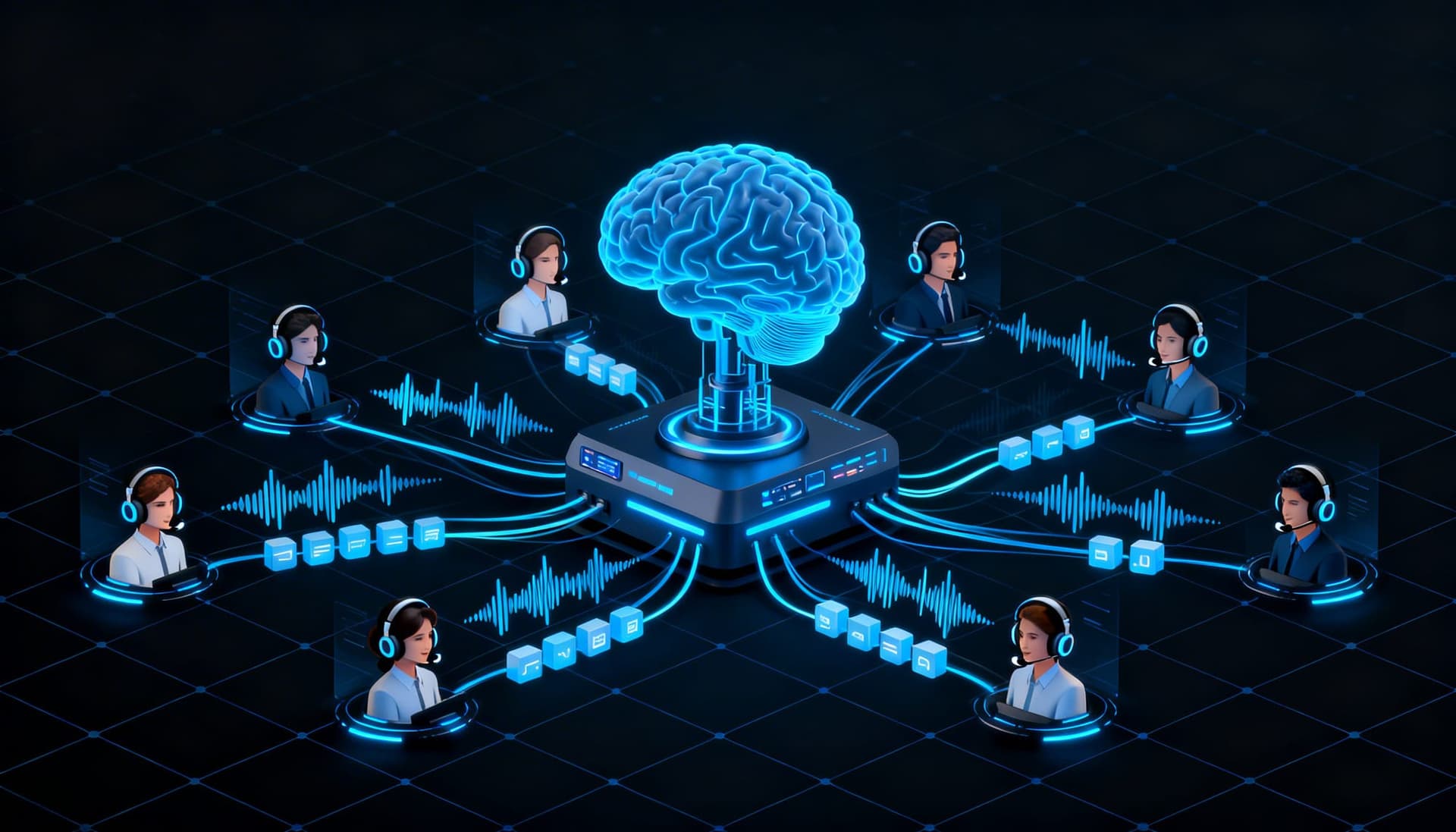
At its core, Voice AI acts as a cloud-based conversational layer connected to electronic health records, scheduling platforms, and care systems. It can manage multiple conversations at once, support multiple languages, and provide immediate, judgment-free assistance around the clock.
Rather than replacing human staff, Voice AI handles routine interactions efficiently so healthcare teams can focus on complex care, clinical decisions, and meaningful patient engagement.
Why Voice AI Matters for Modern Healthcare Systems?
Healthcare stands at a critical crossroads. The gap between patient demand and available resources continues to widen. Call centers struggle to answer incoming calls, leaving many patients without responses. People endure long hold times, and a significant number of callers hang up in frustration before ever getting help.
Think about the last time you called your doctor's office. Did someone answer right away? Or did you listen to hold music for what felt like forever? Maybe you even gave up and tried calling back later. This is the reality for millions of patients every single day.
Voice AI addresses these challenges by providing around-the-clock access, reducing wait times dramatically, supporting multiple languages, and freeing healthcare staff to focus on complex cases requiring human judgment and compassion. In other words, it’s a high-impact layer of Healthcare AI automation that improves access without adding pressure on front-desk or clinical teams.
It's not just about convenience. When patients can't get through to their healthcare providers, they delay care, miss appointments, or end up in emergency rooms for issues that could have been handled with a simple phone call. Voice AI helps bridge this gap, making healthcare more accessible when people need it most.
How Voice AI Works in Medical Environments?
Understanding how Voice AI functions helps demystify the technology and builds confidence in its reliability.
When a patient calls a healthcare facility using Voice AI, here's what happens behind the scenes:
Voice Capture: The call is answered instantly, and the system begins listening to your speech with advanced noise filtering that can handle background sounds, accents, and different speaking styles.
Speech Recognition: The system converts your spoken words into text with impressive accuracy, even with complex medical terms that would trip up regular voice assistants.
Understanding Intent: This is where it gets interesting. The AI doesn't just hear your words, it understands what you actually need. It picks up on context, urgency, and the real question behind what you're saying.
Information Retrieval: The system connects with electronic health records, scheduling systems, and databases in real-time to find the information needed to help you.
Intelligent Response: Based on everything it's gathered, the system formulates a helpful answer or takes action on your behalf.
Voice Output: The response is converted back into natural-sounding speech using advanced Text-to-Speech technology with appropriate tone and pacing, making the conversation feel human and comfortable.
Continuous Learning: Every interaction helps the system improve. It learns from patterns, refines its understanding, and gets better at helping people over time.
The entire process happens in just a couple of seconds, creating a conversation that feels natural and helpful rather than robotic and frustrating.
Key Areas Where Voice AI Is Transforming Patient Services
Voice AI creates positive change across the entire patient journey, and modern healthcare conversational ai platforms make these improvements feel seamless for patients and staff. Here are the main areas where it's making a real difference:
Voice AI for Patient Communication and Engagement
Voice AI transforms how healthcare organizations stay connected with patients delivering appointment reminders, sharing test results for routine matters, and providing follow-up instructions through natural conversations that feel personal and caring.
Voice AI for Appointment Scheduling and Management
Patients can book, reschedule, or cancel appointments at any hour of the day or night. The system checks available time slots, verifies insurance coverage, and sends confirmations all in one smooth interaction without any hold time.
Voice AI for Patient Triage and Symptom Assessment
When patients are unsure where to seek care, Voice AI asks intelligent questions about symptoms, assesses the situation, and recommends appropriate next steps. It's like having a knowledgeable nurse help you figure out whether you need emergency care, urgent care, or a regular appointment.
Voice AI for Chronic Disease Monitoring and Support
For patients managing ongoing conditions like diabetes or heart disease, Voice AI provides daily check-ins, medication reminders, and lifestyle coaching between clinic visits. This ongoing support helps people stay on track with their health goals.
Voice AI for Insurance Navigation and Billing Assistance
Healthcare insurance can be incredibly confusing. Voice AI helps by answering coverage questions, explaining bills in plain language, discussing payment options, and directing patients to financial assistance programs when needed.
Voice AI for Post-Discharge Follow-Up and Care Continuity
After hospital stays, Voice AI checks on patients to make sure they're recovering well, ensures they understand their recovery instructions, and identifies concerning symptoms early before they become serious problems.
Clinical & Administrative Use Cases of Voice AI
The real power of Voice AI becomes clear through specific applications already delivering measurable results in healthcare settings:
Appointment Scheduling and Reminders: Medical practices are using Voice AI to offer round-the-clock scheduling. Patients love the convenience of booking appointments whenever it's convenient for them, and practices benefit from reduced administrative burden and extended service hours.
Insurance Verification: The system performs real-time eligibility checks during scheduling conversations, preventing surprise bills and claim denials later. Patients know upfront what their coverage looks like and what they'll owe.
Prescription Refill Management: Patients simply request refills by voice. The system verifies their identity, checks medication lists, confirms refills are available, and routes requests appropriately to pharmacies or physicians for approval.
Lab Results Notification: For non-critical results that don't require clinical interpretation, Voice AI reaches out proactively to let patients know their results are ready and what they mean. This frees clinical staff to focus on abnormal results requiring intervention.
Clinical Documentation: Physicians can dictate notes naturally during patient visits, and the system captures and organizes the information. This reduces the time doctors spend on paperwork and gives them more time for patient care.
Patient Education and FAQ: Voice AI handles countless routine questions about office hours, appointment preparation instructions, medication side effects, and patient portal access. These are questions that don't require medical expertise but consume significant staff time.
Waitlist Management: When appointments open due to cancellations, the system immediately contacts patients on the waitlist, maximizing provider utilization and getting patients in sooner.
Post-Visit Surveys: Conversational feedback collection yields higher response rates than email surveys and reveals deeper insights about patient experiences and areas for improvement.
Care Coordination: For patients seeing multiple specialists, Voice AI helps coordinate appointments, ensures information flows between providers, and keeps everyone on the same page about the treatment plan.
Outbound Health Campaigns: When vaccines arrive or screenings are due, Voice AI conducts education and scheduling outreach to eligible patients, improving population health outcomes.
How Voice AI Enhances Patient Experience?
The ultimate measure of healthcare technology is its impact on patient experience. Voice AI delivers improvements patients genuinely appreciate:
Immediate Access
Healthcare systems using Voice AI have dramatically reduced wait times transforming frustration into satisfaction instantly. Instead of waiting on hold for what feels like forever, patients get help right away.
Natural Conversations
Patients speak naturally without navigating rigid menus or pressing endless buttons. The system understands and responds in one fluid exchange, making the experience feel like talking to a helpful person rather than fighting with a machine.
Consistency and Accuracy
Every patient receives the same quality information every time, building trust and reducing errors. The system doesn't have bad days, doesn't forget things, and doesn't give different answers to the same question.
Multilingual Support
Systems converse fluently in dozens of languages, eliminating language as a barrier to care access. Patients can communicate in whatever language they're most comfortable with.
Accessibility for All
Voice interaction is inherently accessible for patients with visual impairments or limited digital literacy. You don't need to navigate complex websites or apps you just talk.
Emotional Intelligence
Advanced systems detect emotional cues in voices and adjust tone, pace, and escalation accordingly. If someone sounds distressed or confused, the system responds with appropriate sensitivity.
Proactive Support
Rather than waiting for problems to arise, Voice AI reaches out with reminders and check-ins, making patients feel supported and cared for between appointments.
Privacy and Comfort
Some patients feel more comfortable disclosing sensitive information to AI than to another person. There's no judgment, no embarrassment—just helpful, confidential assistance.
Time Savings
Routine tasks that might take hours of phone tag with traditional systems complete in just minutes with Voice AI.
Healthcare systems that have implemented Voice AI report significant increases in patient satisfaction ratings, with patients specifically highlighting ease of scheduling, reduced wait times, and feeling genuinely heard during interactions.
Voice AI for Hospitals, Clinics, and Health Systems
Different healthcare settings benefit from Voice AI in distinct ways:
Large Hospital Systems: Major medical centers handle enormous call volumes daily. Voice AI scales effortlessly, managing a significant portion of calls autonomously with high patient satisfaction. After-hours coverage becomes seamless without expensive overnight answering services.
Community Clinics and Primary Care: Smaller practices gain disproportionate benefits. A lean practice can suddenly offer service quality rivaling major health systems. They can provide extended hours and better patient access without the cost of additional administrative staff.
Specialty Practices: Voice AI learns domain-specific vocabulary and protocols. An orthopedic practice's system becomes expert in joint-related terminology and specialty-specific care instructions. A cardiology practice's AI understands cardiac procedures and can explain complex testing preparation.
Urgent Care and Emergency Departments: Voice AI helps manage patient flow before arrival. Symptom assessment provides realistic wait-time estimates and redirects non-urgent cases to more appropriate care settings, reducing emergency room overcrowding.
Telehealth Platforms: Voice AI integrates naturally with virtual care, handling pre-visit check-in, technical troubleshooting, and post-visit follow-up. It smooths out the rough edges of virtual healthcare delivery.
Multi-Location Systems: Organizations operating multiple facilities ensure consistent patient experience across all locations while respecting site-specific details like individual provider schedules and local protocols.
Voice AI for Health Insurance & Care Coordination
Insurance and care coordination two of healthcare's most complex and frustrating challenges are areas where Voice AI proves remarkably effective:
Insurance Verification: Real-time eligibility checks during scheduling verify coverage, confirm in-network status, identify copay amounts, and alert to prior-authorization requirements. Patients know what to expect financially before they even book the appointment.
Billing Questions: Voice AI excels at explaining charges in plain language. Instead of deciphering confusing medical bills alone, patients can have a conversation that breaks down what they owe and why.

Walk away with actionable insights on AI adoption.
Limited seats available!

Benefits Explanation: Common questions about coverage details, deductible status, and what services are covered receive instant answers through insurance database integration. No more waiting on hold with insurance companies for basic information.
Care Coordination: When patients see multiple specialists, Voice AI manages appointment synchronization, record sharing, and referral tracking. It ensures everyone involved in a patient's care has the information they need.
Discharge Planning: After hospital stays, Voice AI coordinates follow-up appointments, prescriptions, medical equipment delivery, and home health services all the logistics that can be overwhelming for patients and families.
Population Health Management: The system conducts proactive outreach to high-risk populations for preventive care, discharge follow-up, and medication adherence support, helping keep vulnerable patients healthy.
Prior Authorization: Voice AI streamlines the often-frustrating prior authorization process by gathering required clinical information, checking authorization status, and notifying all stakeholders about approvals or denials.
Social Determinants Screening: The system can conduct sensitive screenings for food insecurity, housing stability, and transportation barriers social factors that significantly impact health outcomes. It then connects patients with community resources that can help.
Real-World Examples of Voice AI in Healthcare
Real implementations demonstrate the transformative power of Voice AI in healthcare settings:
Wait Time Transformation
A large healthcare network faced extremely long average wait times and significant call abandonment losing many daily patient interactions. After Voice AI implementation, wait times dropped dramatically, most calls were handled autonomously, and abandonment fell to minimal levels. The financial impact included substantial daily revenue recovery from appointments that would have otherwise been missed.
Eliminating Admin Burden
A medical practice with about a dozen physicians implemented Voice AI and achieved excellent patient approval ratings, true around-the-clock scheduling capability, elimination of multiple full-time administrative positions with significant annual savings, and complete elimination of answering service costs.
Documentation Revolution
Voice-enabled documentation delivered substantial reductions in documentation time, major decreases in order entry time, and significant cuts to transcription costs. Physicians gained considerable additional time daily for direct patient care.
Benefits of Using Voice AI in Healthcare
Voice AI delivers quantifiable benefits across multiple dimensions:
Operational Efficiency: Automated handling of most routine calls, reduction in average handle time, elimination of after-hours answering service costs, and ability to scale service without proportional staffing increases. Healthcare organizations can serve more patients with existing resources.
Cost Savings: Organizations typically save substantial amounts annually per eliminated or reassigned administrative position, reduce transcription costs significantly, minimize revenue loss from missed calls, and lower no-show rates considerably. These savings add up quickly.
Patient Satisfaction: Immediate response without hold times, around-the-clock availability, multilingual support, consistent information delivery, and proactive care engagement drive satisfaction scores to very high levels. Happy patients are more likely to follow treatment plans and recommend the practice to others.
Staff Well-being: Reduced burnout from repetitive tasks, more time for complex and meaningful work, better work-life balance, and decreased stress from overwhelming call volumes. Healthcare workers can focus on the aspects of their jobs that drew them to healthcare in the first place.
Clinical Outcomes: Earlier detection of declining conditions through proactive monitoring, improved medication adherence, better care coordination, and reduced emergency interventions. When patients get better support, their health outcomes improve.
Competitive Advantage: Meeting modern patient experience expectations, differentiation in crowded healthcare markets, attraction and retention of tech-savvy patients, and reputation as an innovative organization. In competitive healthcare markets, patient experience matters.
Data and Insights: Every interaction generates structured data revealing patient needs, common pain points, operational bottlenecks, and opportunities for improvement. This intelligence helps healthcare organizations continuously improve their services.
Accessibility and Equity: Language barriers eliminated, better support for patients with disabilities, accommodation of varied work schedules, and rural access to sophisticated services. Voice AI helps make healthcare more equitable and accessible for everyone.
Challenges, Risks, and Limitations of Voice AI in Healthcare
While Voice AI offers tremendous benefits, responsible implementation requires acknowledging limitations and addressing challenges:
Accent and Dialect Recognition: Systems may struggle with diverse accents or regional speech patterns. Continuous training on diverse voice data helps, but occasional misunderstandings occur.
Solution: Easy escalation to human staff when the system's confidence is low.
Complex Clinical Scenarios: Voice AI handles routine tasks excellently but cannot replace human judgment for nuanced clinical decisions. It's great for scheduling and basic questions but not for complex medical situations.
Solution: Clear boundaries with immediate escalation protocols for complex cases.
Emotional and Crisis Situations: While emotion detection improves, Voice AI cannot fully replace human empathy in highly emotional situations. When someone is truly distressed, they need human support.
Solution: Rapid transfer to appropriate staff for distressed callers.
Technology Adoption Barriers: Some patient populations may be unfamiliar or uncomfortable with voice technology, particularly older adults or those with limited technology exposure.
Solution: Always offer human alternatives and introduce the technology gradually.
Integration Complexity: Connecting Voice AI with legacy systems, multiple electronic health record platforms, and diverse software can be technically challenging.
Solution: Work with vendors offering robust integration support and healthcare experience.
Privacy Concerns: Patients may worry about voice data security and how their information is being used. These concerns are legitimate and need to be addressed.
Solution: Transparent privacy policies, robust security measures, and clear communication about data handling.
Dependency Risk: Over-reliance on technology can create vulnerabilities if systems fail or experience outages.
Solution: Backup protocols and hybrid models combining AI with human staff to ensure continuity of service.
Accuracy Limitations: While highly accurate, Voice AI is not perfect. Misheard words or misunderstood intent can occur, particularly in noisy environments or with unclear speech.
Solution: Confirmation steps for critical information and easy correction mechanisms.
Regulatory Uncertainty: Healthcare AI regulations continue evolving, creating compliance challenges for organizations trying to stay ahead of requirements.
Solution: Work with vendors prioritizing compliance and staying current with regulatory developments.
Initial Implementation Effort: Setting up Voice AI requires time, training, and process adjustment. It's not a flip-the-switch solution.
Solution: Phased rollout starting with high-impact, lower-risk use cases to build confidence and capability.
Addressing these challenges requires careful planning, ongoing monitoring, transparent communication with patients and staff, and commitment to continuous improvement. Organizations succeeding with Voice AI treat it as a complement to human staff, not a replacement.
Data Security, Compliance, and HIPAA Considerations
In healthcare, security and compliance are not optional they are fundamental requirements that protect patients and organizations:
HIPAA Compliance Requirements:
Encryption: All voice data must be encrypted both in transit and at rest using industry-standard protocols. This means your conversations are scrambled so nobody can intercept and read them.
Access Controls: Role-based access ensures only authorized personnel can access patient information. Not everyone in a healthcare organization can see everything access is limited based on job responsibilities.
Audit Logging: Comprehensive logs track every access and modification to protected health information. If something goes wrong, there's a complete record of who accessed what and when.
Business Associate Agreements: Vendors must sign legal agreements accepting liability for data protection. This ensures they're legally responsible for keeping patient information secure.
Minimum Necessary Standard: Systems should access only the minimum data required for each task. If the AI is scheduling appointments, it doesn't need access to detailed medical histories.
Breach Notification: Clear protocols for detecting, responding to, and reporting potential breaches. Everyone knows exactly what to do if patient data is compromised.
Data Retention: Clear policies for how long voice recordings and transcripts are stored and when they're securely deleted.
Technical Security Safeguards:
End-to-End Encryption: Protects data from the moment of capture through processing and storage. Your information stays protected throughout its entire journey.
Secure Data Centers: Facilities with rigorous certifications and both physical and digital security measures. These aren't just regular computer servers they're highly secure facilities.
Multi-Factor Authentication: Prevents unauthorized access to administrative systems. Password alone isn't enough there's a second verification step.
Regular Security Audits: Independent verification of security measures and vulnerability testing. Outside experts regularly test the systems to find and fix potential weaknesses.
Secure Connections: Encrypted communication between Voice AI and other healthcare systems prevents data interception during transmission.
Data Anonymization: Removing identifying information when data is used for system improvement, protecting patient privacy even in aggregate analysis.
Administrative Safeguards:
Staff Training: Education on security protocols and responsible AI usage. Everyone who works with the system understands their role in protecting patient information.
Risk Assessment: Regular evaluation of potential vulnerabilities and mitigation strategies. Organizations continuously look for and address potential security risks.
Incident Response Plans: Clear procedures for addressing security incidents quickly and effectively. If something goes wrong, everyone knows their role.
Vendor Management: Due diligence in selecting and monitoring technology partners. Healthcare organizations carefully vet vendors before trusting them with patient data.
Policy Documentation: Written security policies accessible to all stakeholders, ensuring everyone understands the rules and expectations.
Questions to Ask Vendors:
Do you provide a signed Business Associate Agreement?
What certifications do you hold for security and compliance?
How is voice data encrypted and where is it stored?
What is your data retention policy?
How do you handle data breaches?
Can you provide on-premise or private cloud deployment options?
What audit capabilities do you offer?
How do you ensure system availability and disaster recovery?
These aren't just technical questions they're about protecting patient trust and ensuring healthcare organizations meet their legal and ethical obligations.
Integrations: EMR, EHR, VoIP & Healthcare Systems
Voice AI delivers maximum value when seamlessly integrated with existing healthcare infrastructure:
Electronic Health Records
Integration with major systems enables Voice AI to access patient demographics, medical history, medication lists, and appointment schedules. Real-time synchronization ensures information stays current and reduces duplicate data entry that wastes time and creates errors.
Telephony and VoIP Systems
Connection with phone platforms enables call routing, number provisioning, and seamless transfer between AI and human agents. The system supports both inbound calls from patients and outbound calls for reminders or follow-up.
Practice Management Systems
Integration with scheduling, billing, and revenue cycle management platforms ensures Voice AI can book appointments, verify insurance, process payments, and update billing information without manual intervention.
Patient Portals
Connection with patient portals allows Voice AI to guide patients through online resources, reset passwords, explain features, and encourage digital engagement for patients who might be hesitant about technology.
Pharmacy Systems
Integration enables prescription refill requests to flow directly to pharmacies with all necessary information, reducing manual processing and potential errors.
Insurance Verification Systems
Real-time connection to eligibility databases allows instant coverage verification during scheduling calls, preventing billing surprises later.
Customer Relationship Management
Integration with healthcare relationship management systems enables comprehensive patient communication tracking and relationship management across all touchpoints.
Communication Platforms
Omnichannel capability connects voice with text messaging, email, and messaging platforms for seamless communication continuity. Conversations can flow naturally across different channels.
Analytics and Reporting Tools
Integration with business intelligence platforms enables sophisticated analysis of call patterns, patient satisfaction trends, and operational metrics for continuous improvement.
Modern Voice AI platforms offer pre-built connectors for major healthcare systems, programming interfaces for custom integrations, and support for healthcare data exchange standards. Implementation typically takes weeks rather than months when vendors prioritize integration capabilities and have healthcare experience.
How Healthcare Organisations Can Implement Voice AI?
Successful Voice AI implementation follows a structured approach that minimizes risk while maximizing benefits:
Step 1: Identify High-Impact Use Cases
Start by analyzing call patterns and identifying high-volume, routine tasks. Common starting points include appointment scheduling, prescription refill requests, insurance verification, and general information inquiries. Quantify baseline metrics like call volume, handle time, abandonment rate, and patient satisfaction to measure improvement later.
Step 2: Secure Stakeholder Buy-In
Build a compelling business case showing return on investment projections, efficiency gains, and patient experience improvements. Involve front-desk staff, clinical teams, information technology, compliance, and executive leadership early in the process. Address concerns transparently, especially around job security—emphasize that Voice AI handles repetitive tasks so staff can focus on complex, rewarding work that requires human expertise.
Step 3: Evaluate Technology Vendors
Compare vendors on medical terminology accuracy, compliance and certifications, integration capabilities with your existing systems, multilingual support quality, ease of customization, pricing models, and customer support quality. Request demonstrations with your actual use cases, not generic demos, and speak with reference customers in similar healthcare settings about their real experiences.
Step 4: Plan Integration and Data Flow
Map how Voice AI will connect with your electronic health records, practice management system, phone system, and other infrastructure. Define data flows, authentication methods, and synchronization schedules. Ensure information technology and security teams review and approve all integration plans before implementation begins.
Step 5: Design Conversational Flows
Work with front-desk staff to map conversation paths for each use case. They know the actual questions patients ask and the information needed to help them. Include verification steps, information gathering questions, decision points, and clear escalation triggers. Design for the most common scenarios while building fallbacks for unexpected inputs. Test flows extensively before launch.
Walk away with actionable insights on AI adoption.
Limited seats available!
Step 6: Conduct Pilot Testing
Launch with a limited scope, perhaps one clinic location, specific hours, or particular call types. Don't try to do everything at once. Run the pilot for several weeks, monitoring closely. Track success metrics, identify edge cases that need addressing, gather feedback from both patients and staff, and refine based on real-world performance.
Step 7: Train Staff and Communicate Changes
Educate staff on how Voice AI works, when it escalates calls to them, and how they access conversation transcripts and summaries. Make sure they understand their role in the new workflow. Inform patients about the new option through multiple channels, website, portal messages, office signage, social media. Make human assistance easily accessible for those who prefer it.
Step 8: Scale Gradually
Once the pilot proves successful, expand systematically. Add use cases, locations, or hours incrementally rather than attempting full deployment at once. This approach allows you to learn and adjust while minimizing disruption to patients and staff.
Step 9: Monitor and Optimize Continuously
Establish dashboards tracking key metrics: deflection rate, resolution time, patient satisfaction, escalation frequency, and accuracy. Review call recordings regularly to identify improvement opportunities. Update conversational flows monthly based on performance data and changing patient needs. Conduct periodic patient surveys to ensure satisfaction remains high.
Implementation Timeline: Most organizations move from decision to pilot launch in a few months, with full deployment completed within six to nine months. The phased approach reduces risk while building organizational confidence and capability.
Cost Considerations & ROI for Healthcare Voice AI
Understanding the financial model helps healthcare leaders make informed decisions:
Typical Cost Structure
Setup and Integration: One-time costs for getting everything configured and integrated with existing systems. The amount varies depending on complexity and customization needs.
Per-Minute Usage Fees: Ongoing costs based on conversation volume, dramatically lower than human agent costs. You pay for what you use.
Monthly Platform Fees: Some vendors charge base fees for platform access and support, providing predictable monthly costs.
Training and Customization: Initial investment in conversation design and system training to make the AI work well for your specific needs.
Ongoing Optimization: Budget for continuous improvement, monitoring, and updates to keep the system performing well.
ROI Calculation Example:
Consider a mid-sized clinic with substantial weekly call volume:
Current State: Multiple full-time staff handling calls with salaries and benefits. After-hours answering service costs. Missed appointments due to poor communication creating revenue loss.
Voice AI Implementation: Setup costs for initial implementation. Annual usage costs based on call volume. Monthly platform fees.
Savings and Benefits: Reduction in administrative staff needs. Elimination of answering service costs. Recovery of revenue from reduced no-shows. Total annual benefit adds up significantly.
Net ROI: First year shows positive return even after implementation costs. Subsequent years show substantial annual benefit with much lower ongoing costs. Payback period is typically less than a year.
Additional Value Beyond Direct Costs:
Staff Satisfaction: Reduced burnout and turnover save recruitment and training costs. Replacing healthcare staff is expensive and time-consuming.
Patient Retention: Better experience reduces patient churn to competitors. Keeping existing patients is much more cost-effective than acquiring new ones.
Capacity Expansion: Handle more calls without facility expansion or proportional hiring. Growth becomes more profitable.
Data Value: Insights from call analytics enable operational improvements that deliver ongoing value beyond the direct cost savings.
Competitive Differentiation: Modern experience attracts new patients and builds reputation in the community.
Scalability: Growth doesn't require proportional staff increases, improving economics over time.
Most healthcare organizations achieve positive return on investment within the first year, with benefits accelerating in subsequent years as usage expands and costs stabilize.
Future of Voice AI in Healthcare
Voice AI in healthcare continues evolving rapidly. Understanding emerging trends helps organizations prepare for what's coming:
Predictive Health Monitoring: Advanced systems will analyze voice patterns to detect early signs of conditions like heart failure, depression, neurological diseases, and respiratory issues. Subtle changes in speech patterns, tone, and breathing can signal health changes before traditional symptoms appear.
Ambient Clinical Intelligence: Voice AI will listen during patient visits, automatically documenting encounters, suggesting diagnoses based on symptoms discussed, and flagging missing information all without physicians needing to dictate or type. Doctors can focus entirely on the patient.
Personalized Voice Assistants: Systems will recognize individual patients and adapt communication style, language complexity, and information delivery based on health literacy, cultural background, and personal preferences learned over time.
Emotional Intelligence Enhancement: Next-generation systems will better recognize and respond to emotional states detecting anxiety, confusion, frustration, or distress and adapting responses or escalating appropriately to human support.
Expanded Clinical Decision Support: Voice AI will integrate with clinical guidelines and medical literature, providing evidence-based suggestions during patient interactions while maintaining clear human oversight for final decisions.
Voice-First Medical Devices: Integration with home health devices will enable patients to check vitals, receive medication reminders, and report symptoms using natural conversation with connected monitoring systems.
Multilingual Expansion: Support will extend to even more languages and regional dialects, with real-time translation enabling seamless communication across language barriers worldwide.
Proactive Health Management: Systems will initiate health-focused conversations based on patient data reminding about screenings, checking on chronic conditions, and encouraging preventive behaviors before problems develop.
Integration with Social Determinants: Voice AI will screen for and address social factors affecting health food security, housing stability, transportation access connecting patients with community resources that can help.
Regulatory Framework Maturation: As healthcare AI regulations develop, clearer guidelines will emerge around liability, transparency, patient consent, and quality standards, making implementation more straightforward.
Generative AI Advancement: Large language models specialized for healthcare will enable more sophisticated conversations through advanced function-calling capabilities, better understanding of complex medical information, and more nuanced responses to patient questions.
Voice Biomarker Development: Research into voice as a diagnostic tool will expand, potentially enabling non-invasive screening for various conditions through speech analysis.
Industry projections suggest that within a few years, most healthcare providers will deploy some form of conversational AI for patient-facing services. Voice AI is transitioning from early adoption to mainstream infrastructure.
The organizations succeeding in this evolution will be those that view Voice AI not as a cost-cutting tool, but as a strategic investment in patient experience, operational excellence, and clinical quality. The technology will continue advancing, but the fundamental goal remains constant: helping healthcare providers deliver better care to more people, more efficiently, more compassionately.
Frequently Asked Questions around Voice AI in Healthcare
What is Voice AI in healthcare?
Voice AI in healthcare is technology that enables patients and providers to interact with healthcare systems using natural spoken language. It uses speech recognition, natural language understanding, and conversational intelligence to understand requests, access information, and provide helpful responses all through voice conversation.
How accurate is Voice AI with medical terminology?
Modern healthcare-specific Voice AI systems achieve very high accuracy with medical terminology because they're trained on extensive clinical conversations, similar to how speech-to-text models are optimized for specific domains. This is significantly higher than consumer voice assistants that struggle with complex medical terms.
Is Voice AI HIPAA compliant?
Reputable healthcare Voice AI vendors provide compliant solutions with encryption, secure data storage, access controls, audit logging, and signed Business Associate Agreements. Always verify compliance certifications before implementing any healthcare AI solution.
Can Voice AI replace human healthcare staff?
No. Voice AI is designed to complement human staff, not replace them. It handles routine, repetitive tasks so healthcare professionals can focus on complex cases requiring human judgment, expertise, and empathy. The best implementations create hybrid models combining AI efficiency with human capability.
What happens if Voice AI doesn't understand a patient?
Quality Voice AI systems include robust escalation protocols. When confidence is low or the situation exceeds system capabilities, calls transfer seamlessly to human staff with full context. Patients can also request human assistance at any time.
How long does implementation take?
Most organizations move from decision to pilot launch in a few months, with full deployment completed within six to nine months. Phased implementation allows learning and adjustment while minimizing disruption.
What does Voice AI cost?
Costs vary but typically include setup fees, per-minute usage fees, and monthly platform fees. Most healthcare organizations achieve positive return on investment within the first year through staff savings and efficiency gains.
Does Voice AI work in multiple languages?
Yes. Modern Voice AI systems support dozens of languages and can switch between them based on patient preference, eliminating language barriers to care access.
How do patients feel about Voice AI?
When implemented well, patient satisfaction is high. Patients appreciate immediate access, no hold times, consistent information, and natural conversation. Many don't realize they're interacting with AI; they just notice excellent service.
Can Voice AI handle emergency situations?
Voice AI can recognize emergency keywords and situations, but it immediately escalates to qualified human staff rather than attempting to handle emergencies independently. Patient safety always takes priority over automation.
What systems does Voice AI integrate with?
Voice AI integrates with electronic health record systems, practice management platforms, phone systems, patient portals, pharmacy systems, insurance databases, and relationship management systems. Modern platforms offer pre-built connectors and programming interfaces.
How secure is voice data?
Healthcare Voice AI uses end-to-end encryption, secure data centers with rigorous certifications, role-based access controls, and comprehensive audit logging. Data retention policies and anonymization protect patient privacy.
Will Voice AI work for our specialized practice?
Yes. Voice AI can be trained on specialty-specific terminology and protocols. Orthopedic, cardiology, oncology, mental health, and other specialty practices successfully use customized Voice AI solutions.
How do we measure Voice AI success?
Key metrics include call deflection rate, average wait time, patient satisfaction scores, cost per interaction, no-show rates, and staff satisfaction. Most organizations see measurable improvements within weeks.
What if our patients prefer talking to humans?
Always offer human alternatives. Effective implementations make it easy for patients to reach human staff while providing Voice AI as an option. Over time, many patients appreciate the choice and convenience Voice AI offers.
Conclusion
Healthcare depends on clear communication, timely access, and human connection. Voice AI strengthens all three by handling routine interactions efficiently, reducing delays, and ensuring patients receive accurate support when they need it. Rather than replacing healthcare professionals, it allows them to focus on complex care, clinical judgment, and meaningful patient interactions.
As patient demand grows and healthcare systems face increasing operational pressure, Voice AI provides a practical way to improve access, efficiency, and patient experience at scale. From appointment management and triage to care coordination and follow-up, it is already delivering measurable impact across healthcare organizations.
Voice AI in healthcare is not a future promise. It is a present-day solution helping providers deliver better, more accessible, and more compassionate care.

Saisaran D
I'm an AI/ML engineer specializing in generative AI and machine learning, developing innovative solutions with diffusion models and creating cutting-edge AI tools that drive technological advancement.
Walk away with actionable insights on AI adoption.
Limited seats available!