
I’ve noticed something consistent with LLMs. They feel sharp for quick chats, but once I push them into long prompts, strict constraints, or multi-step reasoning, things start breaking. Sections get skipped, and earlier constraints don’t carry through. The output looks fine at a glance, but doesn’t hold up.
This isn’t just anecdotal. Research shows LLM performance drops as task complexity and reasoning depth increase
I see this most in real work, like technical docs or inference pipelines, where one early mistake compounds and there’s no self-correction. A single-pass response just commits to the error.
That’s exactly where Recursive Language Models (RLMs) change things. Instead of trusting the first output, I treat it as a draft and force the model to review, evaluate, and refine it in loops.
In this post, I’ll break down what RLMs are, why they outperform standard LLMs, and how I actually implement them on top of existing models.
What Are Recursive Language Models (RLMs)?
A Recursive Language Model (RLM) is an execution strategy that improves how a standard language model generates output by introducing iterative refinement.
Instead of producing a final answer in a single pass, an RLM treats the initial output as a draft. That draft is then evaluated, corrected, and refined through multiple iterations until it meets the required constraints.
In a typical LLM setup, whatever the model misses stays missed. RLMs solve this by adding a feedback loop:
generate → evaluate → refine.
I’ve seen this approach work especially well in tasks where missing structure or constraints isn’t acceptable.
The result isn’t more creative output, but it is more complete, structured, and reliable.
Why LLMs Fail on Long Prompts (Even With Large Context)
It’s common to assume long-context failures happen because models “run out of memory.” So the usual fix is increasing the context window.
But that’s not the full picture.
Even when the entire prompt fits within the context window, LLMs still miss things. Sections get skipped. Earlier constraints don’t carry through to the final output.
The issue isn’t that the model can’t see the text. It’s that it doesn’t check whether it followed everything.
Once the generation starts, the model moves forward without verifying its output. A larger context window helps it see more, but it doesn’t make it validate what it produces.
RLMs address this by adding checkpoints. Each iteration compares the current output against the original requirements.
That kind of step-by-step verification doesn’t exist in single-pass generation.
How RLMs Improve Output Through Iteration
The core idea behind RLMs is simple: generation should be revisitable. Instead of trusting the first answer, the system treats it as a working draft. That draft is then reprocessed with targeted questions like:
- What sections are missing?
- Which constraints were violated?
- Is the structure actually complete?
This loop keeps running until the output finally meets all the requirements, or until the system decides it’s gone far enough and stops. At that point, the model isn’t just spitting out text anymore, it’s effectively participating in a feedback-driven control system, adjusting its own output based on what’s missing or wrong.
That shift is small architecturally, but it makes a clear difference in practice.
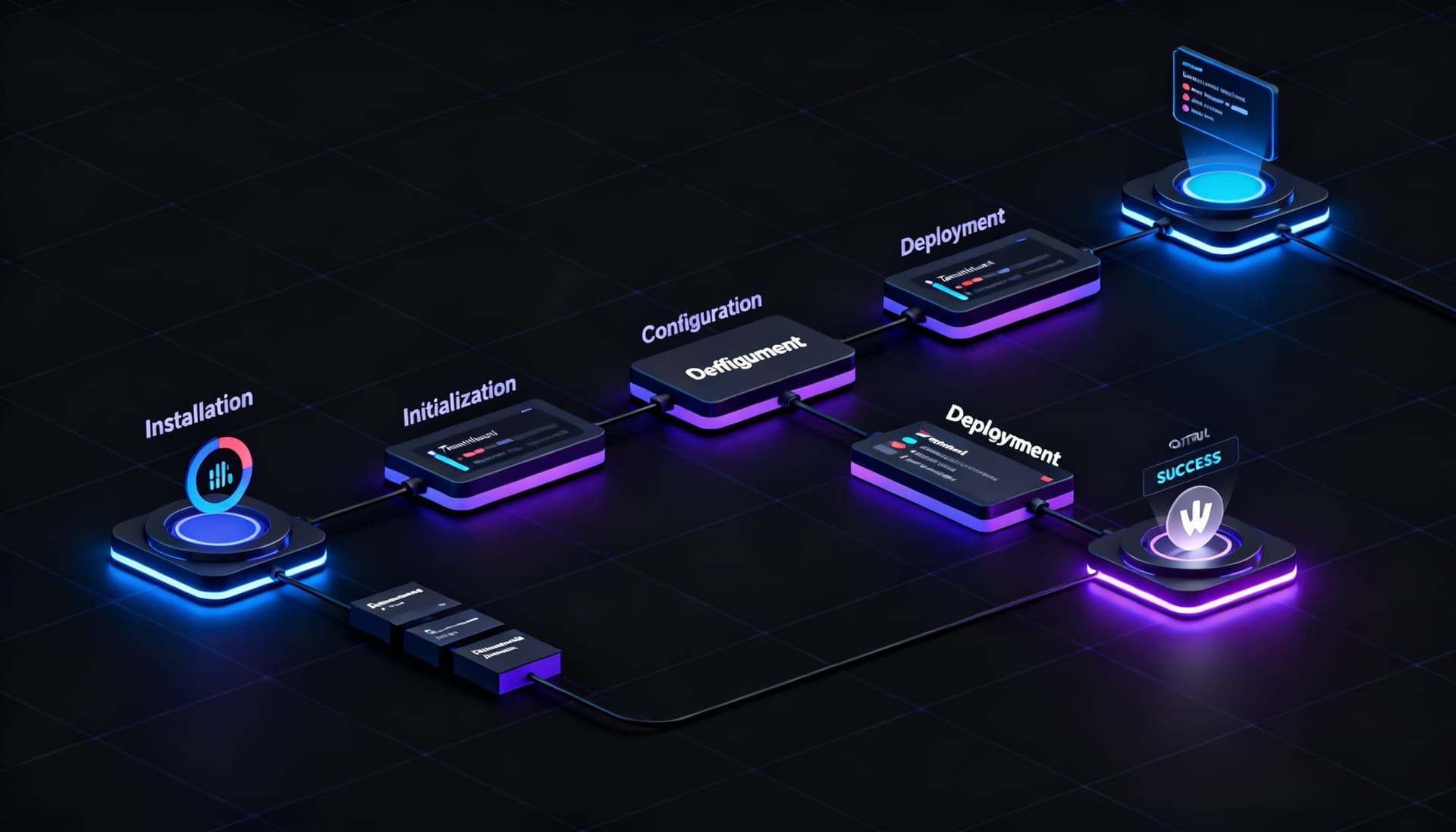
How Recursive Language Models Work (Step-by-Step)
An RLM wraps a standard LLM inside a feedback loop. The loop itself isn’t the interesting part. What matters is the decision-making at each step.
Step 1: Initial Draft Generation
The system sends the original task prompt to the LLM and requests a complete response. This output is explicitly treated as a draft, not a final answer.
Step 2: Evaluation Pass
A second prompt is constructed that includes the original task requirements, the draft output, and explicit evaluation instructions.
Step 3: Decision Gate
Based on the evaluation, the system decides whether the answer is complete, needs refinement, or requires expansion or correction.
Step 4: Recursive Refinement
If issues are detected, a refinement prompt is generated and sent back to the LLM. The model improves the existing output instead of starting from scratch.

Walk away with actionable insights on AI adoption.
Limited seats available!

Step 5: Termination Condition
The loop ends when all constraints are satisfied or a maximum iteration limit is reached to prevent infinite recursion.
RLM Architecture vs Traditional LLM Architectures
Traditional:
- 1 prompt → 1 pass → 1 output.
- Good for chat/short stuff.
- Dies on structure/constraints.
RLM:
- Prompt → Draft → Evaluate → Refine → Loop
- Improves the same output through iteration
- Treats the model as an editor, not just a writer

How to Build an RLM on Top of Any LLM


Final inference
Here’s a direct comparison between a single-pass LLM call and an RLM setup:
| Type | Iterations | Total Time (s) | Input Tokens | Output Tokens | Total Tokens |
Direct API | 1 | 15.38 | 441 | 1227 | 1668 |
RLM | 2 | 23.02s | 6,247 | 1,054 | 7,301 |
RLM takes more time and tokens, but produces more complete and reliable output.
The direct API is faster, but it doesn’t correct itself.
RLM helps with reasoning.The direct API focuses on generation.
Use Cases of Recursive Language Models
RLMs are not for everything. For casual chat or creative writing, they’re unnecessary.
They become useful in tasks where missing details can cause real issues. This usually happens in structured or multi-step work, where the output needs to follow specific requirements.
Common examples include:
- Technical documentation
- Policy generation
- Legal analysis
- Multi-step planning
- Long-form analytical writing
In these cases, skipping a section or missing a constraint can break the entire output.
That’s where RLMs help. By revisiting and refining the response, they reduce the chances of incomplete or inconsistent results.
Any task where completeness matters more than speed is a good fit for RLMs.
A direct LLM is faster, but an RLM is more reliable.
def run_rlm(prompt):
    start_time = time.time()
    rlm = RLM(
        backend="openai",
        backend_kwargs={"model_name": "gpt-4o-mini"},
        environment="local",
        max_depth=1,
        max_iterations=10,
        verbose=True,
    )
    result = rlm.completion(prompt)
This example shows how an RLM wraps a standard LLM with iteration controls and refinement logic.
RLMs vs Other Long-Context Techniques
Techniques like retrieval augmentation, chunking, and summarization help the model access more information.
They solve a context problem.
RLMs solve a different problem.
They don’t improve what the model sees. They improve how the model checks what it produces.
In simple terms:
- Retrieval and chunking → Did the model get the right information?
- RLMs → Did the model use that information correctly?
If your issue is missing context, use retrieval or chunking. If your issue is incomplete or inconsistent output, use RLMs.
In practice, both are often used together.
The key difference is feedback. RLMs add a step where the model evaluates and improves its own output.
Example: Direct LLM vs RLM Output

This example compares a direct LLM response with an RLM-refined output. The RLM version is more structured and complete due to iterative refinement.
Walk away with actionable insights on AI adoption.
Limited seats available!
Performance & Limitations of Recursive Language Models
The most obvious downside of RLMs is latency. Each iteration adds time, and your demo shows this clearly. The RLM output takes several times longer than a direct call.
There are also diminishing returns. After a certain number of iterations, improvements flatten out. Poorly designed recursion logic can even make outputs worse.
RLMs require careful tuning of iteration limits, evaluation rules, and cleanup logic. They are powerful, but not free.
Safety & Engineering Considerations
From an engineering perspective, RLMs introduce new failure modes. Infinite loops, over-correction, and excessive verbosity are real risks if guardrails are not enforced.
From a safety standpoint, recursive systems can reinforce both correct and incorrect outputs. If the evaluation logic is flawed, the model may repeatedly reinforce incorrect assumptions.
This makes monitoring, logging, and iteration limits essential components of any production RLM system.
Frequently Asked Questions
What is a Recursive Language Model (RLM)?
An RLM treats the first output as a draft and improves it through repeated evaluation and refinement instead of returning a single final response.
Why do LLMs fail on long or complex prompts?
They don’t verify their output. Once generation starts, instructions can be missed without any correction step.
How do RLMs fix incomplete outputs?
They re-check the draft against requirements and refine missing sections, constraints, or structure before finalizing the response.
When should you use RLMs instead of direct LLM calls?
When missing details, structure, or constraints can break the output, like in technical docs, workflows, or multi-step reasoning tasks.
How many iterations should an RLM run?
Typically 2–5 iterations. Beyond that, improvements slow down while cost and latency increase.
Do RLMs increase cost and latency?
Yes. Each iteration adds tokens and time, so you trade speed for more reliable and complete output.
Can RLMs replace techniques like RAG or chunking?
No. RAG improves what the model sees. RLMs improve how the model checks its output. They solve different problems and often work together.
What is the main advantage of RLMs?
They add a verification step, helping catch missing sections, broken structure, and constraint violations before returning the final output.
Conclusion
Now that we’ve seen how RLMs work, the difference is clear. They don’t change the model itself; they change how the output is handled.
Instead of relying on a single response, they add a step where the output is checked and refined. This becomes useful in tasks where structure and completeness matter, and missing details can affect the outcome.
The trade-off is more time and tokens in exchange for more reliable results.
For simple tasks, a direct LLM is enough. But when accuracy matters, that extra step makes a difference.
RLMs don’t generate better answers; they help ensure the answer is actually complete.

Divaesh Nandaa
Walk away with actionable insights on AI adoption.
Limited seats available!