- PyTorch prioritizes flexibility, Python-friendly development, and rapid experimentation.
- TensorFlow offers a mature ecosystem for large-scale, mobile, browser, and edge deployment.
- PyTorch uses dynamic computation graphs, while TensorFlow supports eager execution and compiled graphs.
- Training performance is generally comparable and depends more on architecture, hardware, and optimization.
- PyTorch is widely used in research and custom model development.
- TensorFlow remains strong for production serving through TensorFlow Serving, TFLite, and TensorFlow.js.
- Choose based on deployment requirements, team experience, ecosystem compatibility, and model complexity.
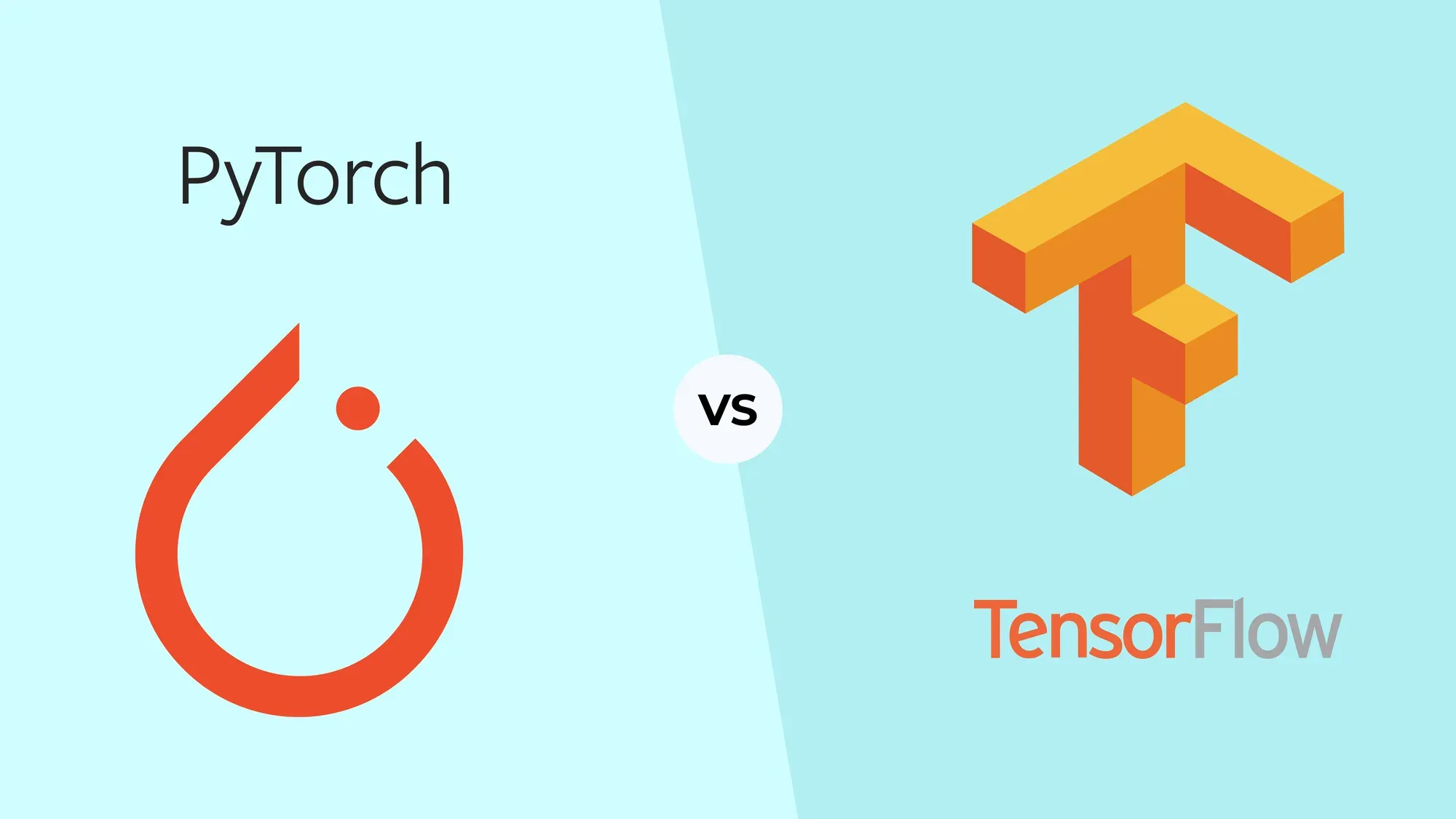
Choosing between PyTorch and TensorFlow is one of the first real decisions you make as a deep learning practitioner. Both frameworks power some of the most advanced AI systems in the world, and both have mature ecosystems. But they're built on different philosophies, and that difference matters more than most people think.
This article breaks down how PyTorch and TensorFlow compare on performance, ease of use, deployment, and industry adoption, so you can pick the right tool for your project.
What Is PyTorch?
PyTorch is a deep learning framework developed by Meta's AI Research lab, built for flexibility and fast experimentation. It uses dynamic computational graphs, which means the model is built and executed at the same time, line by line.
This makes debugging straightforward. You can inspect, print, and modify your model mid-execution just like regular Python code.
PyTorch has become the dominant framework in academic research and is increasingly adopted in production environments.
What Is TensorFlow?
TensorFlow is a deep learning framework developed by Google, designed with production deployment in mind from the start. It originally used static computational graphs, where the entire computation is defined before any data flows through it.
TensorFlow 2.x introduced eager execution, which brought dynamic behavior closer to PyTorch. But TensorFlow's ecosystem, particularly TensorFlow Serving, TFLite, and TensorFlow.js, remains its strongest differentiator for deploying models at scale.
Static vs Dynamic Graphs: Why It Matters
The graph approach each framework uses shapes how you build and debug models.
PyTorch builds the graph on the fly as your code runs. If something breaks, you get a clear Python error pointing to the exact line. This makes iteration fast.
TensorFlow's static graph approach requires you to define the full computation before running it. This opens the door for heavy optimization at compile time, which is one reason TensorFlow can be faster in certain production scenarios.

Walk away with actionable insights on AI adoption.
Limited seats available!

In practice, TensorFlow 2.x has largely closed this gap with eager execution enabled by default. But the underlying philosophy still surfaces in deployment patterns.
Performance Comparison
Neither framework is universally faster than the other. Performance depends on the model architecture, hardware setup, and how well you optimize your training loop.
Training speed: PyTorch and TensorFlow are comparable for most standard architectures. PyTorch often edges ahead in research settings because it's easier to experiment with custom training loops.
Inference speed: TensorFlow has an advantage here, especially with TensorFlow Serving and TFLite. TorchScript and ONNX have improved PyTorch's inference story, but TensorFlow's tooling is more mature.
GPU utilization: Both support CUDA and multi-GPU training. TensorFlow's XLA compiler can squeeze more efficiency out of hardware for large-scale workloads.
Distributed training: TensorFlow's tf.distribute is well-documented and widely used. PyTorch's DistributedDataParallel is equally capable and has gained significant adoption in large model training.
Ease of Use
PyTorch reads like Python. The API is intuitive, and the learning curve is gentle for developers already familiar with NumPy or basic Python.
TensorFlow has improved significantly with TF 2.x and the Keras API. Keras abstracts away a lot of the complexity and is a solid choice for beginners building standard models.
Where PyTorch still leads is in custom AI development. Writing a novel architecture or a custom training loop is simpler in PyTorch without needing to work around framework conventions.
Industry Adoption
PyTorch dominates academic research. The majority of papers published at NeurIPS, ICML, and ICLR include PyTorch implementations. Most open-source model weights, including those behind large language models, are released in PyTorch first.
TensorFlow has deep roots in industry, particularly in companies that need scalable deployment pipelines. Google's internal infrastructure runs on TensorFlow, and its mobile and edge deployment tools remain industry-leading.
The gap has narrowed. Many companies now use PyTorch for research and training, then convert to TensorFlow or ONNX for serving.
Which One Should You Use?
Choose PyTorch if you're:
- Doing research or rapid prototyping
- Working with cutting-edge model architectures
- Prioritizing flexibility over deployment tooling
Walk away with actionable insights on AI adoption.
Limited seats available!
Choose TensorFlow if you're:
- Deploying models to mobile or edge devices
- Building large-scale serving pipelines
- Working in a team already using Google Cloud or TFX
If you're just starting out, PyTorch is easier to learn and has more community resources for beginners in 2024.
Frequently Asked Questions
Is PyTorch better than TensorFlow?
Neither is objectively better. PyTorch is better for research and experimentation. TensorFlow is better for production deployment, especially on mobile and edge devices.
Can I switch from TensorFlow to PyTorch?
Yes. The core concepts carry over. Most people find PyTorch easier to learn if they already understand neural networks.
Does TensorFlow still support static graphs?
TensorFlow 2.x uses eager execution by default, but you can still use @tf.function to compile static graphs for performance optimization.
Which framework does Google use?
Google uses TensorFlow internally. However, many Google researchers also publish work in JAX, which is becoming increasingly popular for large model training.

Walk away with actionable insights on AI adoption.
Limited seats available!