In-house Vs Outsourcing: Building Your New Product Development
Should you build an in-house team or outsource your product development? That’s a question every startup founder needs to answer, especially when building an MVP for their product. Making this decision is both critical and vital.
Both approaches have their own advantages, and the right choice depends on your organization's specific needs, goals, and resources. Let’s explore the benefits of each option to help you determine the best route for your product development strategy.
Advantages of Building an In-house Product Development Team
Building an in-house product development team is a great alternative to outsourcing for businesses with a long-term vision. It is also considered the best type of product development team to build if you prioritize control, IP protection and strengthening your internal capabilities. If you’re building your startup in an industry where a deep understanding of your product is relevant, then building an in-house team is your best shot. Apple is a prime example—its highly skilled internal team consistently produces products that align with its brand, values, and customer expectations.
Below are reasons why you might want to consider building an in-house team for your product development:
- Direct Control Over Development: Having an internal team means that you have complete oversight of the development process. This makes it easier to implement changes quickly, make adjustments on the fly, and keep the project aligned with your vision. You're able to set the tone, manage priorities, and steer the direction of the product without waiting on external partners.
- Intellectual Property Protection: Intellectual property (IP) is the lifeblood of many product-driven businesses. When you have an in-house team, you maintain tight control over your IP. There's less risk of it being shared or mishandled outside your organisation, making this a safer option for companies with proprietary technologies or innovations.
- Cultural Alignment and Consistency: A team within your organization can seamlessly align with your company culture. They understand your values, mission, and long-term objectives. This creates a consistent experience throughout the development process and ensures that the final product is in tune with your brand’s identity.
- Long-Term Capability Building: An in-house team not only focuses on the current product but also on building your organization’s development capabilities for the future. You'll develop a deep bench of talent, knowledge, and experience that can be leveraged for future projects and innovations.
Advantages of Outsourcing Your Product Development
If speed, and scaling fast are one of the goals for your product development, then outsourcing is your best bet. Outsourcing for product development is highly required if moving quickly and saving on costs is your product development goal. It’s a scalable approach that helps speed up the development process and also assures you the best talents anywhere in the world. Imagine building a product in the US, and having your product development team all working in different time zones from 7 different countries, that’s what outsourcing can do. Think of Tesla, which frequently outsources certain aspects of its vehicle manufacturing and software development to specialized firms to meet its ambitious production goals.
While building an in-house team has its perks, outsourcing parts of your product development can also offer unique advantages. Here’s why you might choose to go down the outsourcing route:
- Access to Specialized Expertise: Outsourcing gives you access to talent with highly specialized skills that may be difficult or costly to build in-house. Whether you need expert designers, engineers, or software developers, outsourcing allows you to tap into global expertise without needing to hire and train in-house staff for every skill set.
- Cost Efficiency and Flexibility: Outsourcing is often more cost-effective, especially for specialized tasks. You can scale your team up or down depending on the project’s needs, avoiding the costs of maintaining a large, permanent in-house team. This flexibility allows you to adapt quickly to changes in your development cycle without a significant financial commitment.
- Faster Development Cycles: Specialized external teams are often able to develop products faster due to their experience and focus. They come equipped with the knowledge, tools, and methodologies that streamline the development process. Outsourcing can speed up your time-to-market, which is critical in today’s fast-paced business environment.
- Scalability Options: As your business grows, so will your product development needs. Outsourcing provides the ability to scale resources quickly, whether that means adding more development capacity or accessing new areas of expertise. This scalability makes outsourcing an ideal choice for businesses that are expanding rapidly or experimenting with new product types.
Build Lean. Learn Fast.
Launch an MVP that saves money while proving your concept works.
In-house Vs Outsourced Product Development: 4 Major Differences
1. Cultural Integration
Culture is defined by those seemingly insignificant moments that hold great significance. In-house teams participate in the Friday gatherings, share inside jokes, and engage in spontaneous conversations by the coffee machine, where innovative ideas often emerge. They embody the essence of your organization. Conversely, outsourced teams resemble a distant relative who visits occasionally professional and connected, yet operating with their own distinct approach. They may not fully understand the humour behind your team's ongoing joke about a past server outage, and that is perfectly acceptable.
2. Cost Structure
Financial considerations are paramount. With in-house teams, you are fully committed—covering salaries, health benefits, and the premium coffee machine they insisted upon, among other expenses. This situation is akin to homeownership; you are responsible for the mortgage regardless of how many rooms you utilize. On the other hand, outsourced teams function more like a hotel, where you pay for the services you require. While it may seem pricier on a per-night basis, you are relieved from the burdens of maintenance and year-round utility costs.
3. Knowledge Retention
Envision your product's knowledge repository as a cherished family recipe collection in-house teams contribute to it consistently, fully aware of the rationale behind selecting a particular framework three years prior or the intricacies of a specific feature. They possess a wealth of experience. In contrast, outsourced teams are akin to talented chefs you have engaged in; they can prepare an excellent dish but may lack insight into why a beloved family ingredient is essential.
4. Technical Expertise
In-house teams function as local experts—they possess an intimate understanding of your product but may have limited exposure to practices in other environments. Outsourced teams, however, are comparable to travelling chefs; they have worked in various establishments globally and can introduce a range of diverse influences to your offerings. Both types of teams bring valuable strengths, and occasionally, a new perspective is just what your product requires.
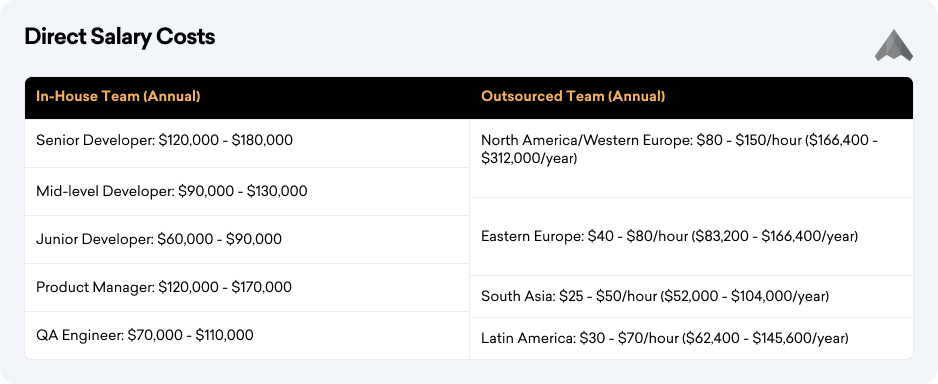
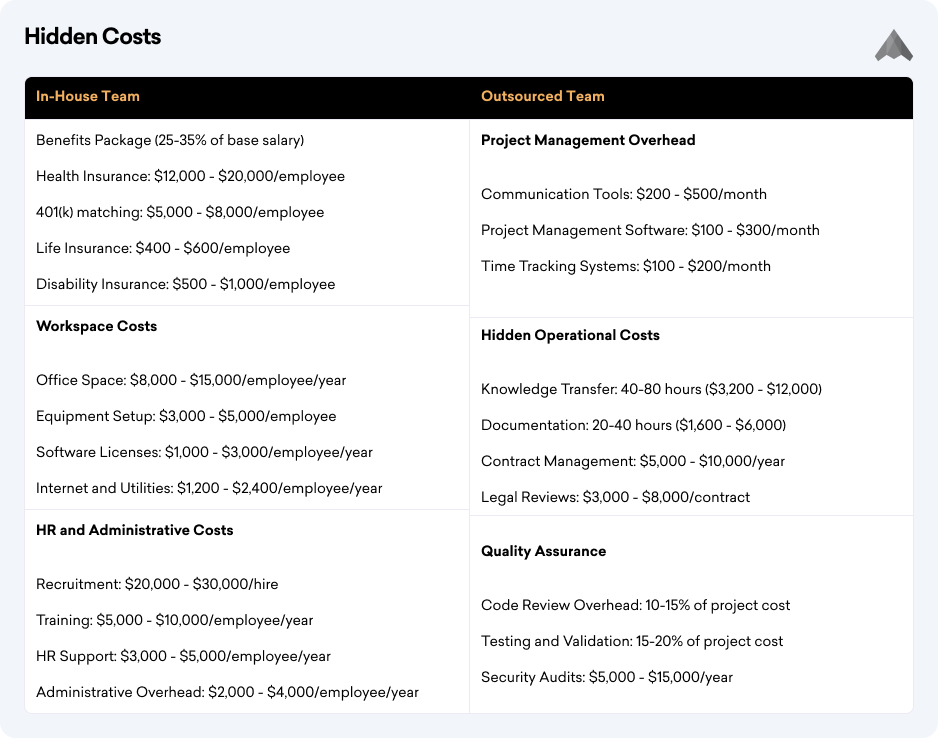
Cost of Building: In-House vs Outsourced Development Teams
Direct Salary Costs
Hidden Costs
Our Final Words
The decision between building an in-house product development team or partnering with top outsourcing software companies isn't just a binary choice – it's about finding the right approach for your specific stage of growth, and with US AT F22Labs, we are certain you’re on that path to making the right decision. Why should you consider F22Labs for your product development outsourcing needs?
Build Lean. Learn Fast.
Launch an MVP that saves money while proving your concept works.
At F22Labs, We excel in bridging the gap between idea and execution through:
- Proven MVP development methodology
- Experienced product development teams
- Agile development practices
- Clear communication protocols
- Transparent project management
- Quality-assured deliverables
Ready to Move Forward?
Whether you choose to build in-house or partner with F22Labs, the key is making an informed decision aligned with your business goals. Our team can help you evaluate your specific needs and recommend the most effective path forward.
Remember: The most successful startups often begin with strategic outsourcing through MVP development, then gradually transition to in-house teams as they scale. F22Labs can help you navigate this journey effectively, ensuring your product development strategy aligns with your growth trajectory.

Murtuza Kutub
A product development and growth expert, helping founders and startups build and grow their products at lightning speed with a track record of success. Apart from work, I love to Network & Travel.