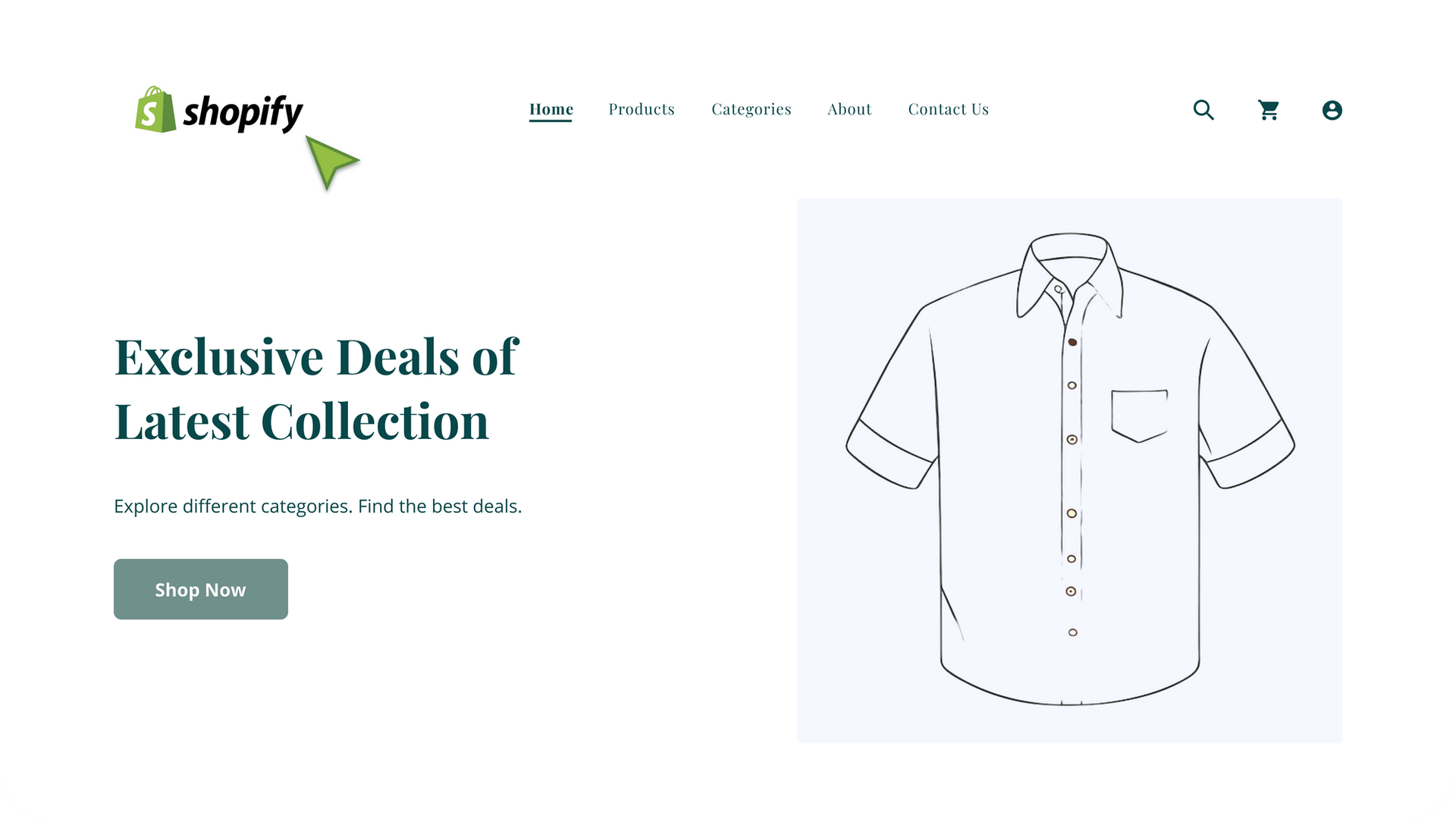
If you're running a Shopify store, there’s a moment where you realize your homepage isn’t always the most important destination.
I’m writing this guide for store owners who want to intentionally control user flow, whether that’s spotlighting a hero product, supporting a single-product store, or shortening the path to conversion during a campaign.
Redirecting your Shopify logo to a product page is a small structural change, but it directly influences how users navigate, where attention lands, and how quickly buyers reach what matters. This guide walks you through that change clearly, safely, and with purpose.

Step-by-step guide to make your Shopify logo link to a product page
This approach works best when you want your store’s primary navigation to reinforce a specific buying action instead of defaulting users back to the homepage.
Step 1: Log in to the Shopify Admin Panel
First, log in to your Shopify admin panel and go to "Online Store" > "Themes". Find your current theme and click "Actions" > "Edit code".
In the theme files, look for the "header" section. This is usually named "header.liquid". Within this file, search for the code that displays your logo.
Its code will typically look something like this:
<a href="{{ routes.root_url }}" class="header__logo-image">
  {{ shop.brand.logo | image_url: width: 250 | image_tag }}
</a>
Step 2: Changing The Destination Link of The Logo
To change where the logo links to, you just need to modify the href attribute. Replace {{ routes.root_url }} with the URL of your product page. For example, if you want to link to a product with the handle "formal-shirt",your code would look like this:
<a href="/products/formal-shirt" class="header__logo-image">
  {{ shop.brand.logo | image_url: width: 250 | image_tag }}
</a>
Step 3: Updating The Changes
After making this change, save your file. Then, preview your theme to make sure the logo now links to the correct product page.
Your Store, Open for Business - Fast
Custom Shopify builds that convert browsers into buyers.
That's it! You've successfully changed your logo link to a product page. Remember, if you're not comfortable editing code, you can always reach out to a Shopify expert for help.
Keep in mind that some users expect the logo to lead to the homepage, so you might want to ensure there's still an easy way for customers to get back to your main page. Also, if you're linking to a seasonal product or special promotion, don't forget to change it back when the promotion ends.
Frequently Asked Questions
1. Can I link my Shopify logo to a product page instead of the homepage?
Yes. By editing the header.liquid file and changing the logo’s href value, you can redirect it to any product, collection, or custom page.
2. Is it bad for UX if the logo doesn’t link to the homepage?
Not necessarily. While homepage linking is a convention, stores with a single product, active campaigns, or hero SKUs often benefit from directing users to a conversion-focused page.
3. Will this change affect my Shopify theme updates?
If your theme is updated or replaced, the change may be overwritten. Always document custom edits or use a duplicate theme for safety.
Your Store, Open for Business - Fast
Custom Shopify builds that convert browsers into buyers.
4. Can I revert the logo link back to the homepage later?
Yes. Simply replace the product URL with {{ routes.root_url }} to restore the default behavior.
5. Is coding required to change the Shopify logo link?
Yes, a small Liquid edit is required. If you’re not comfortable modifying theme files, a Shopify developer can handle this safely.
Conclusion
Changing where your Shopify logo links isn’t about breaking convention; it’s about aligning navigation with intent.
When done deliberately, this adjustment helps focus attention on high-priority products, reduces unnecessary clicks, and supports faster purchase decisions.
As with any structural change, the goal isn’t experimentation for its own sake. Monitor engagement, conversion paths, and user behavior to ensure the logo link supports, not disrupts, your store’s experience.

Murtuza Kutub
A product development and growth expert, helping founders and startups build and grow their products at lightning speed with a track record of success. Apart from work, I love to Network & Travel.