Consider this scenario: your Shopify store attracts steady traffic, your marketing campaigns are optimized, and your SEO is working, yet conversions remain low, and bounce rates stay high. I wrote this guide to help store owners understand how theme selection directly impacts performance, not just appearance.
In many cases, the underlying issue is not traffic quality but theme misalignment. A Shopify theme is more than visual design; it defines navigation flow, mobile responsiveness, loading speed, and how effectively customers move toward purchase.
The right theme strengthens brand clarity and conversion logic. The wrong one silently reduces trust, usability, and revenue potential.
Why Your Shopify Theme Matters?

1. Your Theme Reflects Your Brand Personality
Brand personality communicates positioning, pricing perception, and customer trust expectations. For example, a business selling herbal skincare products might want to convey values centered around natural ingredients, organic processes, self-care, and holistic well-being.
Consider a theme like Refresh, which emphasizes clean, minimalist, and straightforward design. While it might be suitable for some skincare products, does it effectively communicate the natural and holistic values of an herbal skincare brand?
Using such a clinical, minimalist theme for a herbal company could create a disconnect between the brand's message and its visual presentation, potentially causing confusion and undermining customer trust. Theme selection is a structural business decision, not a cosmetic one. Visual inconsistency reduces perceived brand authority.
2. It Determines User Experience
User experience directly influences conversion velocity and purchase confidence. Your theme shapes how customers navigate your store, search for products, and explore your content. For businesses selling products in different sizes and to different countries, customers need assurance that they're ordering the correct size for their needs.
They want to see measurements and units clearly before making a purchase decision, making the size guide a crucial element in the buying process.
Consider a product page where the size guide is placed at the bottom of the product details, requiring customers to scroll to find this essential information.
This introduces friction at a critical decision point. All important details that influence purchasing decisions should be visible in the first fold of the page, allowing customers to make informed decisions quickly and easily.
3. Mobile Responsiveness Impacts Your Bottom Line
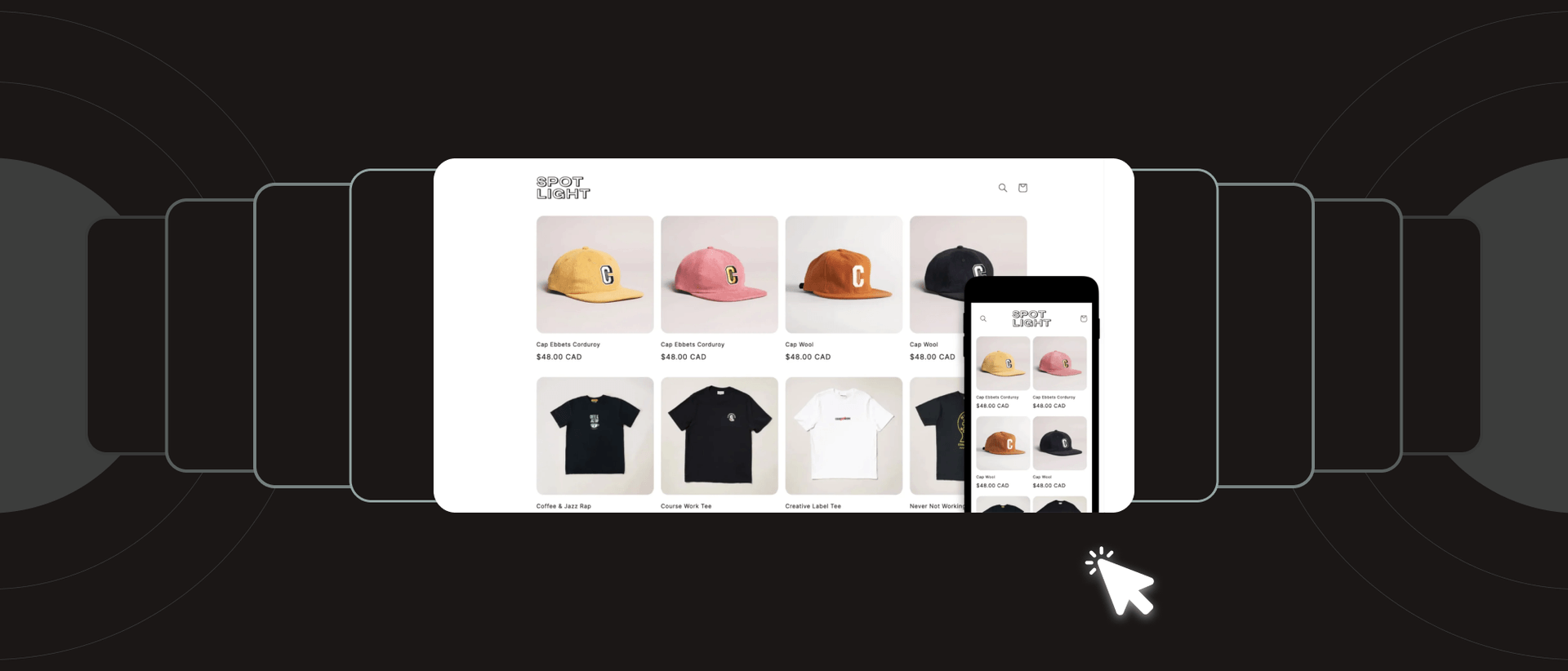
Mobile optimization is no longer optional; it is revenue-critical. In today's mobile-first world, your theme's performance on smartphones and tablets can make or break your business. Over 62.52% of e-commerce traffic comes from mobile devices, making mobile responsiveness non-negotiable.
For instance, a jewelry store using a theme with small product images and tiny buttons might look fine on desktop but becomes frustrating on mobile devices. Customers struggling to see product details or click the "Add to Cart" button are likely to abandon their purchase and shop elsewhere.
4. Loading Speed Affects Conversion Rates
Your theme's code structure and optimization directly impact your store's loading speed. Research shows that every second of delay in page load time reduces conversions by 7%. A visually stunning theme loaded with unnecessary features and unoptimized code can significantly slow down your store. Speed optimization should be evaluated before design aesthetics.
Take a fashion store using a theme with high-resolution image sliders on the homepage. While these may look impressive, they can dramatically increase load times, especially on slower connections. A well-optimized theme with smart image loading and minimal JavaScript will keep customers engaged and ready to buy.
5. Search Engine Optimization (SEO) Foundation
Your theme’s code structure directly impacts crawlability, indexing efficiency, and organic visibility. A well-coded theme with proper heading hierarchy, structured data, and clean URLs provides a strong foundation for SEO success.
Your Store, Open for Business - Fast
Custom Shopify builds that convert browsers into buyers.
Consider an electronics store using a theme with all product titles rendered as images instead of text. While this might achieve a specific visual style, it makes it harder for search engines to understand your content, potentially hurting your rankings and visibility.
Things To Consider Before Choosing A Theme For Your Store
Theme selection should be filtered through operational scalability and long-term performance goals.
1. Prioritize Shopify Store Themes Over Third-Party Themes
Shopify themes which are available on Theme Store undergo rigorous quality checks and testing to ensure they meet performance standards. These themes are guaranteed to be compatible with all of Shopify's features and receive regular updates to maintain security and functionality. Additionally, they come with dedicated support and documentation from verified developers.
Third-party themes might lack consistent updates, have compatibility issues with Shopify features, or contain malicious code that could compromise your store's security. Some might also have poor coding practices that could slow down your website's performance. The initial cost savings of a third-party theme could lead to higher long-term expenses in fixes, customizations, and potential security issues. Stability and update reliability reduce technical risk over time.
2. Look For Your Business Niche
It might seem overwhelming to find the right one among this vast selection as Shopify offers dozens of themes.
Start by searching for industry-specific themes, as these are built with features tailored to your sector's unique needs. Theme developers often create specialized designs that address industry-specific requirements, ensuring better functionality and user experience for your particular business type.
3. Filter Themes Out That Suits Your Catalog Size
The number of products you sell should directly impact your theme choice, as different catalog sizes require different navigation and presentation features.
If you offer dozens of products, focus on themes that help customers easily navigate through your extensive collection. Look for themes that include enhanced search functionality, advanced filtering options, mega menus for category organization, breadcrumbs for clear navigation paths, and well-structured collection pages.
These features prevent customers from feeling overwhelmed and help them find exactly what they're looking for.
If the number of products that your store offers is limited, choose shopify themes that often emphasize visual presentation with larger product images, detailed product descriptions, and streamlined navigation. Avoid themes with elaborate filtering systems or complex mega menus that might make your store feel empty or overcomplicated.
4. Consider Your Ideal Customer Journey
Before selecting a theme, map the critical decision moments in your customer journey from your customer's perspective. Different businesses require different approaches to showcase their products effectively.
Consider what aspects would enhance your customers' buying experience:
Do your products need multiple image views to help customers make informed decisions?
Would detailed product descriptions with specific features and benefits boost customer confidence?
Is quick access to customer support crucial for your product type?
For instance, if you're selling furniture, customers might need to see products from various angles and detailed dimensions. A theme with a multi-image gallery feature and prominent product specifications would be essential. On the other hand, if you're selling simple accessories, prioritize themes that focus on clean, single-image layouts with brief descriptions.
Choose a Shopify theme that showcases your products' unique selling points and creates an environment where customers can easily find the information they need to make a purchase decision. The right theme should make your products stand out while providing a smooth, intuitive shopping experience.
5. Look For The Features That Best Suits Your Business Needs
Not every eye-catching feature adds value to your store therefore consider focusing on features that directly contribute to your business goals and improve the shopping experience.
For example, if you run a small artisanal candle store with only 20 unique products, infinite scroll might be unnecessary and even counterproductive. A simple, well-organized grid layout would serve your customers better, allowing them to see your complete collection at a glance.
On the other hand, if you're running a clothing or home decor store, color swatches become an essential feature. Customers need to see accurate color representations and variations to make informed decisions. In this case, investing in a theme with color swatch functionality would improve the shopping experience.
Consider focusing on features that make it easier for your customers to shop and help you sell more effectively, rather than getting distracted by trending designs or flashy elements. Feature selection should align with revenue impact, not trend adoption.
Frequently Asked Questions
How do I choose the best Shopify theme?
Choose a Shopify theme based on:
- Brand positioning
- Catalog size
- Mobile responsiveness
- Loading speed
- SEO structure
- Customer journey alignment
Your Store, Open for Business - Fast
Custom Shopify builds that convert browsers into buyers.
Performance should guide design selection.
Are paid Shopify themes worth it?
Yes. Paid themes typically offer better optimization, support, and scalability compared to free or third-party alternatives.
Do Shopify themes affect SEO?
Yes. Theme code structure impacts heading hierarchy, page speed, crawlability, and structured data implementation.
How important is mobile responsiveness in Shopify themes?
Critical. Over 60% of eCommerce traffic comes from mobile devices, making mobile performance directly tied to revenue.
Can a Shopify theme increase conversions?
Yes. A well-structured theme improves navigation clarity, trust signals, and decision visibility, which reduces bounce rates and increases conversion rates.
Should I use third-party Shopify themes?
Official Shopify themes are generally safer due to regular updates, security standards, and compatibility assurance.
Conclusion
If your store underperforms despite strong traffic, the underlying cause may be structural misalignment between your theme and your business goals.
Choosing the best Shopify theme requires evaluating brand positioning, catalog size, user journey, mobile performance, and SEO structure.
When selected strategically, your theme becomes a growth asset, not just a design layer. When selecting a theme for your Shopify store, take a strategic approach by understanding your brand's needs, assessing your catalog size, and considering your customer journey.
Focus on features that truly matter for your business rather than getting distracted by trending designs or flashy elements. While the selection process might seem overwhelming at first, prioritizing official Shopify themes and following these guidelines will help you choose a theme that not only looks good but also drives results.

Sahil Singh
I’m a Front-End developer with 1.3 years of experience creating user-friendly, optimized web pages. I specialize in developing features that boost conversion rates for e-commerce websites.