Have you ever spoken to customer support and wondered if the voice on the other end was human or AI? That moment of uncertainty is exactly why Voice AI agents matter. I wrote this guide to break down the mechanics, architecture, and real-world implications behind these systems so you can understand not just what they are, but how they actually deliver value in production environments.
Voice AI agents now power virtual assistants, call centers, healthcare reminders, and outbound sales workflows. What once felt futuristic is already embedded in daily business operations. This guide explains what voice AI agents are, how they work, and how components like Speech-to-Text (STT), Large Language Models (LLMs), Text-to-Speech (TTS), and Voice Activity Detection (VAD) coordinate in real time. You’ll also explore architecture design, build vs buy decisions, pricing considerations, compliance requirements, and common mistakes, all structured to help you make informed technical and business decisions.
What are Voice AI Agents?
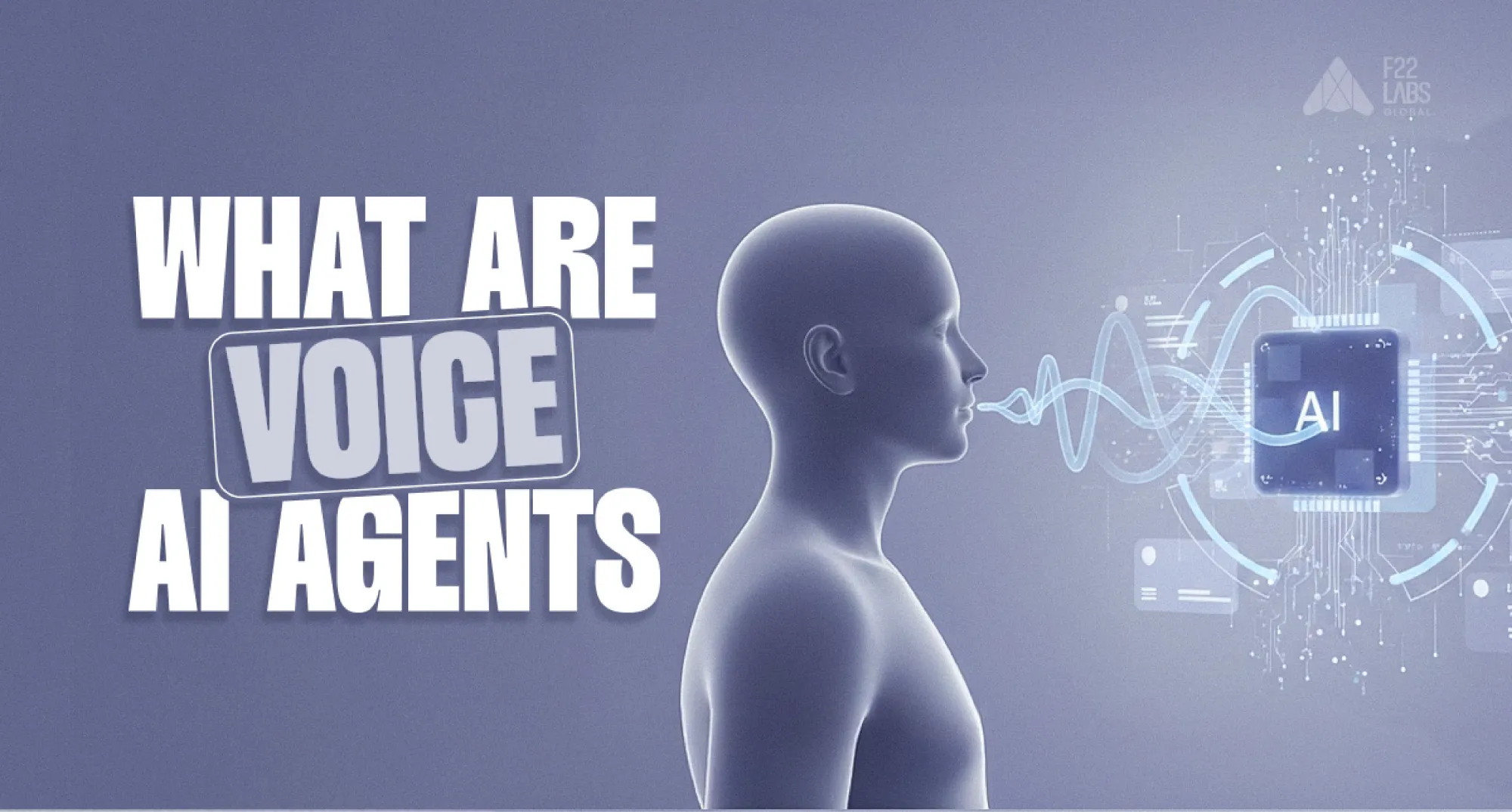
Voice AI agents are software systems designed to understand spoken language, maintain contextual conversations, and respond with natural-sounding speech. They enable users to interact with software through voice instead of text, functioning as intelligent conversational interfaces rather than scripted IVR trees.
At a functional level, a voice AI agent listens, converts speech into text, interprets intent using an AI model, and generates a spoken response. Advanced implementations extend beyond conversation, executing tasks such as booking appointments, retrieving structured data, answering customer queries, and triggering workflows across integrated systems. Their real-time capabilities and cross-device compatibility make them increasingly central to customer support, healthcare, sales, and internal operations. They allow users to interact with applications using their voice instead of typing, much like talking to a human assistant.
At a basic level, a voice AI agent listens to what you say, converts your speech into text, interprets your intent using an AI model, and then generates a spoken response. More advanced agents can also perform actions such as booking appointments, answering customer queries, retrieving information from databases, or triggering workflows in external systems. Because they operate in real time and can work across phones, browsers, and smart devices, voice AI agents are increasingly used in customer support, healthcare, sales, and internal business operations.
How Voice AI Agents Work
At a high level, a voice AI agent follows a structured conversational loop designed for real-time interaction:
You speak into a phone, browser, or call interface
Speech is converted to text using Speech-to-Text (STT)
A Large Language Model (LLM) interprets intent and generates a response
Text is converted back into speech via Text-to-Speech (TTS)
A natural-sounding response is delivered instantly
The loop continues until task completion
This can be simplified as:
Voice → STT → LLM → TTS → Voice
But to make the experience feel natural, there's one more critical layer: Voice Activity Detection (VAD). VAD helps the system detect when a person starts or stops speaking. This may sound trivial, but it's essential for natural conversations. Without it, the AI might interrupt you or think you're done speaking while you've only paused briefly.
Closely related is turn detection, which helps the system decide when to take its "turn" in the conversation. Good turn detection ensures smooth flow, no awkward interruptions, no long silences.
Voice AI Agent Architecture
A voice AI agent isn’t a single model or API, it’s a coordinated system of components working together in real time. Each layer plays a specific role in turning raw audio into a meaningful, spoken response, and the experience only feels natural when all of them stay perfectly in sync.
Audio Capture Layer
Everything starts with the audio capture layer, which listens through a microphone on a phone, browser, or dedicated device. The quality of this input directly impacts the entire pipeline, clear audio leads to more accurate transcription, while noise and distortion can degrade the conversation before it even begins.
Real-Time Speech-To-Text Processing
Once audio is captured, it moves into real-time speech-to-text processing. Neural models transcribe speech as it’s spoken, handling accents, background noise, and variations in speaking speed. Voice Activity Detection (VAD) plays a crucial role here by identifying when the user is actually speaking and filtering out silence or background sounds.
Conversation Engine
The transcribed text is then passed to the conversation engine, typically powered by a large language model such as GPT, Claude, or Gemini. This layer understands intent, maintains conversational context across turns, and decides what action to take. In more advanced setups, it can also call external APIs to fetch data, book appointments, or update systems in real time.
Text-To-Speech Layer
Once a response is generated, the text-to-speech layer converts it into natural, human-like audio. Modern TTS systems go beyond simple narration; they can control tone, pacing, emotion, and even replicate specific voices to match a brand or personality.
Orchestration Layer
Overseeing all of this is the orchestration layer, which manages timing, state, and turn-taking. It ensures the agent knows when to listen, when to speak, and how to transition smoothly between the two without awkward interruptions or delays.
Integration Layer
Finally, the integration layer connects the agent to real business systems like CRMs, databases, and payment gateways. This is what turns a voice AI agent from a conversational demo into a practical tool that can actually complete tasks and deliver value.
5 Core Components of a Voice AI Agent
Every voice AI agent is built from a few essential parts that work together to understand speech, generate responses, and speak back naturally. Let’s look at the key components that make this possible.
Speech-to-Text (STT)
The STT engine listens to human speech and converts it into text that the LLM can process. Key providers include:
- Deepgram: Known for low latency and high accuracy
- AssemblyAI: Strong multilingual support
- Google Speech-to-Text: Reliable with broad language coverage
- Whisper (OpenAI): Open-source option with excellent accuracy
Accuracy and latency are the biggest challenges. The faster and more precisely the model extracts words, the more natural the conversation feels. Latency under 300ms is considered real-time.
Large Language Model (LLM)
The LLM acts as the central brain. It doesn't just reply, it reasons, remembers context across turns, and can trigger actions. Popular choices include:
- GPT-5 / GPT-4o: Strong reasoning and function calling
- Claude 4.5 Sonnet: Excellent at following complex instructions
- Gemini: Google's multimodal model with good voice integration
The LLM needs to handle conversation context, make decisions quickly, and integrate with external tools via function calling.

Walk away with actionable insights on AI adoption.
Limited seats available!

Text-to-Speech (TTS)
The TTS engine gives the AI its personality, transforming text into natural, expressive speech. Leading options:
- ElevenLabs: Highly realistic voice cloning
- Play.ht: Good balance of quality and latency
- OpenAI TTS: Fast and reliable
- Google Cloud TTS: Wide language support
Modern TTS can adjust emotion, speaking rate, pitch, and even add filler words like "um" or "hmm" for more human-like delivery.
Voice Activity Detection (VAD)
VAD determines when a user is speaking versus when there's silence or background noise. This prevents the agent from:
- Interrupting mid-sentence
- Processing background noise as speech
- Waiting too long after the user finishes
Popular VAD models include Silero VAD and WebRTC VAD, with latency typically under 50ms.
Streaming Infrastructure
To achieve real-time performance, all components must stream data rather than wait for complete utterances. This requires:
- WebSocket connections for bidirectional audio
- Chunked processing at each layer
- Buffer management to prevent audio glitches
- State synchronization across distributed services
AI Voice Agent Use Cases and Applications
Voice AI agents are transforming multiple industries:
Customer Support
- Handling tier-1 queries, password resets, account inquiries, and order tracking. Companies report 60 to 80% resolution rates for common issues.
Appointment Scheduling
- Automated booking for healthcare, salons, restaurants, and service businesses. Reduces no-show rates through automated reminders.
Sales and Lead Qualification
- Outbound calling to qualify leads, follow up on inquiries, and schedule demos. Some agents achieve conversion rates comparable to human SDRs.
Call Center Automation
- Intelligent routing, call summarization, and handling overflow during peak times. Can reduce wait times by 40 to 60%.
Healthcare
- Appointment reminders, prescription refills, post-visit follow-ups, and basic symptom screening (within regulatory limits).
Finance and Banking
- Transaction verification, account balance inquiries, fraud alerts, and basic financial advice.
Internal IT/HR Helpdesks
- Password resets, PTO requests, policy questions, and onboarding assistance.
Accessibility
- Helping visually impaired users navigate services, or providing voice interfaces where typing is difficult.
How to Build a Voice AI Agent?
Building a voice AI agent sounds complex, but with today’s tools, it’s more accessible than ever. You start by clearly defining what the agent should do: maybe handle 80% of customer queries or perform a single task like booking appointments. Once the problem is clear, you design conversational flows mapping greetings, clarifications, actions, and closing statements.
Then comes the tech stack. Choose STT and TTS engines that support real-time streaming and target languages. Select an LLM capable of reasoning and integrating with APIs. Once wired together, agents should follow the STT -> LLM -> TTS loop while streaming replies as they’re generated. For a natural experience, integrate VAD and turn detection early on; their tuning can make or break how “human” our AI feels.
Finally, test with real users. Monitor where the agent misunderstands or responds too slowly. Add guardrails for situations where a human agent should take over, especially in high-impact cases like payments or medical queries. Improvement is a continuous process, every call gives you more data to refine.
Build vs Buy Voice AI Agents: Which Approach Is Right for You?
Build from Scratch
Pros
- Full control over architecture and components
- Custom integrations tailored to internal systems
- No recurring per-minute platform fees
- Intellectual property remains internal
Cons
- Requires experienced AI/ML engineering teams
- Longer time to market (3–6 months typical)
- Infrastructure, monitoring, and scaling responsibilities
- Continuous optimization overhead
Best suited for organizations with internal AI capabilities, long-term deployment plans, or high-volume workloads where platform costs scale rapidly.
Buy a Platform
Platforms such as Hirevox, Vapi, Bland AI, Vocode, and Retell provide pre-built infrastructure for rapid deployment.
Pros
- Fast implementation (days to weeks)
- Managed infrastructure and monitoring
- Built-in analytics and tooling
- Lower upfront engineering investment
Cons
- Per-minute pricing scales with usage
- Limited deep customization
- Vendor dependency
- Platform-level uptime risk
Best suited for startups validating use cases, lean teams, or businesses prioritizing speed over infrastructure ownership.
Hybrid Approach
Many companies start with a platform to prototype and validate the use case, then gradually build more capabilities in-house as volume grows. This balances speed with long-term cost control.
Cost and Pricing Considerations of AI Agents
Costs depend on how much traffic your agent handles. Most providers charge per minute of audio or per token of processing. If you’re processing a few hundred calls monthly, expect a few hundred dollars. Large-scale deployments involve optimizing for model cost, call duration, and latency.
Legal & Compliance Requirements
AI Disclosure
- Clearly state the caller is speaking to an AI.
- Avoid misleading users; offer a human option.
Data Privacy
- Follow major laws: GDPR, CCPA, HIPAA, COPPA.
- Encrypt recordings, limit retention (30 to 90 days), allow users to access/delete data, and get explicit consent before recording.
Walk away with actionable insights on AI adoption.
Limited seats available!
Accessibility
- Meet ADA and similar standards.
- Provide text alternatives and support for hearing-impaired users (e.g., TTY/TDD).
Industry-Specific Rules
- Finance: PCI-DSS, SOC 2.
- Healthcare: HIPAA, HL7.
- Telecom: TCPA for automated calls.
The Future of Voice AI Agents
Voice AI agents are evolving from reactive systems into context-aware, proactive assistants. Improvements in real-time streaming, orchestration layers, and multimodal integration are reducing friction and increasing human-likeness.

Key trends shaping the next phase:
Emotional Intelligence – Detecting sentiment and adjusting tone dynamically
Multimodal Integration – Combining voice with images, screen-sharing, and video
Persistent Memory – Retaining cross-session context and preferences
Improved Interruption Handling – Natural pause, resume, and conversational repair
Proactive Engagement – Initiating follow-ups and reminders based on context
The trajectory points toward voice becoming a primary interface layer for software, not just a support channel.
Common Mistakes When Building Voice AI Agents
- Over-ambitious Scope: Don't try to handle every possible conversation on day one.
- Ignoring Latency: Users notice delays over 1-2 seconds. Optimize every component for speed. Use streaming everywhere possible.
- Inadequate Testing: Testing within a team isn't enough. Real users have different accents, environments, and expectations. Beta test with 50-100 real users before full launch.
- Forgetting Privacy: Don't treat voice data casually. Implement proper security from day one encryption, access controls, retention policies. One breach can destroy trust.
- No Human Escalation: Some situations require human judgment. Build clear escalation paths and make them easy to trigger. Don't trap frustrated users with "I'm sorry, I didn't understand that" loops.
- Neglecting Monitoring: Deploy comprehensive logging and monitoring. Track transcription accuracy, response times, completion rates, and user satisfaction. Voice AI agents require ongoing optimization.
- Copying Human Speech Too Closely: Filler words and pauses can make agents feel more natural, but too many make them sound unsure. Find the right balance for the brand.
- Not Disclosing AI Usage: This is both an ethical and legal issue. Always be transparent that users are speaking with AI. Deception damages trust and may violate regulations.
Frequently Asked Questions
How long does it take to build a voice AI agent?
A: Using platforms, you can have a basic agent running in 1-2 weeks. Building from scratch typically takes 2-4 months for an MVP, 6+ months for production-grade systems.
What's the typical accuracy of STT?
A: Modern STT systems achieve 90-95% accuracy in ideal conditions. Real-world accuracy (with accents, noise, poor connections) is typically 80-90%. Domain-specific training can improve this.
Can voice AI agents handle multiple languages?
A: Yes, most STT and TTS providers support 50+ languages. However, LLM quality varies by language. English, Spanish, French, German, and Chinese typically work best. Test thoroughly for each language you support.
What's the difference between voice AI agents and IVR systems?
A: Traditional IVR uses menu trees ("Press 1 for sales, 2 for support"). Voice AI agents understand natural language, maintain context, and handle complex, multi-turn conversations without rigid menus.
What is a Voice AI agent?
A Voice AI agent is a software system that understands spoken language, processes intent using AI models, and responds with natural-sounding speech in real time.
How do Voice AI agents work?
They follow a loop: Voice input → Speech-to-Text → Large Language Model processing → Text-to-Speech output → Spoken response.
What are the core components of a Voice AI agent?
Speech-to-Text (STT), Large Language Model (LLM), Text-to-Speech (TTS), Voice Activity Detection (VAD), and streaming infrastructure.
What is the difference between Voice AI agents and IVR systems?
IVR systems use predefined menu trees. Voice AI agents understand natural language and manage multi-turn contextual conversations.
How accurate is Speech-to-Text (STT)?
Modern STT systems achieve 90–95% accuracy in ideal conditions and 80–90% in real-world environments.
Should companies build or buy Voice AI agents?
Build for long-term control and scale. Buy for speed, validation, and lower upfront engineering investment.
Are Voice AI agents compliant with regulations?
They must comply with GDPR, CCPA, HIPAA, TCPA, PCI-DSS, and industry-specific laws depending on deployment context.
Conclusion
Voice AI agents are no longer experimental concepts; they are emerging as a primary interaction layer between humans and software. While the architecture may seem complex, the foundational model remains straightforward:
Voice → STT → LLM → TTS → Voice
guided by VAD and intelligent orchestration.
Understanding these mechanics allows you to evaluate vendor claims, optimize system performance, and make informed build-versus-buy decisions. Whether you are deploying internally or at enterprise scale, voice AI agents represent a structural shift in how digital systems communicate with users.

Kiruthika
I'm an AI/ML engineer passionate about developing cutting-edge solutions. I specialize in machine learning techniques to solve complex problems and drive innovation through data-driven insights.
Walk away with actionable insights on AI adoption.
Limited seats available!