Database Testing in Software Testing: Beginners Guide
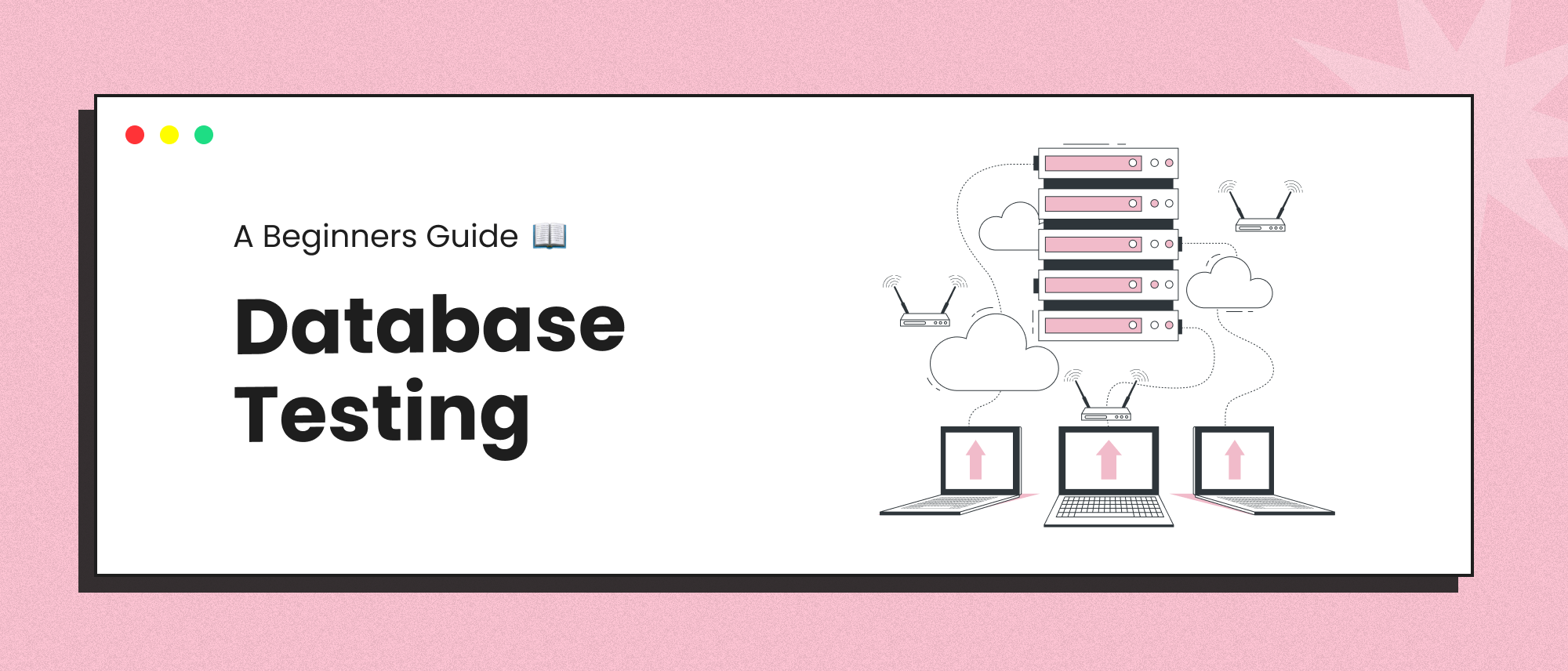
Ever wondered what keeps your online banking secure and reliable? How do companies ensure that your personal information remains accurate across their systems? Database testing forms the backbone of reliable software systems by ensuring that stored data remains correct, consistent, and accessible. Much like a well-organized library catalog, database testing helps maintain order within complex information systems.
Many teams still ask what is database testing and why it matters, and the answer lies in its role in verifying data integrity, validating database operations, and ensuring optimal performance under varying conditions. As modern applications rely heavily on data-driven functionality, database testing has become a critical quality assurance activity in today’s software development lifecycle.
What Is Database Testing?
Database testing is the process of verifying that a database functions correctly and meets defined business and technical requirements. It ensures that data is stored accurately, relationships between tables are maintained, and database components behave as expected during application operations.
This type of testing involves validating data integrity, checking constraints, verifying triggers and stored procedures, and ensuring accurate query execution. Database testing is commonly referred to as back-end testing or data testing, as it focuses on validating what happens behind the user interface.
Think of database testing like checking a library’s catalog system—every book must be in the right place, searchable, and properly linked to related records.
Key aspects of database testing include:
- Verifying data integrity and consistency
- Executing complex queries to validate logic and performance
- Ensuring data accuracy across CRUD (Create, Read, Update, Delete) operations
Why Is Database Testing Important?
Database testing is a cornerstone of modern software quality assurance. Today’s applications handle massive volumes of sensitive data, ranging from financial transactions to personal user information. Even a small database error can lead to serious consequences such as financial loss, security breaches, regulatory issues, or loss of user trust.
Advantages
- Ensures data validity and consistency across all systems
- Prevents data loss by identifying defects early
- Improves performance through optimized queries and indexing
- Strengthens security by validating access controls and permissions
- Reduces long-term maintenance and costly production failures
Disadvantages
- Requires skilled testers with strong database knowledge
- Can be time-consuming due to complex queries and dependencies
- Needs test environments similar to production databases
- Requires frequent updates as schemas evolve
- Performance testing may strain system resources
Despite these challenges, database testing remains essential for building reliable, secure, and scalable software systems.
Key Challenges in Database Testing
1. Frequent Changes
Databases evolve continuously, and these frequent changes increase the complexity of db testing as schemas, relationships, and queries keep shifting. For example, adding “Reactions” alongside “Likes” in a social media application requires updating test cases that previously validated only likes.
2. Complexity
Modern databases contain deeply interconnected tables. In an e-commerce system, changing a product’s price must update cart totals, order history, tax calculations, and inventory records. Testing these relationships requires careful coordination and coverage.
3. Performance Issues
Databases must handle heavy traffic efficiently. During peak events like Black Friday sales, databases may process thousands of transactions per second. Teams invest significant resources in simulating peak loads because db testing must validate performance under extreme conditions.
Types of Database Testing
Think of database testing as inspecting a house from multiple perspectives.
Sleep Easy Before Launch
We'll stress-test your app so users don't have to.
1. Structural Testing
Structural testing validates tables, keys, indexes, constraints, and relationships to ensure the database architecture is correctly designed.
Example: Ensuring that comments in a social media app are correctly linked to both users and posts. Advantages: Detects schema and design flaws early. Disadvantages: Requires deep database expertise.
2. Functional Testing
Functional testing ensures that database operations behave correctly during real application workflows.
Example: Updating a profile picture should save the new image, archive the old one, and update thumbnails everywhere. Advantages: Ensures correct user-facing behavior. Disadvantages: May overlook performance bottlenecks.
3. Non-Functional Testing
Non-functional testing focuses on performance, scalability, reliability, and security.
Example: Testing whether Instagram can handle millions of story uploads during New Year’s Eve. Advantages: Prevents crashes during peak usage. Disadvantages: Requires significant infrastructure and planning.
Understanding SQL in Database Testing
What Is SQL?
Most beginners start with a database testing tutorial to understand how SQL interacts with tables, records, and relationships. It allows testers and developers to retrieve, insert, update, and delete data directly from database systems.
Examples of SQL Operations
Reading Data
SELECT * FROM customers WHERE name = 'John';
Creating Data
INSERT INTO customers (name, email) VALUES ('Sarah', 'sarah@email.com');
Updating Data
UPDATE customers SET email = 'new.sarah@email.com' WHERE name = 'Sarah';
Deleting Data
DELETE FROM customers WHERE name = 'John';
How SQL Is Used in Database Testing
Testers use SQL queries to validate data accuracy, verify business rules, and confirm that database transactions are processed correctly.
Advantages: Precise validation of backend data Disadvantages: Requires strong SQL knowledge and schema understanding
Database Testing Tools
Just like a mechanic uses different tools for different car parts, database testers rely on specialized tools:
- Apache JMeter: Performance and load testing
- SQLTest: Validation for SQL Server databases
- DBUnit: Test data setup and cleanup
- Selenium with TestNG: End-to-end testing with database verification
The right tool depends on database type, system complexity, and testing goals.
Sleep Easy Before Launch
We'll stress-test your app so users don't have to.
How to Choose the Right Database Testing Tool
When following a database testing tutorial, you should also learn how to evaluate and select the right database testing tool for your project needs.
- Compatibility: Support for your database system and versions
- Ease of Use: Clear interface and documentation
- Features: Automation, reporting, and performance testing
- Scalability: Ability to support future testing needs
Best Practices for Database Testing
- Validate data accuracy, constraints, and relationships
- Balance automated and manual testing approaches
- Maintain clean, reusable test data
- Test early and continuously throughout development
Common Pitfalls in Database Testing
1. Under-Testing
Failing to test edge cases and negative scenarios leads to missed defects.
2. Incomplete Test Data
Using unrealistic or incomplete test data produces unreliable results.
3. Ignoring Performance Testing
Functional correctness alone is insufficient; performance and scalability must be validated.
Additional Practical Scenarios and Testing Coverage
Database testing provides measurable value when applied to real-world systems at scale. In transaction-heavy environments such as banking platforms, database testing validates atomicity, consistency, isolation, and durability during concurrent operations. When multiple users transfer funds simultaneously, testers ensure balances remain accurate and rollbacks occur correctly during failures.
In e-commerce systems, database testing confirms that pricing, inventory, orders, and payments remain synchronized during peak traffic periods. It also ensures analytics dashboards and financial reports reflect accurate, trustworthy data.
Schema changes and database migrations are another critical scenario. Database tests help teams safely add columns, modify indexes, and deprecate tables without breaking existing features. From a business perspective, strong database testing directly impacts customer trust, regulatory compliance, and operational stability. Catching data issues early prevents costly production incidents, reduces emergency fixes, and enables confident releases as systems scale.
Our Final Words
Database testing plays a vital role in delivering secure, reliable, and high-performing software. From validating data integrity to ensuring performance under load, it safeguards the foundation of modern applications.
As databases grow in complexity and handle increasingly sensitive information, thorough database testing becomes non-negotiable. When combined with system integration testing, it ensures applications and their underlying data work seamlessly together.
Need Expert Help?
Looking for professional support with database testing? Our QA Software Testing Services team specializes in comprehensive database testing solutions. With expertise across traditional and modern database systems, we help ensure your data remains accurate, secure, and performant under all conditions.

Rabbani Shaik
AI enthusiast who loves building cool stuff by leveraging AI. I explore new tools, experiment with ideas, and share what I learn along the way. Always curious, always building!