
Top 10 Examples of Minimum Viable Products
Eric Ries defined a Minimum Viable Product (MVP) as the version of a product that enables maximum validated learning with the least effort. I’m writing this because many teams still mistake “MVP” for “small product,” when the real goal is faster learning with lower risk before scaling time, budget, and engineering complexity.
Research shows that 64% of app features are rarely or never used, which reinforces why launching lean matters. That’s also why real minimum viable product examples are useful: they reveal how successful teams validated demand, narrowed scope to the core value, and expanded only after the market proved the product was worth building.
In this guide, you’ll find 10 proven MVP examples, from SaaS to consumer platforms, showing how each started with a narrow, testable version and evolved into a category leader. Whether you’re building a SaaS tool, eCommerce platform, or mobile app, these MVP case studies help you make better scope decisions and increase the odds of product-market fit.
What is the Minimum Viable Product (MVP)?
A Minimum Viable Product (MVP) is the smallest version of a product that still delivers value and allows you to validate key assumptions with real users. The focus is not “fewer features,” but faster learning testing what matters most before investing heavily in full-scale development.
In practice, an MVP helps teams start small, learn quickly, and scale only when the market response supports it. Studying MVP product examples makes this concept actionable by showing how winning products prioritized validation over perfection.
Why Build an MVP?
Smart Risk Management
MVPs are a risk-control strategy: they test demand and usability before you commit to expensive engineering decisions. Netflix is a classic example, DVD-by-mail validated user behaviour and content preferences before streaming infrastructure became a justified investment. The lesson is simple: prove the core behaviour first, then scale the delivery model.
Consider Netflix's evolution. They didn't start with streaming, they mailed DVDs. This simple model helped them understand customer behaviour and movie preferences before investing millions in streaming infrastructure. It's a masterclass in risk-smart scaling.
Market Presence That Matters
Time in market beats theory. MVPs create early presence and real user signals while competitors are still building. LinkedIn’s early version worked because the value was instantly clear: a professional profile and connections. That early clarity helped them learn how people wanted to network, then expand based on real usage rather than assumptions.
What made this approach brilliant? Users could immediately grasp the value professional networking made easier, while LinkedIn gathered priceless insights about how professionals actually wanted to connect online.
Resource-Smart Development
MVPs protect resources by forcing focus: one core job-to-be-done, validated first. Spotify’s early approach emphasized smooth streaming and reliability before expanding into broader product layers. Building trust in the core experience created the foundation for later features to succeed.
Spotify's early days illustrate this perfectly. They focused exclusively on smooth music streaming when competitors were trying to build social networks, playlist algorithms, and podcast platforms simultaneously. By perfecting their core offering first, they built trust with users before expanding their feature set.
The Feedback Advantage
An MVP creates a fast feedback loop with the market. Airbnb’s early version validated that people would pay for alternative lodging and that hosts would supply inventory. That feedback shaped the product direction and clarified what mattered most, trust, listings, and repeatable booking behaviour.
Types of MVP: Choosing Your Launch Strategy

Choosing an MVP type is a decision about what you need to validate first, demand, willingness to pay, workflow feasibility, or the core product experience. The formats below map to different validation goals.
1. The Digital Handshake (Landing Page MVP)
Best for validating market interest before building. A landing page MVP tests positioning, messaging, and lead intent with minimal cost. Buffer used this approach effectively: a simple page explained the promise, captured emails, and shaped the initial feature set around what early users actually wanted.
2. The Personal Touch (Concierge MVP)
Best for validating the workflow and willingness to pay with high-touch delivery. A concierge MVP proves the solution works for users before automation. Uber’s early model validated matching, demand patterns, and unit economics in a tight market before expanding scope.
3. Behind-the-Scenes Magic (Wizard of Oz MVP)
Best for validating the product experience while keeping the backend manual. A Wizard of Oz MVP looks automated to the user, but humans power key steps behind the scenes. Zappos used this approach to prove people would buy shoes online before investing heavily in inventory and logistics.
4. The Specialist (Single-Feature MVP)
Best for validating one strong value proposition. A single-feature MVP focuses on the one capability users care about most. Instagram’s early success came from making photos look better, clear value, fast adoption, and a foundation for later social features.
5. The Working Model (Prototype MVP)
Best for validating usability and trust when the experience must work end-to-end. A prototype MVP proves the interaction design and reliability before scaling. Square’s early version worked because it made payment processing simple and dependable for small businesses, exactly what the market needed.
Best Practices for Your MVP Journey
Success with an MVP comes from building strategically, not just building less. The goal is to validate one clear problem, learn quickly from the target users, and iterate in short cycles while keeping scope disciplined.
- Focus on solving one clear problem exceptionally well
- Gather meaningful feedback from your actual target market
- Stay flexible and ready to adapt based on user insights
- Keep your development cycles short and iterative
- Maintain clear communication with early adopters
Best 10 Minimum Viable Product (MVP) Examples
MVPs play a crucial role in product development. They help in validating assumptions about the market and user behavior, save time and resources, and reduce risks associated with product failure.
These MVP product examples provide a way for startups and large companies alike to test their ideas without investing too much time and money into something that may not work. MVPs form the foundation of MVP software development examples and are key to agile MVP examples.
What are the Examples of Real MVPs?
MVPs matter because they validate market demand and user behavior before heavy investment. These real MVP examples show how teams tested assumptions, reduced risk, and built only what was necessary to learn fast and scale responsibly.
These examples of MVPs provide a way for startups and large companies alike to test their ideas without investing too much time and money into something that may not work. MVPs form the foundation of software development and are key to your growth and by understanding these startup MVP examples you’ll get a clear picture on planning for the evolution of your product.
Example 1: Dropbox
Kicking off our list of minimum viable product examples is Dropbox. It started as a basic file-syncing service and its MVP was nothing more than a simple video demonstrating how the product would work. This was an innovative approach to an MVP KPIs (key important points) showcase.
| Key Features | Functionality |
|
File storage and syncing |
Allows users to store and sync their files online, making them accessible from any device |
|
Sharing |
Users can share files and collaborate with others |
|
Backup |
Automatically backs up files to the cloud |
The MVP of Dropbox was successful because it effectively communicated the potential of the product. The reaction to the video was overwhelmingly positive, demonstrating a clear market need. The company was able to build an impressive waiting list even before the product was fully developed.

Dropbox's success and impact on the market have been profound. As of April 2023, the company boasts over 700 million users and is valued at approximately $8.28 Billion.
Example 2: Airbnb
Airbnb, another heavyweight in our roster of minimum viable product examples, was born out of necessity. Its co-founders, struggling to pay rent, decided to rent out their living space to attendees of a local conference.
They set up a simple website, "Air Bed and Breakfast," where they listed their apartment as a bed and breakfast. This was the humble MVP for what would become Airbnb.

Unique Selling Points and Value Proposition
The unique selling points of Airbnb's MVP were:
Authentic local experiences: Airbnb provided a platform for homeowners to rent out their spaces, offering travelers a more unique and local experience than traditional hotels.
Affordable accommodations: The service catered to budget-conscious travelers looking for more affordable lodging.
Community-driven: Airbnb fostered a community of users who could rate and review each other, creating trust among its user base.
The value proposition of Airbnb was simple and attractive:
For guests: Offering a wide range of affordable accommodations with the opportunity to experience local living.
Build Lean. Learn Fast.
Launch an MVP that saves money while proving your concept works.
For hosts: Enabling homeowners to monetize their unused spaces.
Growth and Disruption in the Hospitality Industry
Airbnb revolutionized the hospitality industry. Its user-friendly platform and community-focused approach caught the attention of travelers and homeowners alike. The company's growth has been staggering.
By the end of 2022, Airbnb boasted over 4 million hosts and 6.6 million listings worldwide. The impact of this MVP product example on the hospitality industry is undeniable, causing hotels to rethink their business models.
Example 3: Zappos
Zappos, another classic from our MVP examples, was initially a risk-averse MVP. Founder Nick Swinmurn, unable to find a pair of shoes he wanted in a mall, envisaged a better solution.
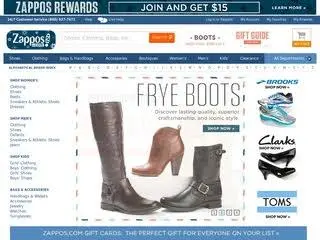
He started Zappos as a simple website displaying pictures of shoes from local shoe stores. When orders came in, he would purchase the shoes from the stores and ship them out, emphasizing an extraordinary customer experience from the very start.
Innovative Features and Business Model
Acquisition by Amazon and Market Expansion
The MVP software development example of Zappos proved that excellent customer service could lead to incredible growth. This did not go unnoticed by eCommerce giant Amazon, which acquired Zappos in 2009 for approximately $1.2 billion.
Post-acquisition, Zappos expanded into clothing, accessories, and other product categories. Today, Zappos has millions of customers and continues to prioritize customer service, maintaining its position as a leader in online retail.
Example 4: Buffer
When we think about social media management tools, Buffer readily pops into mind as a reliable and user-friendly platform. But did you know that Buffer, too, began its journey as an MVP? Joel Gascoigne, the co-founder, started Buffer by creating a simple landing page.
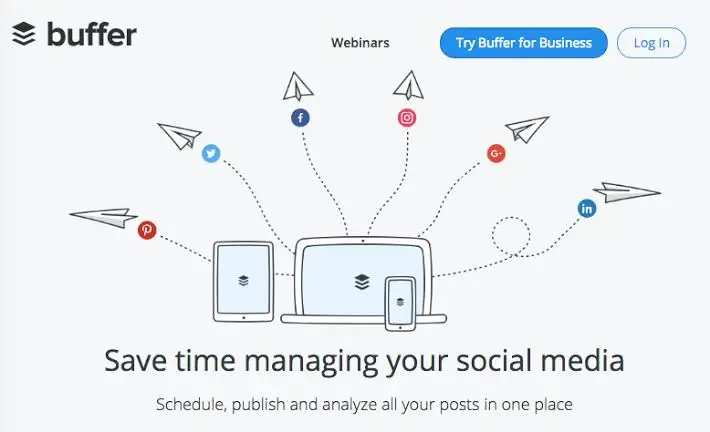
The landing page detailed what the product would do—help users schedule their social media posts—and asked interested visitors to sign up. This initial version served as a concrete MVP product example to validate demand.
Core Features and User Feedback-Driven Development
From its MVP stage, Buffer was poised to solve a specific problem—streamlining social media posting. Over time, they built on the feedback received from early adopters to refine and expand the product.
| Core Features | Functionality |
Post scheduling | Users could schedule social media posts across various platforms |
Multiple profiles | Users could manage multiple social media profiles from a single platform |
Analytics | Buffer provided insights into post-performance to help users optimize their strategy |
Growth Strategies and Monetization Models
Buffer adopted a freemium model, a strategic move that contributed to its virality. Users could use the basic features for free but had to pay for advanced functionalities.
As they continued to add valuable features and improve user experience, Buffer grew, gaining over 1 million in 2013. Today, Buffer remains a prominent player in social media management tools, further affirming the power of MVP examples.
Example 5: Instagram
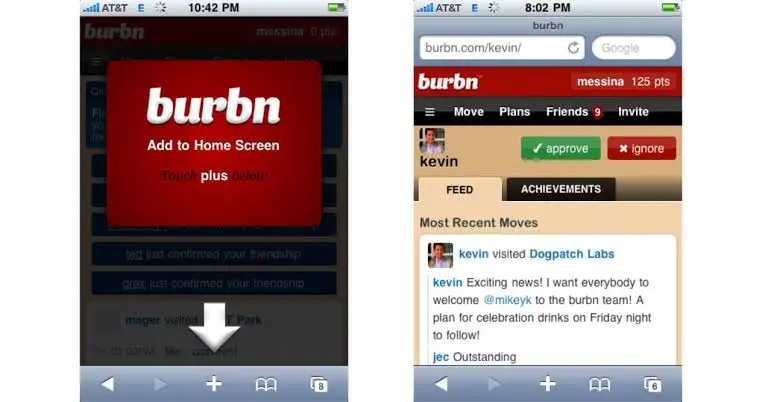
Delving into the historical records of Minimum Viable Product (MVP) examples, we find a noteworthy case on Instagram. What is now a social media powerhouse started as a simple app named Burbn, which allowed users to check in, post plans, and share photos.
Key Features and User Engagement Strategies
Kevin Systrom, the co-founder of Instagram, noticed that the photo-sharing feature of Burbn was the most used and loved. He quickly pivoted, stripping Burbn down to a pure photo-sharing app, renamed it Instagram, and gave birth to another notable mvp product example.
| Key Features | Functionality |
Photo Sharing | Users could share photos with their followers |
Filters | Instagram offered various filters to enhance photos |
Likes and comments | Users could engage with other posts through likes and comments Acquisition by Facebook and Continued Evolution |
Instagram's user base skyrocketed post-launch, hitting a million users within just two months. Its massive success led to the acquisition by Facebook in 2012 for a whopping $1 billion.
Since then, Instagram has continually evolved, introducing features like Stories, IGTV, reels, and Shopping, and transforming from one of the best examples of MVP to a comprehensive social media platform.
Example 6: Kickstarter
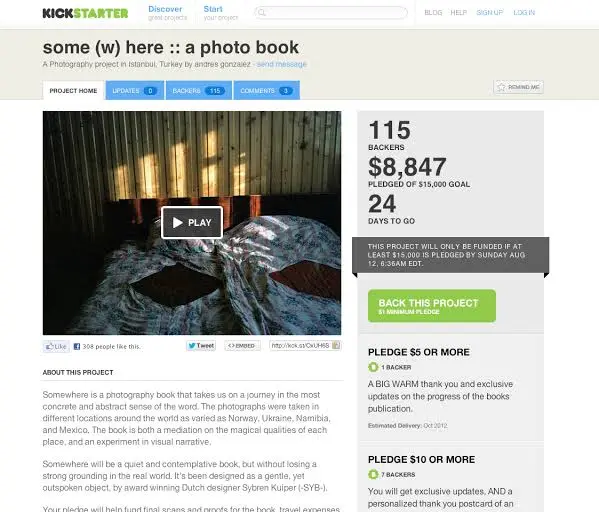
Kickstarter has made its name as a popular crowdfunding platform, helping bring creative projects to life. But this platform, too, started as an MVP. Perry Chen, the founder, built Kickstarter to validate the demand for a crowdfunding platform that helps creators secure funding for their projects.
Platform Features and Initial Success Stories
Kickstarter's features were straightforward and user-friendly, offering a win-win situation for creators and backers.
| Platform Features | Functionality |
Project creation | Creators could set up a project, specify their funding goal, and deadline |
Backer rewards | Creators could offer rewards to backers depending on their pledge amount |
All-or-nothing | Creators would only receive funds if the project reached its funding goal |
Kickstarter's impact was immediate and transformative. Kickstarter, as an MVP, was quick to demonstrate its potential, becoming a vital platform for creators needing financial backing to realize their visions. One of the early success stories that propelled Kickstarter into the spotlight was the Elevation Dock.
The Elevation Dock, a high-quality iPhone dock designed to "make docking enjoyable," was introduced on Kickstarter by Casey Hopkins, a previously unknown innovator. The project aimed to raise $75,000. However, the idea struck a chord with tech enthusiasts and Apple product users worldwide, raising a whopping $1,464,706 with the help of over 12,500 backers.
This incredible feat marked one of the first times a Kickstarter project had raised over a million dollars. It signified the platform's potential to transform an idea into a product by harnessing the collective power of individual backers who believed in that vision.
Impact on the Creative Industry
Kickstarter has left an indelible mark on the creative industry. It fundamentally disrupted traditional funding models, providing an alternative for creatives who may not have access to typical financial backing.
Since its launch, Kickstarter has successfully funded over 240,000 projects, raising more than $7 billion from backers worldwide. This triumph makes Kickstarter an inspiring MVP development for startups.
Example 7: Spotify
Among the array of minimum viable product examples, the journey of Spotify, a leading music streaming platform, stands out prominently. This Swedish company took a different approach, launching a fully-featured MVP right from the start.
Yet, their iterative, customer-focused approach to product development places them firmly within the sphere of MVPs.
Spotify's MVP in the Music Streaming Industry
The unique aspect of Spotify's MVP was that it was far from minimal. It was an ambitious effort to tackle a big problem - piracy in the music industry. The founders, Daniel Ek and Martin Lorentzon created an attractive legal alternative for listeners to enjoy music.
The initial product was a desktop client, limited to invite-only users in Sweden, which allowed people to stream an extensive catalog of music.
User-Centric Design and Personalized Recommendations
Spotify understood that their real competition wasn't other music streaming services, but rather the convenience of pirated music.
To compete with this, they adopted a user-centric design, focusing on three key areas:
- Ease of use
- The breadth of the music catalog, and
- Personalized recommendations.
Spotify's ease of use was paramount. The platform was designed to be as intuitive and straightforward as possible. The music catalog, on the other hand, was expansive, featuring songs from numerous genres across the globe.
One of Spotify's most notable achievements was pioneering the personalized music recommendation feature. Their famous "Discover Weekly" playlist, generated using an algorithm based on listening habits, made the listening experience unique and individualistic.
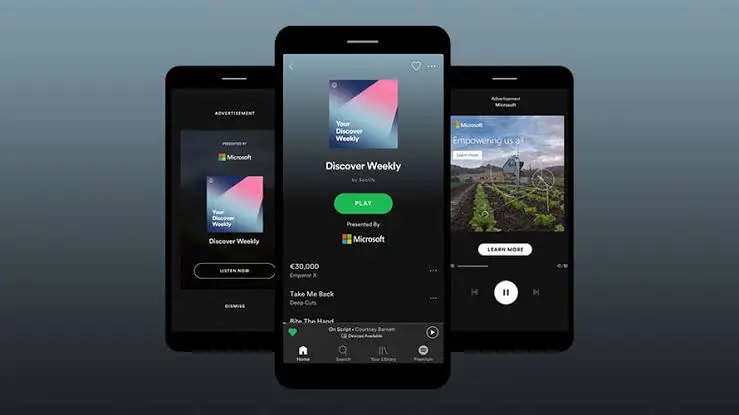
This feature brought a significant edge to one of the wonderful examples of startup MVPs, making Spotify a beloved platform for millions.
Global Expansion and Competition
After validating its MVP and refining its offering in Sweden, Spotify began its global expansion. By the end of March 2023, Spotify boasted 518 million active users and 229 million premium subscribers worldwide. The company's 2020 revenue stood at €7.88 billion.
Despite competition from tech giants like Apple and Amazon, Spotify has managed to hold its own, thanks to its unwavering focus on providing the best possible user experience.
By carefully listening to their users and continually iterating their product, Spotify's journey from app MVP to a global leader showcases the potential of minimum viable product examples.
Example 8: Uber
Uber's MVP is a good example and their story is a classic tale of disruption, demonstrating how a simple app can redefine an entire industry. The inception of Uber is another fascinating addition to the spectrum of MVP examples.
Uber's MVP for Ride-Sharing Services
Uber's genesis was surprisingly modest. The founders, Travis Kalanick and Garrett Camp were simply looking for a better way to hail a cab on a snowy night in Paris.
This personal experience led to the birth of UberCab, an MVP launched in 2010 that connected riders with drivers via a smartphone app.

UberCab was limited to San Francisco and offered luxury cars only. This gave them a limited user base of early adopters, a high-demand market, and affluent customers willing to pay premium prices for convenience.
Disruptive Business Model and User Experience
The Uber story we know today revolves around its disruptive business model, often cited as a key mvp software development example. Uber broke the mold of traditional taxi services by allowing virtually anyone with a car to become a driver. This provided limitless scalability and made rides more accessible and affordable for users.
The customer experience was at the heart of Uber's model. Users could request a ride with a few taps, track the vehicle's arrival, and pay automatically via the app. This seamless user experience, along with its transparent pricing and rating system, helped Uber stand out in a crowded market.
Uber's strategy centered around aggressive growth. They moved swiftly, launching in city after city before competitors could establish a foothold. Uber’s success also spurred competition, with regional ride-sharing services popping up across the globe.
Despite these challenges, Uber remains a leading global player in the ride-hailing market, recently expanding into other areas like food delivery (Uber Eats) and freight (Uber Freight).
Global Growth and Regulatory Challenges
Uber’s success story is as much about its rapid global growth as it is about the various regulatory hurdles it faced. The company’s aggressive expansion saw it spread across hundreds of cities in dozens of countries within a few years.
Build Lean. Learn Fast.
Launch an MVP that saves money while proving your concept works.
By the end of March 2023, Uber boasted approximately 93 million active users worldwide and its drivers completed nearly 1.44 billion trips in the second quarter alone.
However, Uber’s journey wasn't always smooth. Their disruptive business model raised eyebrows in many cities, leading to legal battles and regulatory challenges.
Despite these hurdles, Uber’s app MVP example demonstrates how a lean startup can swiftly adapt and pivot to navigate a complex regulatory landscape.
Uber's journey from a simple MVP development for startups to a global tech giant is a testament to the power of MVPs. It is one of the compelling examples of mvp on how a simple solution to a common problem can disrupt an entire industry, create a new market, and become a household name.
As we explore more minimum-viable product examples, it’s clear that MVPs are more than just a bare-bones version of a product.
Example 9: Slack
Another prime example in our catalog of minimum viable product examples is Slack, a hub for team communication and collaboration. The story of Slack's MVP began when a small team of game developers needed a better way to communicate. They built an internal tool that eventually turned into one of the fastest-growing B2B products.

Slack's MVP for Team Communication
Slack was created by Stewart Butterfield while he was leading a team developing a game called 'Glitch'. To streamline communication within the team, they developed an internal tool.

When the game failed to gain traction, they realized that the communication tool they had built had potential as a stand-alone product. Thus, Slack was born as an MVP, initially rolled out to other companies in the tech industry.
It was an instant hit, effectively addressing the pain points of team communication. Instead of relying on the fragmented communication landscape of emails, text messages, and various other tools, teams could now communicate effectively in one place.
This MVP product example made team collaboration more streamlined and efficient, laying the foundation for Slack's global success.
Key Features & Integration Capabilities
| Features | Description |
Channels | Divide team conversations into specific topics, projects, or anything else. |
Direct Messages | Communicate directly with a team member or a small group. |
File Sharing | Share files and collaborate on them right within Slack. |
Searchable History | Find key information quickly, even from within files shared. |
Calls | Voice or video call within the team or even share your screen. |
Workflow Builder | Automate routine actions and communication. |
Security | Enterprise-grade security features and compliance standards. |
App Integrations | Integrate with over 2,200 apps, including Google Drive, Trello, and Salesforce. |
Adoption by Organizations and Market Leadership
Since its launch in 2013, Slack has seen massive adoption by organizations worldwide. Its ease of use, robust features, and integration capabilities have made it a favorite tool for team communication and collaboration.
By 2022, Slack had over 18 million daily active users, and over 750,000 companies using the platform.
This MVP software development example has not only led the way in team communication but also transformed the way organizations work. Its focus on reducing email dependency, facilitating real-time communication, and seamless integration with other tools has set new standards in the industry.
Example 10: Tesla
Turning to a completely different industry, let's consider Tesla, a trailblazer in the electric vehicle sector, and another excellent addition to our roster of minimum viable product examples.
Tesla's MVP Approach to Electric Vehicles
Tesla's journey is a fantastic mvp development for startup examples, especially for those targeting ambitious, large-scale projects. Elon Musk and his team at Tesla set out to change the narrative around electric vehicles (EVs).
They wanted to prove that EVs could be better, quicker, and more fun to drive than gasoline cars.
Tesla's MVP was the Roadster, a high-performance electric sports car launched in 2008. Rather than trying to compete with established auto giants in the mass market, they targeted a niche - affluent buyers interested in high-performance, environmentally friendly cars.

Technological Innovations and Sustainability Focus
Tesla's Roadster disrupted the auto industry, not only because it was electric but also due to its impressive performance and range. The Roadster could accelerate from 0 to 60 mph in less than 4 seconds, with a range of 245 miles on a single charge - a significant leap from existing electric cars of the time.
This focus on continuous technological innovation became a key tenet of Tesla's product development philosophy.
Tesla's mission is to accelerate the world's transition to sustainable energy. It isn't just about creating electric vehicles; it's also about creating an entire ecosystem that supports sustainable energy. Tesla's focus on building high-capacity battery plants, investing in solar energy, and developing self-driving technology aligns with this mission.
Market Disruption & Future Prospects
Tesla's disruptive approach, starting with a high-end sports car and gradually moving to more affordable models, has proven successful. As of 2022, Tesla was the most valuable car company globally taking the 9th spot, exceeding the market cap of traditional auto giants like Toyota and Volkswagen.
Tesla's prospects appear equally promising. With the continuous development of more affordable models, expansion into new markets, and a focus on self-driving technology, Tesla is poised to maintain its market leadership.
FAQs
1. What is an MVP in simple terms?
An MVP is the smallest product version that delivers value and validates key assumptions with real users.
2. What should be included in an MVP?
Only what’s required to prove the core value and test adoption, retention, or willingness to pay, everything else is deferred.
3. What is the difference between MVP and prototype?
A prototype tests usability and concept quickly; an MVP is released to users to validate demand and real behavior.
4. Which MVP type is best for early validation?
Landing page MVPs are best for demand testing; concierge or Wizard of Oz MVPs are best for workflow validation before automation.
5. How do you measure MVP success?
Use metrics tied to the hypothesis: sign-ups, activation rate, retention, conversion, time-to-value, and user feedback quality.
6. What is the biggest mistake teams make with MVPs?
Overbuilding before validation, adding features instead of validating whether the core problem is real and the solution is wanted.
Final Thoughts
The journey of these 10 companies, all unique app MVP examples, illustrates the power and importance of MVPs in product development.
It's crucial to note that an MVP isn't just a basic version of your product but the start of a journey. A journey of understanding your users, their needs, the market landscape, and, importantly, your product.
"The best way to predict the future is to create it," said Abraham Lincoln. This quote fits perfectly when it comes to developing a Minimum Viable Product (MVP). It's about creating a future for your ideas, for your vision, and ultimately, for your business.
These 10 MVP examples show a consistent pattern: MVPs are not “unfinished products,” but structured experiments designed to validate demand, scope, and value quickly. A successful MVP prioritizes learning speed, not feature volume, and scales only after evidence supports the next investment.
If you’re planning an MVP, a clear scope, strong validation metrics, and fast iteration cycles make the biggest difference. F22 Labs supports MVP strategy and development, from scoping and UX to build and launch, so teams can validate faster, reduce risk, and move toward product-market fit with confidence.

Murtuza Kutub
A product development and growth expert, helping founders and startups build and grow their products at lightning speed with a track record of success. Apart from work, I love to Network & Travel.

Next for you
MVP Development
How SaaS Companies Can Align Product Development With Revenue Targets
MVP Development
7 Best Outsourcing Software Companies of 2026
MVP Development
MVP Design & Customer Advocacy: How to Build Products Users Love in 2026