Ever wondered how great apps and websites actually begin before design polish or development starts? Low-fidelity prototyping is often the first concrete step teams take to explore ideas, test assumptions, and align on direction. I wrote this guide to help teams understand when low-fidelity prototyping creates the most value and how to use it intentionally, not just as a design ritual.
These simple drawings show what a product might look like. They form the base for building new solutions. These basic sketches help teams show ideas, test them, and get feedback without spending much money.
This article walks through what prototypes are, why they matter, and how to create them. You'll get helpful tips for designing products, leading teams, and turning your ideas into reality.
What is Low-Fidelity Prototyping?
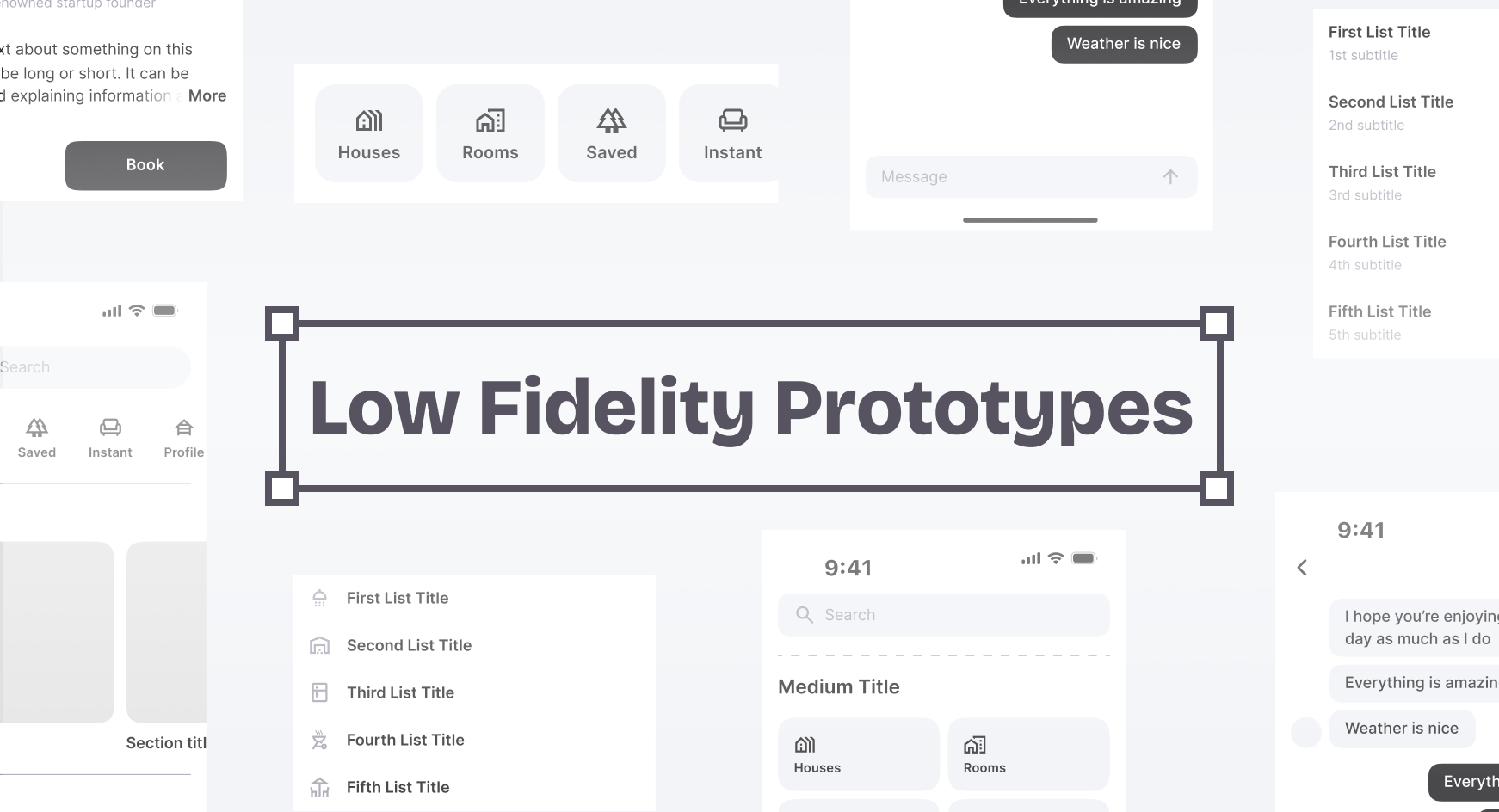
Low-fidelity prototyping involves creating simple representations of a product that emphasize structure, flow, and functionality rather than visual detail. These prototypes show the main ideas, user paths, and basic interactions without details like colors, fonts, or exact layouts.
Unlike high-fidelity prototypes, low-fidelity prototypes are intentionally rough, encouraging discussion, iteration, and early course correction rather than validation of visual design. This difference is important - low-fidelity prototypes are quick sketches meant to spark discussion and changes, not polished final products.
Low-fidelity prototypes commonly take several forms, each suited to different stages of early exploration.
Sketches: Hand-drawn representations used to explore layout, hierarchy, and core ideas quickly. They can be created on paper, whiteboards, or digital sketching tools, and typically focus on layout and primary elements.
Wireframes: Structured layouts that clarify information hierarchy without visual styling. They provide a clearer view of information hierarchy and screen organization without visual design elements.
Paper Prototypes: Physical representations that simulate basic interactions using simple materials.
Storyboards: Sequential visuals that illustrate user journeys across key scenarios.
The defining characteristic of all these forms is their deliberate simplicity, they communicate just enough to convey the concept without the time investment required for detailed design work.
4 Benefits of Low-Fidelity Prototype
Cost-Effective and Quick to Create
One of the core advantages of low-fidelity prototyping is how quickly teams can explore and evaluate ideas before committing resources. Low-fidelity prototypes can be created rapidly, allowing teams to explore multiple directions with minimal investment.
- Teams can explore multiple design directions in a single session
- Changes can be made on the spot during discussions
- Resources are minimized, with little to no technical expertise required
- Failed ideas fail fast, with minimal investment lost
For example, a product team could sketch five different approaches to a checkout flow in the time it would take to build a single high-fidelity version, allowing for broader exploration of the solution space.
Encourages Creativity and Iteration
Their unfinished nature encourages open critique, iteration, and problem-focused discussion.
- The informal appearance sets expectations that the design is malleable
- Team members feel more comfortable suggesting major changes
- The low investment makes it easier to discard or dramatically alter ideas
- Focus remains on solving problems rather than defending work
When a designer presents a pencil sketch rather than a pixel-perfect mockup, stakeholders naturally engage with the underlying concepts instead of getting distracted by visual details like color choices or font styles.
Useful for Brainstorming and Early-Stage Feedback
Low-fidelity prototypes serve as excellent communication tools when ideas are still taking shape:
- They convert abstract ideas into shared artifacts that improve alignment and early feedback.
- They create a shared visual language among team members with different backgrounds
- They help identify misunderstandings and alignment issues early
- They facilitate productive conversations about user needs and business requirements
A simple wireframe can quickly reveal whether stakeholders have a shared understanding of what problem they're solving and how the solution might work.
Reduces Risk by Identifying Potential Issues Early
Identifying usability and flow issues early prevents costly redesigns later.
- Major usability issues become apparent even in simplified interfaces
- Complicated flows can be reconsidered before significant development investment
- Technical feasibility concerns can be raised when changes are still easy to make
- Stakeholder expectations can be managed proactively
For instance, a paper prototype might quickly reveal that a planned user journey has too many steps, allowing the team to simplify the flow before investing in high-fidelity designs or development.
When to Use Low-Fidelity Prototyping
Early Stages of the Design Process
Low-fidelity prototyping is most effective when decisions are still flexible and assumptions need validation.
- During discovery, when exploring multiple directions
- When defining the basic structure and information architecture
- Before committing to a specific design direction
- When transitioning from research insights to potential solutions
These prototypes help bridge the gap between understanding the problem and creating a refined solution.
For Quick Idea Validation
When you need rapid feedback to determine if an idea has merit:
- Testing basic concepts with stakeholders
- Validating assumptions about user needs
- Exploring the viability of new features
- Comparing multiple approaches to solve the same problem is especially valuable in the early stage of shaping mobile app development ideas, where quick validation saves both time and resources.
Partner with Us for Success
A collection of simple wireframes can help determine which direction deserves further development resources.
When Working with Cross-Functional Teams
Low-fidelity prototypes excel at facilitating collaboration across disciplines:
- They help engineers understand design intent without getting lost in details
- They allow product managers to validate business requirements
- They enable marketing teams to provide early input on messaging
- They give executives enough context to provide strategic guidance
Turn Ideas Into Designs That Sell
Work with our team to create UI that wows investors and converts customers.
The accessible nature of these prototypes allows everyone to contribute regardless of their design expertise.
When Budget or Time is Limited
Practical constraints often necessitate a lean approach:
- For startups with limited resources
- When deadlines are tight
- For internal tools where polish is less critical
- When exploring speculative features that may not make it to production
Even with significant constraints, low-fidelity prototyping ensures that design thinking can still influence the product development process through an iterative design process that continuously refines solutions based on feedback.
4 Steps to Create a Low-Fidelity Prototype
Define the Goal of the Prototype
Before picking up a pencil or opening a digital tool, clearly articulate:
- What specific questions should the prototype answer
- Which user tasks or journeys it needs to demonstrate
- The scope of functionality to include
- Who will review the prototype and what feedback you're seeking
This focus ensures the prototype serves its purpose without unnecessary complexity.
Sketch Out Ideas
With goals established, begin visualizing concepts:
- Start with rough sketches exploring multiple approaches
- Focus on the core user flows and primary screens
- Use basic shapes to represent interface elements
- Include annotations to explain functionality that isn't visually obvious
Techniques like the "crazy eights" method—where participants draw eight ideas in eight minutes—can generate diverse solutions quickly.
Select the Right Medium
Choose an appropriate format based on your goals:
- Paper and pencil: Fastest for initial exploration
- Whiteboard: Excellent for collaborative sessions
- Digital wireframing tools: Better for sharing and iterating remotely
- Paper prototyping kits: Useful for simulating interactions without digital tools
The right medium balances speed, collaboration needs, and the fidelity required for meaningful feedback.
Test and Iterate Based on Feedback
Once you have a prototype:
- Share it with stakeholders and potential users
- Facilitate discussions about what works and what doesn't
- Observe how people interpret the prototype
- Make revisions based on insights gathered
- Consider creating multiple iterations to compare approaches
Remember that the goal isn't to perfect the prototype but to learn from it and improve the concept.

Best Practices for Low-Fidelity Prototyping
Focus on Functionality, Not Aesthetics
Maintain discipline about what matters at this stage:
- Use placeholder text instead of crafting perfect copy
- Employ simple shapes rather than detailed icons
- Avoid color unless it's functionally significant
- Resist the urge to "beautify" the prototype
This focus keeps the conversation centered on structure and function rather than visual design preferences.
Involve Stakeholders Early in the Process
Engagement throughout the process improves outcomes:
- Invite key decision-makers to prototyping sessions
- Share in-progress work to prevent surprises later
- Establish a regular cadence for prototype reviews
- Consider co-creation sessions where stakeholders contribute directly
Early involvement builds buy-in and ensures the final product aligns with business goals.
Keep It Simple and Avoid Over-Complicating
Maintain an appropriate level of detail:
- Include only what's necessary to communicate the concept
- Start with the happy path before addressing edge cases
- Break complex flows into manageable segments
- Remember that comprehension matters more than comprehensiveness
A good low-fidelity prototype answers specific questions without trying to address every possible scenario.
Test with Real Users Whenever Possible
Even simple prototypes benefit from user feedback:
- Conduct informal testing with colleagues outside the project
- Recruit actual users for brief feedback sessions
- Use "think aloud" protocols to understand user perceptions
- Focus on tasks rather than asking for general impressions
User insights at this stage can prevent fundamental usability issues from persisting into later versions.
List of Challenges and Limitations
Lack of Detailed Visual Design Can Lead to Misinterpretation
Low-fidelity prototypes require clear framing to avoid misinterpretation.
- Some people have difficulty envisioning the final product
- Expectations may need to be managed about what the prototype represents
- Abstract representations might be interpreted differently by different viewers
- Stakeholders accustomed to polished mockups may be initially resistant
Clear communication about the purpose and limitations of the prototype can mitigate these challenges.
May Not Capture Complex Interactions
Some aspects of the user experience are difficult to represent in low fidelity:
- Animations and transitions between states
- Micro-interactions and feedback mechanisms
- Performance considerations
- Responsive behaviors across different device sizes
Recognize when these elements are crucial and consider supplementing with targeted higher-fidelity explorations of specific interactions.
Requires Facilitation to Ensure Stakeholders Understand the Intent
Low-fidelity prototypes rarely speak for themselves:
- They often need context-setting and explanation
- Misunderstandings can occur without proper framing
- The distance from finished product requires translation
- Some stakeholders may dismiss them as "unprofessional"
Turn Ideas Into Designs That Sell
Work with our team to create UI that wows investors and converts customers.
Skilled facilitation during reviews can overcome these limitations and ensure productive feedback.
Popular Tools for Low-Fidelity Prototyping
Paper and Pen
The most accessible prototyping tools remain highly effective:
- Advantages: No learning curve, always available, inherently collaborative
- Best for: Initial ideation, collaborative design sessions, rapid exploration
- Techniques: Sketching templates, dot grid notebooks, UI stencils
Despite technological advances, many designers still begin every project with hand sketches.
Whiteboarding Tools
Digital and physical whiteboards excel for team collaboration:
- Physical options: Traditional whiteboards, glass walls with markers
- Digital options: Miro, Mural, Jamboard, FigJam
- Advantages: Real-time collaboration, easy to modify, supports remote teams
- Best for: Workshop sessions, journey mapping, collaborative design thinking
These tools combine the spontaneity of sketching with digital advantages like sharing and persistence.
Digital Tools with Wireframing Capabilities
Specialized software offers efficiency for more structured wireframes:
- Dedicated wireframing tools: Balsamiq, Axure (low-fidelity mode)
- General design tools with wireframe capabilities: Figma, Sketch, Adobe XD
- Advantages: Reusable components, easy revisions, digital sharing
- Best for: More detailed wireframes, distributed teams, iterative refinement
These tools often provide wireframe-specific UI kits and templates to maintain appropriate fidelity.
Transitioning to High-Fidelity Prototyping
When and Why to Move to High-Fidelity Prototyping
Transitioning to high-fidelity prototyping should happen only after core assumptions are validated.
- When the fundamental concept has been validated
- When more detailed user feedback is needed on specific interactions
- When presenting to stakeholders who need a more concrete visualization
- When preparing for development handoff
- When testing with users who might be distracted by an unpolished interface
The transition should happen only after the low-fidelity prototype has served its purpose in validating core assumptions.
How Insights from Low-Fidelity Prototypes Inform the Next Stage
Low-fidelity work provides a foundation for higher-fidelity refinement:
- Validated user flows become the structure for detailed screens
- Identified pain points receive focused attention
- Successful elements are maintained and enhanced
- Open questions from low-fidelity testing become focal points
The insights gained through low-fidelity prototyping inform priorities for the more resource-intensive high-fidelity phase, ensuring effort is directed where it matters most.
FAQs
What is low-fidelity prototyping best used for?
It’s best for early-stage exploration, idea validation, and aligning teams before detailed design.
How is low-fidelity different from wireframing?
Wireframes are one form of low-fidelity prototyping focused on structure and hierarchy.
Can low-fidelity prototypes be tested with users?
Yes. Even rough prototypes can reveal usability and flow issues early.
When should teams move to high-fidelity prototypes?
After core workflows and assumptions are validated using low-fidelity prototypes.
Conclusion
Low-fidelity prototyping creates space to explore ideas, challenge assumptions, and align teams before design and development costs rise. When used intentionally, it ensures teams solve the right problems before refining how solutions look or behave. By allowing rapid exploration of ideas without the weight of visual details or technical implementation, these simplified representations enable teams to focus on solving the right problems before addressing how the solution will look and feel.
The beauty of low-fidelity prototyping lies in its accessibility—it democratizes the design process, inviting contribution from team members regardless of their design backgrounds. It creates space for experimentation, failure, and learning when the cost of change is still minimal.
In a product development landscape where speed and adaptability are competitive advantages, low-fidelity prototyping offers a practical approach to validating ideas quickly. Whether you're designing a complex enterprise application or a simple mobile app, starting with low-fidelity prototypes provides the foundation for user-centred solutions that meet both user needs and business goals.
Remember that the goal isn't to create perfect prototypes but to learn and iterate. By embracing the intentional roughness of low-fidelity work, you free yourself and your team to explore more broadly, think more creatively, and ultimately build better products.

Syed Nazia
I’m a UI/UX designer creating user-friendly and visually appealing interfaces. I focus on improving user experience in digital products.