Defect Root Cause Analysis in Software Testing

Defects and bugs are inevitable in software development, but fixing them alone rarely prevents future failures. I’m writing this because many teams close defects quickly, yet face the same issues again in later releases. Defect Root Cause Analysis (RCA) addresses this gap by focusing not just on what broke, but why it broke, making it a critical practice for sustainable software quality.
What is RCA in Software?
RCA in software testing is a structured method for identifying the underlying causes of defects rather than treating visible failures as isolated events. It connects defects to gaps in requirements, design, implementation, or testing processes. Effective RCA depends on well-defined test cases that consistently reproduce issues and provide reliable inputs for analysis.
Why is Defect RCA Critical?
- Prevents Recurrence: Eliminating root causes reduces repeated failures across builds and releases.
- Improves Process Quality: RCA exposes systemic gaps in requirements, development, and testing workflows.
- Optimizes Time and Cost: Addressing causes once is more efficient than repeatedly fixing symptoms.
- Strengthens Team Learning: RCA promotes shared understanding and informed decision-making across teams.
The Defect RCA Process
1. Defect Identification and Documentation
Clearly document the defect with reproducible steps, expected versus actual behavior, affected components, and business or user impact to establish a reliable analysis baseline.
2. Data Collection
Collect supporting data such as recent code changes, environment configurations, logs, test artifacts, and user feedback to ensure analysis is based on complete context.
3. Analysis
Apply structured analysis techniques such as the 5 Whys or Fishbone Diagram to distinguish symptoms from contributing and root causes.
4. Root Cause Identification
Identify the specific breakdown, whether technical, procedural, or communication-related, that allowed the defect to occur.
Sleep Easy Before Launch
We'll stress-test your app so users don't have to.
5. Corrective Action
Implement corrective actions that resolve the underlying cause rather than applying short-term fixes.
6. Preventive Measures
Introduce preventive controls such as reviews, validation checks, or test enhancements to reduce future risk.
7. Verification and Closure
Verify that fixes are effective and confirm that similar scenarios are adequately covered before closure.
Effective RCA Techniques
Multiple techniques support consistent and objective root cause analysis. When combined with defect root cause analysis tools, they help teams track causes, identify trends, and standardize RCA outcomes.
1.5 Whys: Repeated questioning helps trace defects back to process, design, or decision gaps rather than surface failures.
- Why did the user data get corrupted? (System crashed during update)
- Why did the system crash? (Out of memory error)
- Why was there an out-of-memory error? (Memory leak in new feature)
- Why was there a memory leak? (Improper resource management)
- Why was resource management improper? (Lack of code review for memory handling)
2. Fishbone (Ishikawa) Diagram: Organizes possible causes across People, Process, Technology, and Environment for structured evaluation.
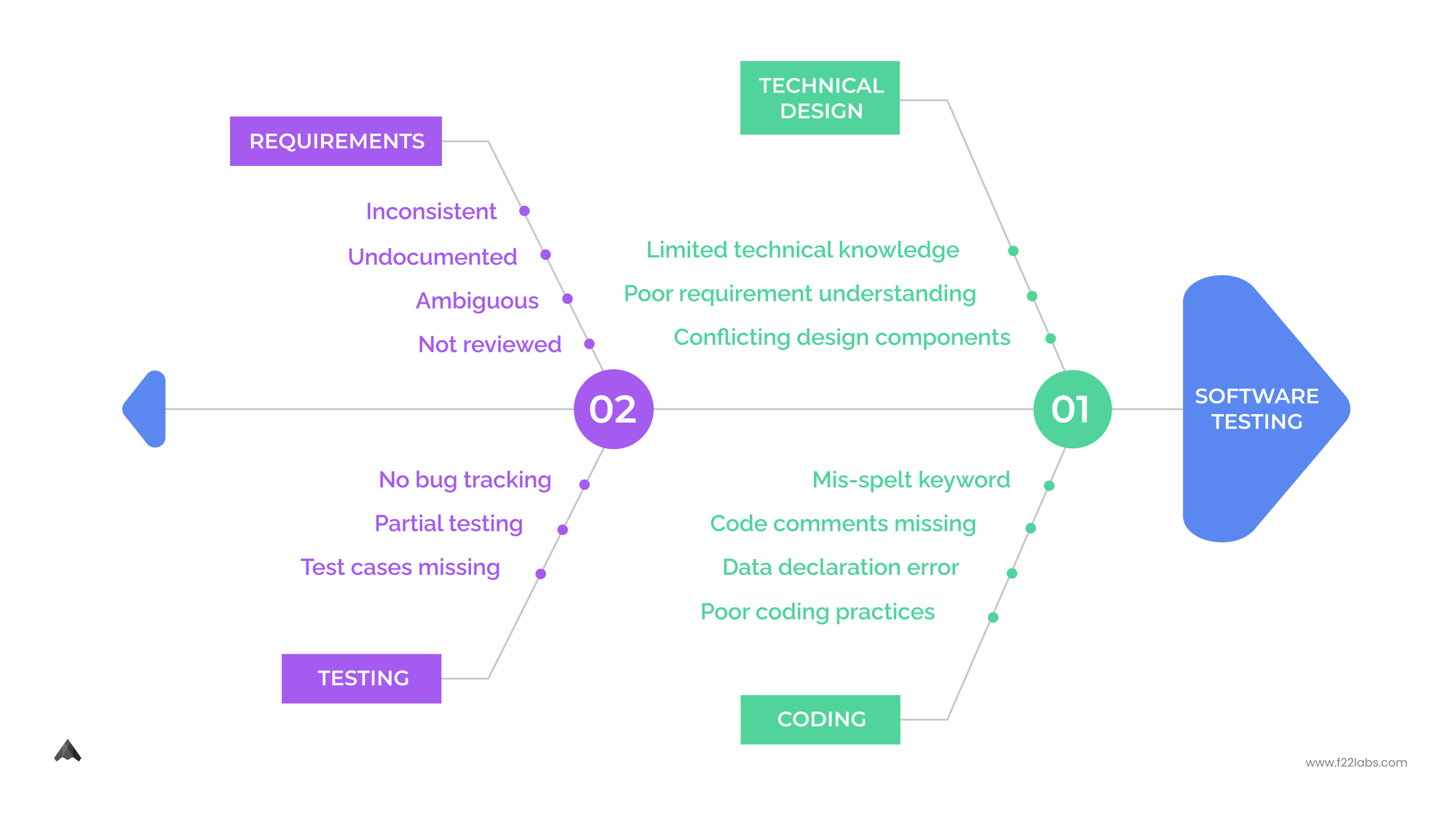
3. Pareto Analysis: Identifies the small set of causes responsible for the majority of defects, enabling focused improvement efforts.
4. Fault Tree Analysis: Maps logical cause–effect relationships leading to failures, supporting risk-based analysis.
Best Practices for Effective RCA in Software Testing
1. Foster a Blame-Free Culture: Focus on learning and improvement, not finger-pointing.
2. Involve Cross-Functional Teams: Different perspectives can uncover hidden causes.
Sleep Easy Before Launch
We'll stress-test your app so users don't have to.
3. Use Data and Metrics: Base your analysis on concrete data, not just opinions.
4. Prioritize High-Impact Defects: Focus RCA efforts on critical or recurring issues.
5. Document and Share Findings: Create a knowledge base to prevent future similar issues.
6. Follow-up: Ensure corrective actions are implemented and effective.
Challenges in Implementing RCA in Software
- Time Constraints: RCA can be time-consuming, but it's an investment in future quality.
- Complexity: Modern software systems can have intricate, interconnected causes.
- Resistance to Change: Teams may be reluctant to alter established processes.
- Lack of Tools: Proper tools for tracking and analyzing defects are crucial.
Our Final Words
Root cause analysis in software testing is not just a corrective activity; it is a shift from reactive defect fixing to proactive quality assurance. When applied consistently, RCA strengthens testing strategy, improves collaboration, and increases confidence in software releases.
Combined with the right automation testing practices, it becomes a powerful driver of long-term software quality. By digging deeper to understand why defects occur, development teams can create more robust and reliable software. Incorporating various types of automation testing can further enhance the effectiveness of RCA.
Implementing a robust RCA process might seem challenging at first, but the long-term benefits of fewer defects, better team collaboration, and higher-quality software far outweigh the initial investment. Make RCA a cornerstone of your overall software testing strategy, and watch your products reach new heights of excellence.
FAQ's
What is RCA in software testing?
RCA in software testing is a systematic process of identifying the fundamental reasons behind software defects to prevent their recurrence and improve overall software quality.
How does RCA improve software development?
RCA in software development improves the process by preventing defect recurrence, enhancing processes, saving time and resources, and fostering a culture of continuous learning and improvement among development teams.
What are some common RCA techniques in software testing?
Common RCA in testing techniques include the 5 Whys method, Fishbone (Ishikawa) Diagram, Pareto Analysis, and Fault Tree Analysis. These help in systematically identifying the root causes of software defects.

Surya
I'm a Software Tester with 5.5 years of experience, specializing in comprehensive testing strategies and quality assurance. I excel in defect prevention and ensuring reliable software delivery.