Problems of Outsourcing Software Development And How to Avoid Them
Outsourcing software development looks like a clear win. Lower costs, faster hiring, and access to skills your local market can't supply.
For companies that approach it with the right structure, it delivers exactly that. For those that don't, it produces missed deadlines, poor code, unexpected costs, and a codebase nobody fully understands.
The gap between those two outcomes is almost never about geography. It's about how the engagement was built. Most outsourcing software development problems are predictable, and most are preventable. Nearly all of them happen in one of three phases: before work begins, during execution, or after the project ends.
Here's what to watch for at every stage. Let's dive in.
Why Outsourcing Projects Fail?
Outsourcing failure is more common than most companies expect before they experience it. KPMG's Global Sourcing Advisory found that over 50% of outsourcing relationships underperform against their original goals. Poor communication, unclear requirements, and vendor misalignment remain the leading problems with outsourcing software development.
The true cost of a failed engagement goes well beyond the vendor invoice. It includes rework, management time, delayed launches, and sometimes a codebase that needs to be rebuilt. Knowing where and when things break down is the first step to preventing them.
Phase 1: Problems Before Work Begins
Many problems of outsourcing software development are set in motion before a single line of code is written. Vendor selection and project setup create the conditions for everything that follows.
Choosing a Vendor on Rate Alone
The outsourcing market has an enormous quality range. A team billing $15/hr and one billing $45/hr can both describe themselves as experienced full-stack developers. The difference in actual quality, communication, and reliability can be significant.
Choosing a rate alone is the most common and most costly mistake in outsourcing. Low-rate engagements frequently cost more in total once rework and delays are factored in. Evaluate vendors on verifiable track record: client references, real portfolio work, and independent reviews.
Using the Wrong Engagement Model
Three models exist, and each suits different work:
Staff augmentation adds individual developers to your existing team. Fast and flexible, but it needs strong internal management to work.
Dedicated team assigns a full squad exclusively to your product. Best for ongoing development where context and continuity matter.
Fixed-scope delivery hands a defined project to an external team. Only reliable when requirements are fully documented and stable.
Mismatching the model to the work creates structural problems from day one. Evolving requirements in a fixed-scope contract put your needs and the vendor's incentives in direct conflict, and that tension rarely resolves in your favor.
No Clear Definition of Success
If both sides can't point to the same definition of "done" at the start, they'll have very different answers at the end. Define success in concrete terms before work begins — specific features, performance standards, quality requirements, and milestones. Write it down and get agreement on it.
Partner with Us for Success
Experience seamless collaboration and exceptional results.
Phase 2: Problems During Execution
Even well-structured engagements run into execution challenges, and many of these software outsourcing challenges appear during delivery. These are the most common ones, and what actually drives them.
Communication Breakdown
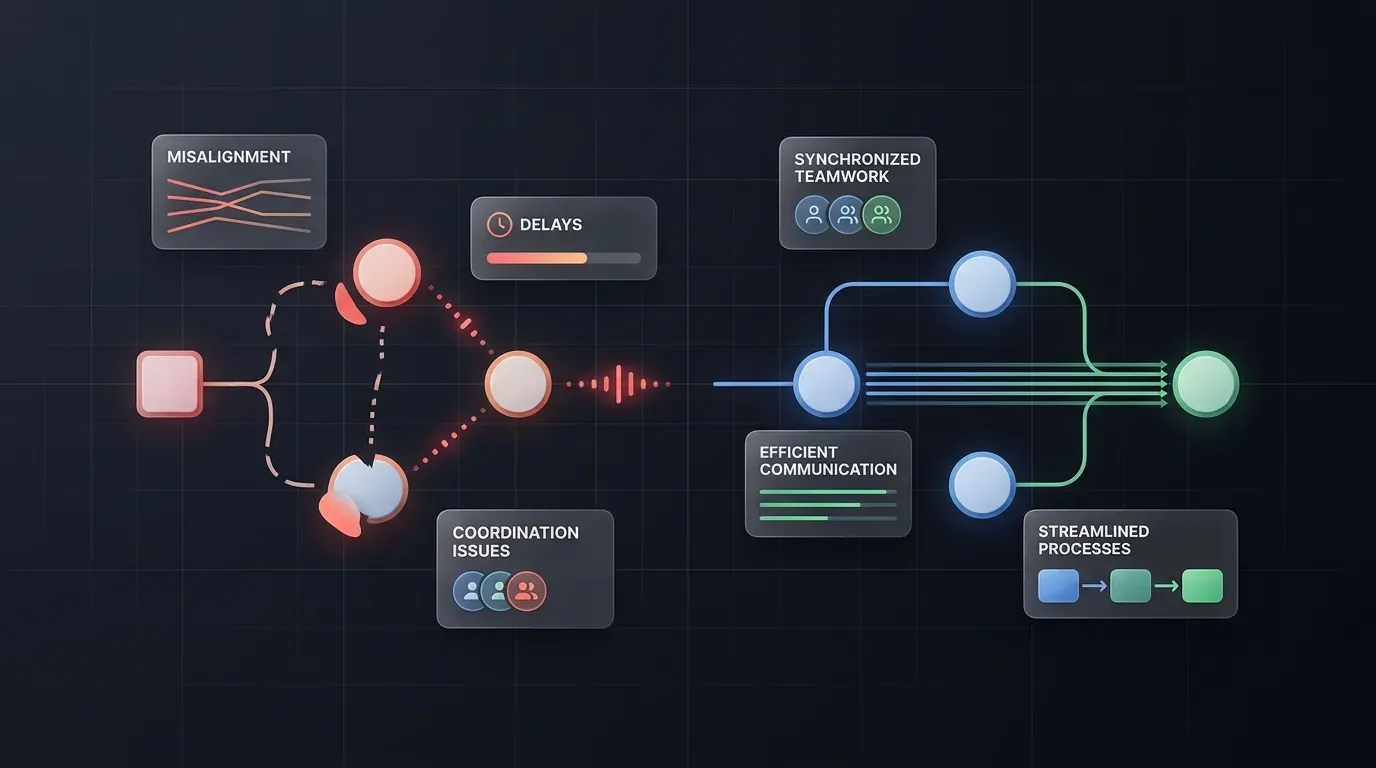
Communication failure remains one of the biggest software outsourcing challenges across remote teams. The issue usually isn't language ability. It's the loss of informal communication, the quick hallway conversation, the 30-second clarification, that remote teams can't replicate naturally.
Time zone gaps make this worse. A question that takes five minutes in the same office can delay a developer for a full day when it has to wait for an asynchronous window.
The fix is structural. Set a daily overlap window of 2–3 hours for real-time collaboration. Use async-first tools, documented tickets, video walkthroughs, and written decision logs for everything outside it. Specify who handles clarifications and at what response speed.
Quality Drift and Technical Debt
Outsourced teams working under delivery pressure tend to produce code that functions but is hard to maintain. Most outsourcing arrangements reward ticket completion, not code quality or long-term architecture.
Features work individually but create problems at integration. The developers who built them are off the project before the issues surface. The internal team inherits the mess.
Require pull request reviews from your own engineers from day one. Set explicit standards for test coverage, documentation, and architecture as contract requirements, not verbal preferences communicated in a kickoff call.
Loss of Visibility
Once execution moves to an external team, visibility can erode quietly. Status reports start replacing real progress signals. Problems surface late because the vendor lacks the context or incentive to escalate early.
Keep the backlog in shared tools that your team can access directly. Run sprint demos and reviews that include your own product stakeholders, not just an engineering lead. Visibility doesn't happen automatically. It requires deliberate design.
Mid-Project Team Turnover
The developer presented during the sales process may not be the one who does the work, or may leave three months in. Knowledge goes with them. Onboarding restarts. Progress stalls.
Ask vendors directly about retention rates before you sign. Require written notice periods and a formal knowledge handoff process if someone leaves your project. This is a common scenario. How a vendor handles it tells you a great deal about how the partnership will work.
Phase 3: Problems After the Engagement Ends
The contract closes. But many problems with outsourcing software development continue long after delivery ends.
Knowledge Lock-In
When an outsourced team builds a significant part of your product without proper documentation, you become dependent on them to maintain it. Switching vendors or bringing the work in-house grows more expensive with every passing month.
Require documentation as a deliverable throughout the engagement, not just at close. Architecture decisions, API contracts, environment setup, and deployment processes should all live in your systems, not the vendor's.
IP Ownership Disputes
In most jurisdictions, code written by a contractor doesn't automatically belong to the client. Without an explicit IP assignment clause, ownership is ambiguous, and that ambiguity tends to surface at the worst possible moment: a fundraising round, an acquisition, or a legal dispute.
Every outsourcing contract needs a clear IP assignment clause, a non-disclosure agreement, and data handling provisions. Get a legal review before signing. This is not optional.
Hidden Costs
The rate on the invoice is rarely the full cost of an outsourcing engagement. Internal management time, tooling, onboarding, rework, and delays all add up. Scope creep, features added mid-project without formal change control, is the most consistent driver of budget overruns.
Model the total cost before the engagement starts: vendor rates plus coordination time, tooling, onboarding, and a contingency buffer. Track against it throughout. Require itemized invoices and a formal process for anything outside the agreed scope.
Partner with Us for Success
Experience seamless collaboration and exceptional results.
Green Flags When Evaluating Outsourcing Partners
Red flags get most of the attention. These positive signals matter just as much:
- They ask detailed questions about your stack and standards before proposing a solution
- They offer references from clients at a similar stage, not just recognizable logos
- They suggest a short paid trial before any long-term commitment
- Their standard contract includes explicit IP assignment language
- Individual developers are introduced by name with work samples before you sign
- They have a documented process for when a team member leaves your project
Build an Outsourcing Engagement That Works with F22 Labs
F22 Labs offers outsourcing software development services for product companies that want outsourcing done right from day one, or are recovering from an engagement that wasn't.
Every partnership is structured with clear IP ownership, dedicated teams, integrated sprint processes, and documentation standards that most outsourcing relationships never establish.
If you're evaluating outsourcing for the first time or need to rebuild after a difficult engagement, reach out. We'll show you what a well-structured arrangement looks like for your product.
Frequently Asked Questions
What is the most common reason software outsourcing fails?
Poor communication and undefined requirements. Most failures trace back to ambiguous goals set before work begins, made worse by communication gaps during execution. Structured overlap windows, shared tools, and documented standards prevent most of these issues.
How do I protect my IP when outsourcing software development?
Include an explicit IP assignment clause, NDA, and data handling provisions in every contract. Confirm which jurisdiction governs the agreement, especially for distributed offshore teams. Always get a legal review before signing.
What is the difference between staff augmentation and a dedicated team?
Staff augmentation places individual developers inside your existing team to fill specific skill gaps. A dedicated team is a squad assigned exclusively to your product, better for ongoing development requiring deep context and long-term continuity.
How do I prevent technical debt from outsourcing?
Require PR reviews by your own engineers, set test coverage and code quality standards as contract requirements, and run regular architecture reviews. Make quality a condition of acceptance, not an afterthought.
Fixed-price or time-and-materials, which is better for outsourcing?
Fixed-price works only when the scope is fully defined and stable. Time-and-materials fits product development where requirements evolve. Mismatching the contract model to the project type is one of the most reliable paths to cost overruns.